

A crash with an uninsured driver can leave you dealing with medical bills, vehicle repairs, lost income, and other losses that the at-fault driver may have no realistic way to pay. In Georgia, that exposure deserves attention before an accident happens because the state has significant levels of both uninsured and underinsured driving.
That is why uninsured and underinsured motorist coverage should be reviewed before you accept, reduce, or reject it. In this guide, Auto Insure News explains what auto insurance for uninsured drivers in Georgia actually means, how Georgia UM/UIM coverage works, the difference between add-on and reduced-by protection, and what to check before choosing your limits.
What is auto insurance for uninsured drivers in Georgia?
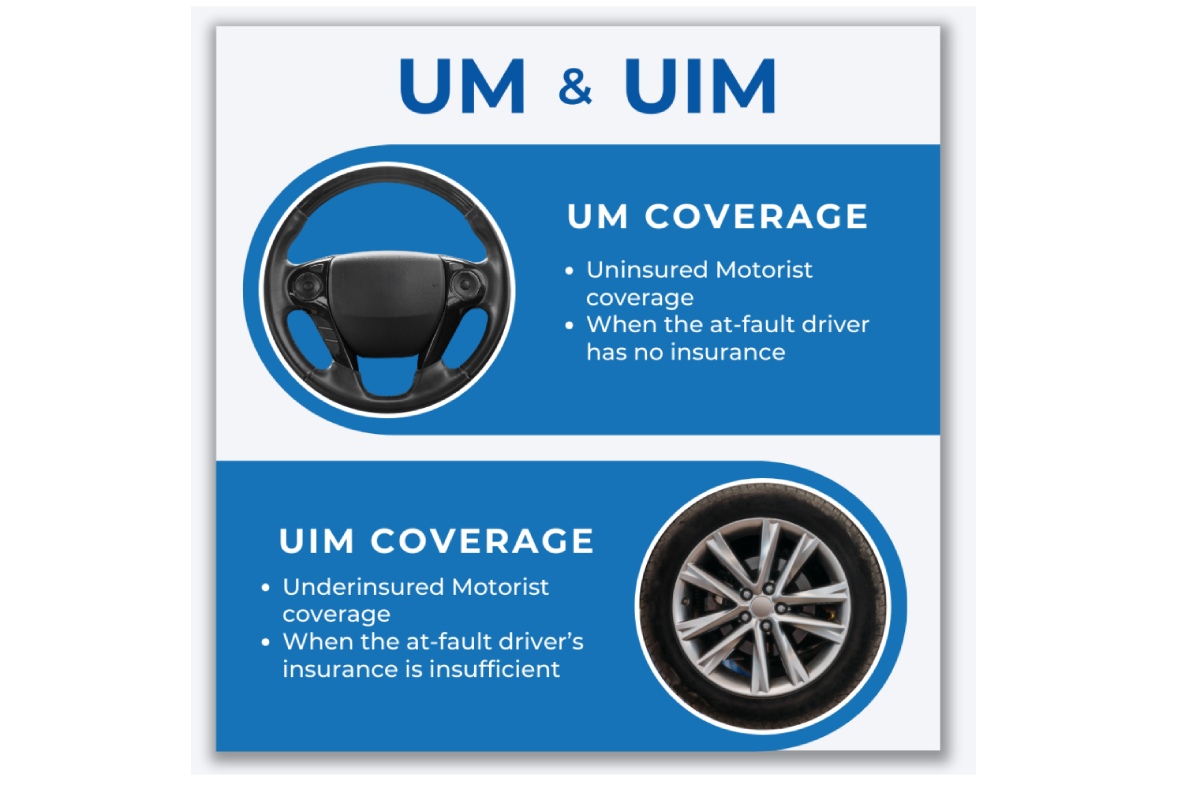
For an insured Georgia driver, protection against an uninsured or underinsured driver comes primarily from uninsured motorist coverage on your own auto policy.
This coverage is commonly called UM coverage, although it can also protect against an underinsured driver whose liability limits are too low to cover the losses they caused.
It can become relevant when:
- The at-fault driver has no liability insurance.
- The at-fault driver’s insurance company legally denies coverage.
- The liability insurer is insolvent and cannot fully pay the claim.
- The at-fault driver has liability insurance, but the available limits are not enough.
- The driver who caused the crash cannot be identified, and Georgia’s hit-and-run requirements are satisfied.
UM insurance is not a policy that allows an uninsured person to drive legally. It is first-party protection purchased by an insured driver against losses caused by another driver who has no insurance or insufficient coverage.

Uninsured vs. underinsured motorist coverage
The difference is the amount of usable liability insurance available from the driver who caused the crash.
| Coverage situation | What happened | Why your UM coverage matters |
|---|---|---|
| Uninsured motorist | The at-fault driver has no usable liability insurance | Your UM coverage can become a primary source of compensation for covered losses |
| Underinsured motorist | The at-fault driver has liability insurance, but your losses exceed the available limits | Your Georgia UM coverage can provide additional protection according to the type and limits you purchased |
| Hit-and-run/unknown driver | The responsible vehicle cannot be identified | UM can apply when Georgia’s statutory proof requirements are satisfied |
This is one reason UM and UIM should not be treated as separate, unrelated products in Georgia. O.C.G.A. §33-7-11 defines an “uninsured motor vehicle” broadly enough to include certain vehicles that carry liability insurance but do not have enough available coverage relative to the insured’s losses and UM protection.
What car insurance does Georgia require?
Georgia requires drivers to carry at least 25/50/25 liability insurance. This is also why drivers should understand why is it illegal to not have car insurance before allowing a policy to lapse.
- $25,000 bodily injury liability per person
- $50,000 bodily injury liability per incident
- $25,000 property damage liability per incident
Georgia’s Office of the Commissioner of Insurance and Fire Safety confirms those as the state’s minimum liability limits.
Liability coverage pays covered claims for injuries and property damage you are legally responsible for causing to other people. It is not designed primarily to protect you from another uninsured driver’s inability to pay.
That distinction is easier to understand once you know auto insurance explained: liability protects against your liability to others, while UM is first-party protection against specified uninsured or underinsured losses.
Is uninsured motorist coverage required in Georgia?
Georgia does not force you to keep UM coverage, but insurers cannot simply omit it from a qualifying auto policy without following Georgia’s statutory process.
O.C.G.A. §33-7-11 requires covered Georgia automobile liability policies to contain uninsured motorist protection. A named insured can reject the coverage, but the rejection must be made in writing.
Georgia law also allows the insured to select UM limits below the liability limits.
This means there are three materially different decisions:
- Keep UM coverage at meaningful limits.
- Select lower UM limits.
- Reject UM coverage in writing.
Our recommendation is not to reject UM solely to reduce the premium. You are effectively choosing whether your own policy will provide another source of recovery when the person who injures you cannot pay the full loss.
Why UM/UIM coverage matters more in Georgia than many drivers realize
Georgia has elevated exposure to both uninsured and underinsured motorists.
Insurance Research Council data, reported by the Insurance Information Institute, estimate that 19.0% of Georgia motorists were uninsured in 2023, compared with 15.4% nationwide.
The underinsurance problem is even more striking. IRC’s state analysis estimated that 37.3% of Georgia drivers were underinsured in 2022, compared with 15.7% countrywide. Georgia was among the states with the highest underinsured motorist rates in that study.
These figures do not mean you personally have a 19% or 37.3% chance of having an uninsured-driver claim. They are market-level estimates.
What they do show is that Georgia drivers should not evaluate UM protection as coverage for an extremely rare theoretical problem.
A driver can satisfy Georgia law with only $25,000 of bodily injury liability per person. A serious injury can quickly exceed that amount, which is why underinsurance matters even when the at-fault vehicle technically has valid insurance.
What can Georgia uninsured motorist coverage pay for?
Georgia’s UM statute addresses both bodily injury and property losses, subject to the limits, exclusions, deductibles, facts of the accident, and damages that can legally be recovered from the responsible driver.
| Loss | How UM coverage can matter |
|---|---|
| Medical expenses | Can form part of a bodily injury UM claim when legally recoverable |
| Lost income | Can be part of covered damages resulting from bodily injury |
| Pain and suffering | Can be included when legally recoverable from the at-fault driver |
| Vehicle damage | Property-damage UM protection can apply, subject to the policy and statutory rules |
| Other covered property inside the insured vehicle | Georgia’s statutory definition of insured property can include covered personal property in the vehicle |
| Death / loss-related damages | Applicable bodily injury UM protection can respond according to Georgia law and policy limits |
UM coverage does not create a double recovery. Georgia’s add-on structure allows additional coverage above the at-fault driver’s available insurance, but combined recovery cannot exceed the insured’s actual economic and noneconomic losses.
Uninsured motorist bodily injury vs. property damage
Do not assume one UM limit answers every question on the policy. Bodily injury and property damage cover different types of losses.
UM bodily injury protection addresses legally recoverable bodily injury losses such as medical expenses, lost earnings, and other injury damages.
UM property damage protection addresses qualifying damage to insured property.
Vehicle damage can also interact with collision insurance. Collision is first-party physical-damage coverage on your vehicle and can often be used even when another driver caused the accident, subject to the collision deductible and policy terms.
These coverages are therefore complementary rather than interchangeable.
When reviewing your policy, check your declarations page for:
- Bodily injury liability
- Property damage liability
- UM bodily injury
- UM property damage
- Collision
- Comprehensive
- Medical payments or other applicable first-party benefits
Add-on vs. reduced-by UM coverage in Georgia
This is the most important Georgia-specific choice in the article.
Georgia allows two approaches to underinsured motorist protection.
Add-on UM coverage
Add-on coverage places your UM limits on top of the liability insurance available from the at-fault driver, up to your actual covered losses.
Under Georgia’s current statutory structure, this is the broader form. The insured can instead reject this structure and select reduced-by protection in writing.
Reduced-by UM coverage
Reduced-by coverage subtracts the at-fault driver’s available liability insurance from your UM limit.
That can substantially reduce the amount your own UM policy contributes after a serious accident.
| Feature | Add-on UM | Reduced-by UM |
|---|---|---|
| At-fault liability available | Paid first without automatically consuming your UM limit | Reduces your available UM limit |
| Potential protection | Broader | Narrower |
| Premium | Can cost more | Can cost less |
| Best use | Drivers prioritizing stronger protection | Drivers intentionally trade protection for a lower premium |
Example: $25,000 liability + $50,000 UM
Assume:
- The at-fault driver’s available bodily injury liability limit is $25,000.
- Your UM limit is $50,000.
- Your legally recoverable losses are $75,000.
| Coverage | Potential insurance available |
|---|---|
| Add-on | $25,000 from the at-fault liability policy + up to $50,000 from UM = up to $75,000 of the demonstrated loss |
| Reduced-by | $50,000 UM limit minus $25,000 available liability = up to $25,000 of UM, producing up to $50,000 total in this simplified example |
This is why the words “I have $50,000 of UM coverage” are not enough information in Georgia. You also need to know whether it is an add-on or a reduction.
Which Georgia UM coverage should you choose?
For most Georgia households that can afford it, we would choose add-on UM coverage and start by pricing limits equal to the policy’s liability limits.
For example, if you carry 100/300 bodily injury liability, obtain the price for a comparable 100/300 add-on UM before voluntarily reducing it.
Why?
- You cannot control whether the other driver buys adequate liability insurance.
- Georgia has a substantial uninsured motorist rate.
- Georgia’s measured underinsurance rate has been particularly high.
- Serious medical and income losses can quickly exceed the 25/50 limits.
- Add-on coverage preserves substantially more protection than an equal nominal reduced-by limit.
If budget forces a compromise, compare the actual dollar savings before reducing UM limits or switching to reduced-by coverage.
Do not give up tens of thousands of dollars in potential protection merely to save a small amount per policy term.
How Georgia hit-and-run UM claims work
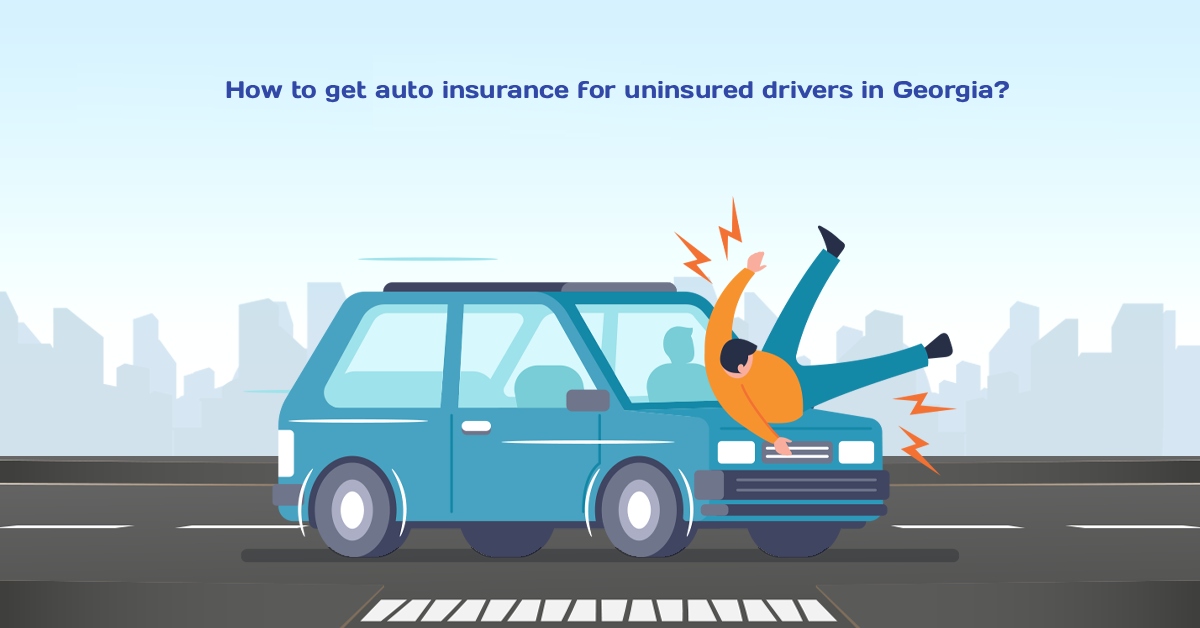
A hit-and-run can qualify as an uninsured motorist claim in Georgia, but the state has special proof rules when the responsible driver is unknown.
Under O.C.G.A. §33-7-11, an unidentified motor vehicle can be treated as uninsured.
Georgia’s statute generally requires actual physical contact between the unknown vehicle and the insured person or property.
There is an important exception: physical contact is not required when the claimant’s description of how the accident occurred is corroborated by an eyewitness other than the claimant.
That matters in a common scenario:
A vehicle cuts across your lane, you swerve to avoid it, hit a guardrail, and the other vehicle disappears without touching your car.
Without contact, independent eyewitness corroboration can become critical to a Georgia UM claim. The distinction between no-fault benefits and fault-based claims is explained in what does no fault insurance mean.
Report a hit-and-run promptly to law enforcement and your insurer. Preserve dashcam footage, witness information, photographs, nearby surveillance footage and anything else that can establish what the unknown driver did.
How to file an uninsured motorist claim in Georgia
Treat a potential UM claim as a real liability case, not simply as a repair request to your own insurer.
- Call law enforcement when required and document the scene.
- Obtain the other driver’s insurance information. Do not assume the driver is uninsured based only on what they say.
- Photograph all vehicle damage, roadway evidence, and injuries that can appropriately be documented.
- Collect witness contact information. This becomes particularly important in an unidentified-driver case.
- Notify your insurer promptly that UM/UIM coverage may be involved.
- Confirm whether the other carrier has accepted, denied, or exhausted liability coverage.
- Keep medical bills, wage-loss documentation, repair estimates, and other evidence of damages.
- Review your UM type and limits. Confirm whether the add-on or the reduction applies before evaluating settlement amounts.
- Preserve all correspondence from both insurers.
For the broader process, review how to claim vehicle insurance before discarding estimates, medical documents, photographs, or correspondence from the insurer.
Georgia UM litigation also has specific procedural rules involving service on the UM insurer when a lawsuit is filed against a known uninsured or underinsured driver. Serious injury cases, disputed hit-and-run claims, and multi-policy UM cases deserve Georgia-specific legal advice before a limitation or service deadline expires.

Can UM coverage stack in Georgia?
Georgia UM claims can involve more than one policy or vehicle, but do not assume that every UM limit automatically stacks.
Available coverage depends on factors including:
- Which policies cover the injured person
- Whether multiple insured vehicles are involved
- The wording and priority of the applicable policies
- Whether the coverage is an add-on or reduced-by
- Payments already available from the at-fault driver’s liability coverage
- The insured’s actual legally recoverable damages
If a serious crash involves your own policy, another household policy, an employer vehicle, or multiple UM policies, identify every potentially applicable policy before settling the claim.
How to compare Georgia auto insurance quotes with UM coverage
Do not compare two Georgia premiums until their UM coverage is identical.
A lower quote can look attractive simply because one insurer has quoted:
- Lower UM limits
- Reduced by instead of add-on coverage
- A higher UM deductible
- Different property-damage protection
- No UM coverage after a written rejection
When comparing policies, keep these items identical:
- Liability limits
- UM bodily injury limits
- UM property damage limits
- Add-on or reduced by-election
- Collision and comprehensive deductibles
- Drivers
- Vehicles
- Garaging address
- Annual mileage
Only then can you tell which insurer is genuinely cheaper for the same protection.
What if you are the uninsured driver in Georgia?
If you personally do not have the required Georgia liability insurance, buying UM coverage is not the immediate problem to solve.
The Georgia Department of Revenue requires owners and lessees to maintain continuous Georgia automobile liability insurance on vehicles with active registration.
If the vehicle is no longer being driven or is out of service, Georgia DOR advises canceling the registration before canceling the insurance.
For an actively registered vehicle, a lapse can result in fines and suspension of registration.
Georgia DOR currently defines a lapse as including:
- 10 days or more between the previous policy termination and the effective date of new insurance; or
- A terminated policy for which no replacement insurance information is received in the state’s system within the applicable 30-day reporting process.
The current lapse fine is $25, with additional consequences if the lapse is not resolved and registration is suspended.
If you are already in that situation, review what happens if i get in an accident without insurance before driving again without valid coverage.
How Auto Insure News evaluates Georgia UM/UIM coverage
Georgia’s UM decision cannot be reduced to a checkbox saying “uninsured motorist: yes or no.” The amount and structure of the coverage determine how useful it becomes after a serious loss.
At Auto Insure News, we evaluate a Georgia policy using four questions:
- How much UM coverage do you actually have? Compare the bodily injury and property damage limits with your liability coverage.
- Is it an add-on or a reduction? Two policies showing the same $50,000 UM limit can produce materially different available insurance after an underinsured-driver crash.
- Who is protected? Review coverage for the named insured, resident family members, passengers, and other insured persons under the policy.
- What happens after a hit-and-run? Georgia’s physical-contact and eyewitness rules make documentation especially important when the unknown vehicle leaves the scene.
Our recommendation: for most Georgia households, price add-on UM/UIM at limits equal to your liability limits before considering any reduction. Georgia’s uninsured-driver exposure is meaningful, its measured underinsurance problem is unusually serious, and a $25,000 at-fault liability limit can disappear quickly after a serious injury. Reduce or reject UM only after you understand exactly how much financial protection you are giving up.

RELATED AUTO INSURANCE GUIDES
Safety & Driving
How Does a Learner’s Permit Work? Rules and Next Steps
Safety & Driving
Thunderstorm Safety Tips at Home, Outdoors and in a Car
Auto Insurance
ACV vs Replacement Cost: How Insurance Payouts Differ
Safety & Driving
Black Ice on the Roads: How to spot it and handle a skid