

The Toyota Camry has been a default midsize sedan for American commuters and families for decades, but the current generation is very different from the Camry many buyers remember. Every 2026 model now uses a hybrid powertrain, all-wheel drive is available across the entire trim range, and Toyota has positioned the car around efficiency rather than V6 performance. This Toyota Camry review by Auto Insure News looks beyond the badge to examine pricing, fuel economy, safety, warranty coverage, ownership costs, trim value, and the competitors worth considering before you buy.
Is the 2026 Toyota Camry worth buying?
Yes. The 2026 Toyota Camry is one of the strongest all-around midsize sedans for buyers who prioritize fuel economy, everyday comfort, safety, and predictable ownership costs.
The strongest case for the Camry is that Toyota no longer makes buyers pay extra just to enter the hybrid lineup. Every 2026 Camry uses the fifth-generation Toyota Hybrid System, producing 225 net combined horsepower with front-wheel drive and 232 horsepower with Electronic On-Demand All-Wheel Drive.
Fuel economy remains the biggest advantage. The LE FWD reaches an EPA-estimated 52 mpg city and 49 mpg highway, while Toyota rates the model at up to 51 mpg combined.
The Camry also earns a 2026 IIHS Top Safety Pick+ award, and Toyota Safety Sense 3.0 is standard throughout the lineup.
The trade-off is clear: this is not a performance sedan. The hybrid system delivers more than enough power for commuting, merging, and highway driving, but the Camry’s priorities are refinement and efficiency rather than aggressive acceleration or steering feel.
Buy the Camry if you want a sedan that is easy to live with for years. Skip it if performance, maximum cargo flexibility, or a plug-in powertrain matters more than efficiency and practicality.
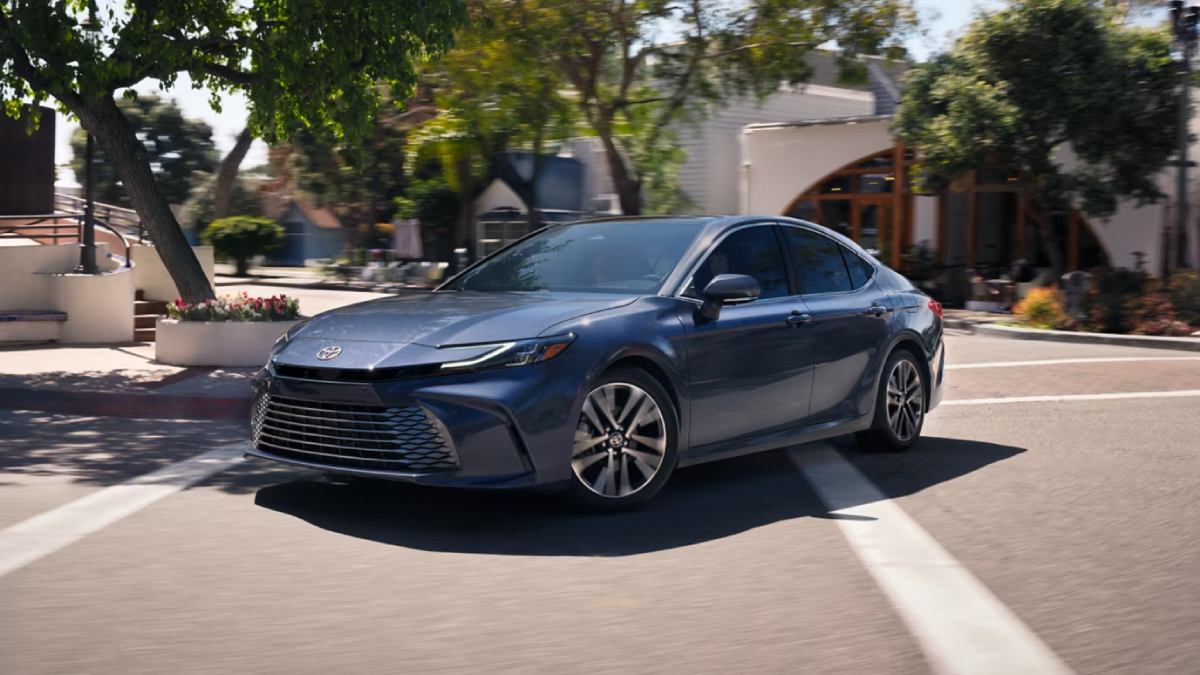
2026 Toyota Camry pros and cons
| Pros | Cons |
|---|---|
| A hybrid powertrain is standard on every trim | No gasoline-only or V6 performance option |
| Up to 51 mpg combined | Driving character favors comfort over excitement |
| AWD is available across the entire lineup | 19-inch wheel trims sacrifice some efficiency |
| 2026 IIHS Top Safety Pick+ | Sedan cargo flexibility cannot match that of an SUV |
| 10-year/150,000-mile hybrid battery warranty | Upper trims can approach $40,000 once AWD and options are added |
| Strong standard driver-assistance equipment | No plug-in hybrid Camry |
The Camry’s advantages are concentrated in areas that matter every day: fuel economy, safety equipment, drivetrain options, comfort, and warranty coverage. Its weaknesses are most important to buyers who expect a midsize sedan to feel sporty or to offer SUV-like cargo capacity.
What is new for the 2026 Toyota Camry?
The ninth-generation Camry was redesigned for 2025, so 2026 is an evolutionary update rather than another major redesign.
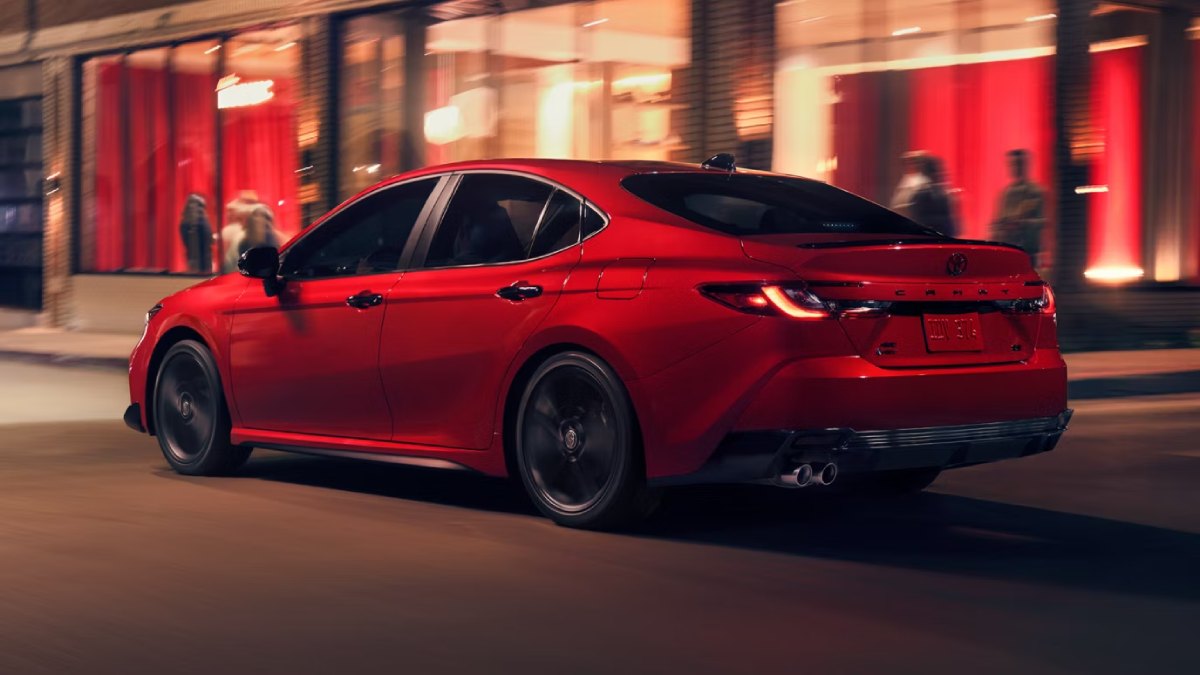
The biggest addition is the Nightshade Edition, which is based on the SE and adds a darker exterior treatment.
The 2026 lineup consists of:
- LE
- SE
- Nightshade
- XLE
- XSE
Every grade is available with front-wheel drive or Electronic On-Demand AWD.
Important characteristics of the current Camry include:
- Hybrid-only powertrain lineup
- 225 net combined horsepower with FWD
- 232 net combined horsepower with AWD
- Up to 51 mpg combined
- Toyota Safety Sense 3.0
- Wireless Apple CarPlay and Android Auto
- Available 12.3-inch multimedia display
- Available 12.3-inch digital gauge cluster
- New Nightshade styling package
Buyers moving from an older Camry should understand the biggest change: the V6 era is over. Toyota has turned the Camry into an efficiency-focused hybrid sedan rather than maintaining separate economy and performance powertrains.
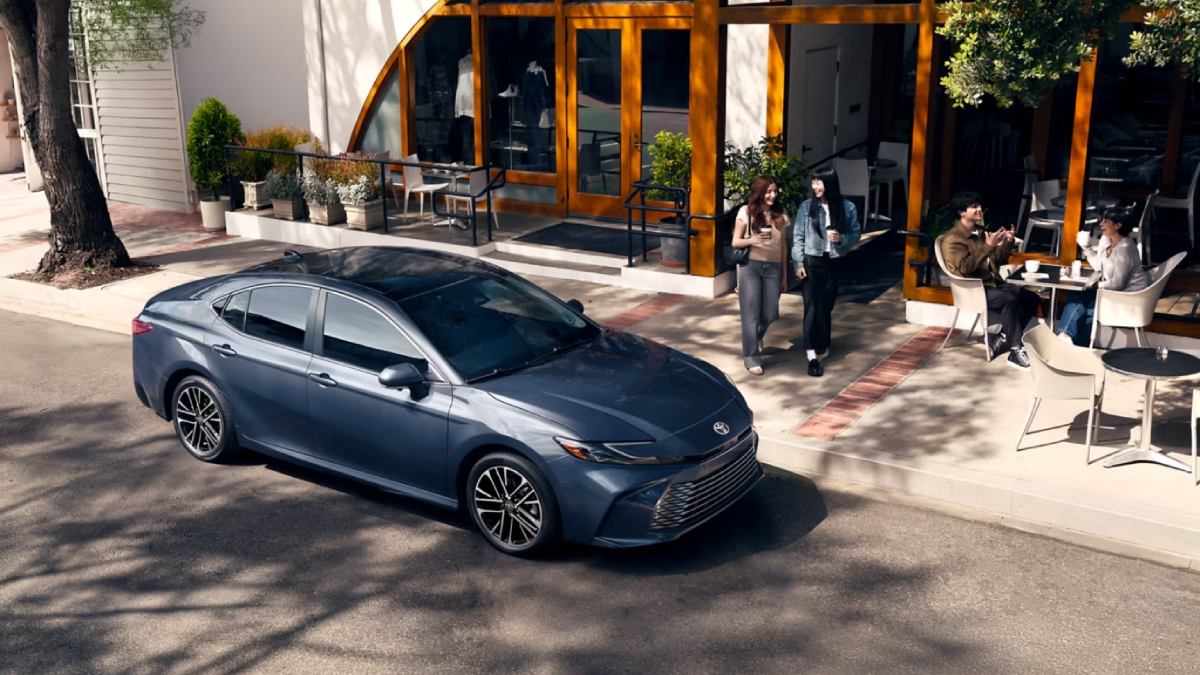
2026 Toyota Camry performance and driving feel
The 2026 Camry combines a 2.5-liter four-cylinder gasoline engine with Toyota’s fifth-generation hybrid system.
Front-wheel-drive models produce 225 net combined horsepower. AWD models produce 232 horsepower.
Those numbers put the Camry comfortably above the level needed for ordinary commuting. Acceleration from city speeds is responsive because the electric motors provide immediate assistance, and highway merging does not require the driver to work the powertrain hard.
The Camry’s tuning is deliberately conservative. Steering is predictable, body movement is controlled, and the hybrid system transitions smoothly between gasoline and electric assistance.
SE, Nightshade, and XSE models add a sportier appearance and tuning, but they do not transform the Camry into a true sport sedan.
The smart way to view the Camry is as a refined commuter that can handle winding roads, not as a performance sedan that happens to be efficient.
Is AWD worth adding?
Toyota charges approximately $1,525 more to move from the equivalent FWD trim to AWD in the current 2026 pricing structure.
AWD makes the most sense for buyers who regularly deal with snow, steep, wet roads, or poor winter conditions. It is not necessary simply because the option exists.
The system also carries an efficiency penalty on some trims. The biggest example is the XSE AWD, which drops to an estimated 43 mpg city and 43 mpg highway.
Our recommendation: buy FWD unless your climate or regular driving conditions give you a real reason to pay for AWD.
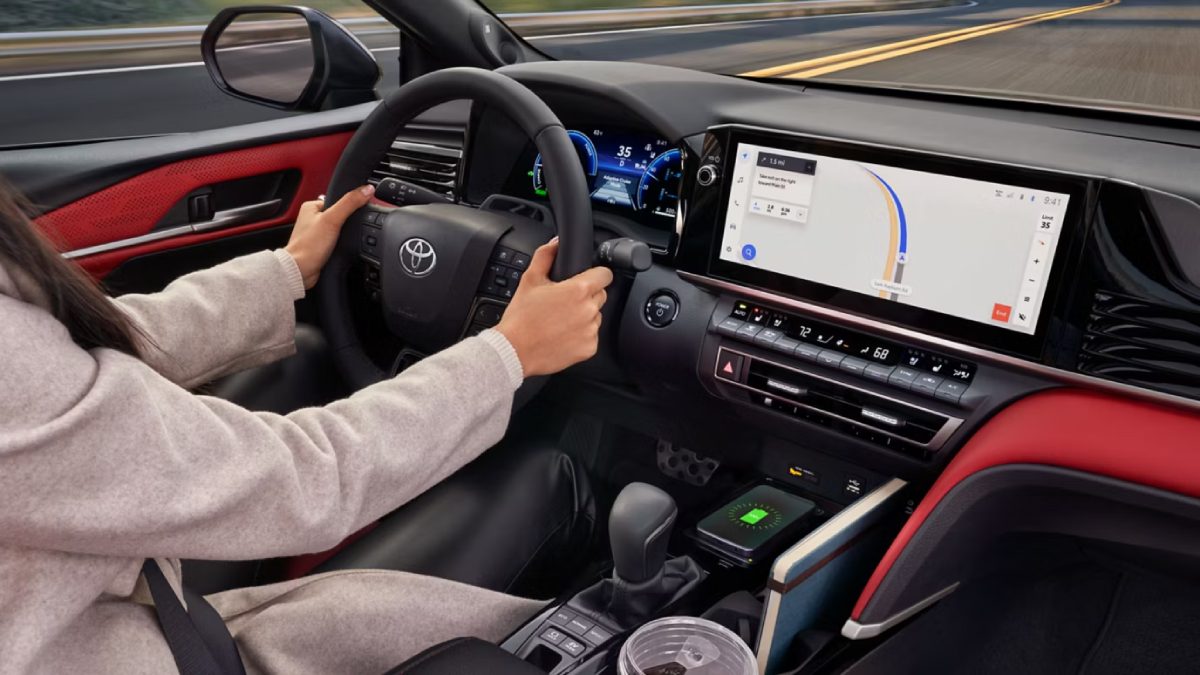
2026 Toyota Camry fuel economy
Fuel economy is the Camry’s strongest competitive advantage, especially because hybrid power is standard rather than optional.
Toyota’s current U.S. specifications list the following city/highway estimates:
| Trim and drivetrain | City mpg | Highway mpg |
|---|---|---|
| LE FWD | 52 | 49 |
| LE AWD | 50 | 49 |
| SE FWD | 47 | 45 |
| SE AWD | 46 | 46 |
| Nightshade FWD | 47 | 45 |
| Nightshade AWD | 46 | 46 |
| XLE FWD | 47 | 45 |
| XLE AWD | 46 | 46 |
| XSE FWD | 47 | 45 |
| XSE AWD | 43 | 43 |
Source: Toyota’s current 2026 Camry specifications. Actual fuel economy depends on driving conditions, weather, vehicle configuration, and driving behavior.
The LE FWD is the trim to buy if fuel economy is your priority. Its smaller wheels and efficiency-oriented configuration produce the strongest mileage in the lineup.
The XSE AWD sits at the opposite end. Buyers are effectively trading some efficiency for larger wheels, sportier equipment, AWD, and styling.
That difference matters over a long ownership period. A commuter covering 15,000 to 20,000 miles per year will benefit more from choosing the LE than a low-mileage driver who simply wants the XSE’s appearance.
Toyota Camry interior comfort and everyday usability
The Camry remains a five-passenger midsize sedan built around commuting and family use.
Front-seat comfort is good for long drives, and rear-seat space is appropriate for adults rather than being treated as occasional seating.
The biggest interior difference comes from trim selection.
LE prioritizes price and efficiency. SE and Nightshade introduce a sportier cabin treatment. XLE shifts toward comfort, while XSE combines the larger technology package with sportier styling.
For families deciding between a Camry and an SUV, the important limitation is cargo shape rather than passenger comfort. A sedan trunk works well for groceries, luggage, strollers, and everyday items, but it cannot match the vertical cargo opening or large-object flexibility of a crossover.
If a compact crossover is on your shortlist, a Honda HR-V vs. CR-V comparison can help clarify the trade-off between size, cargo space, and family usability.
Do not buy an SUV automatically because you have children. If five seats and a conventional trunk meet your real needs, the Camry’s fuel economy can make it the financially stronger choice.
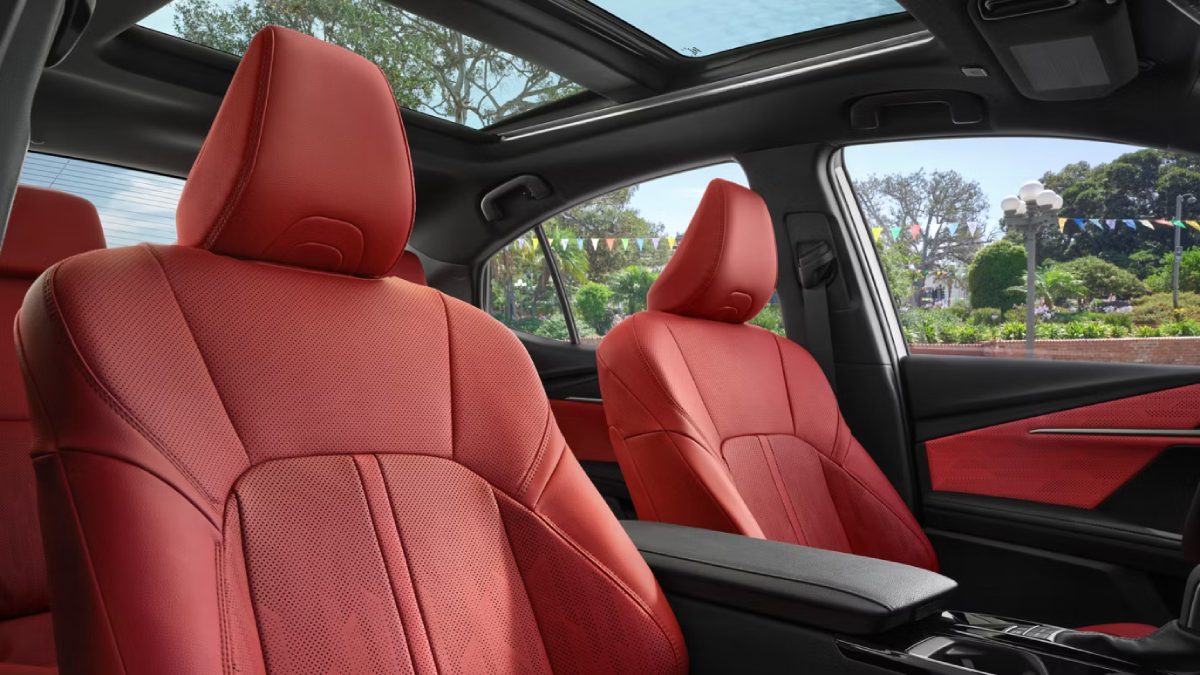
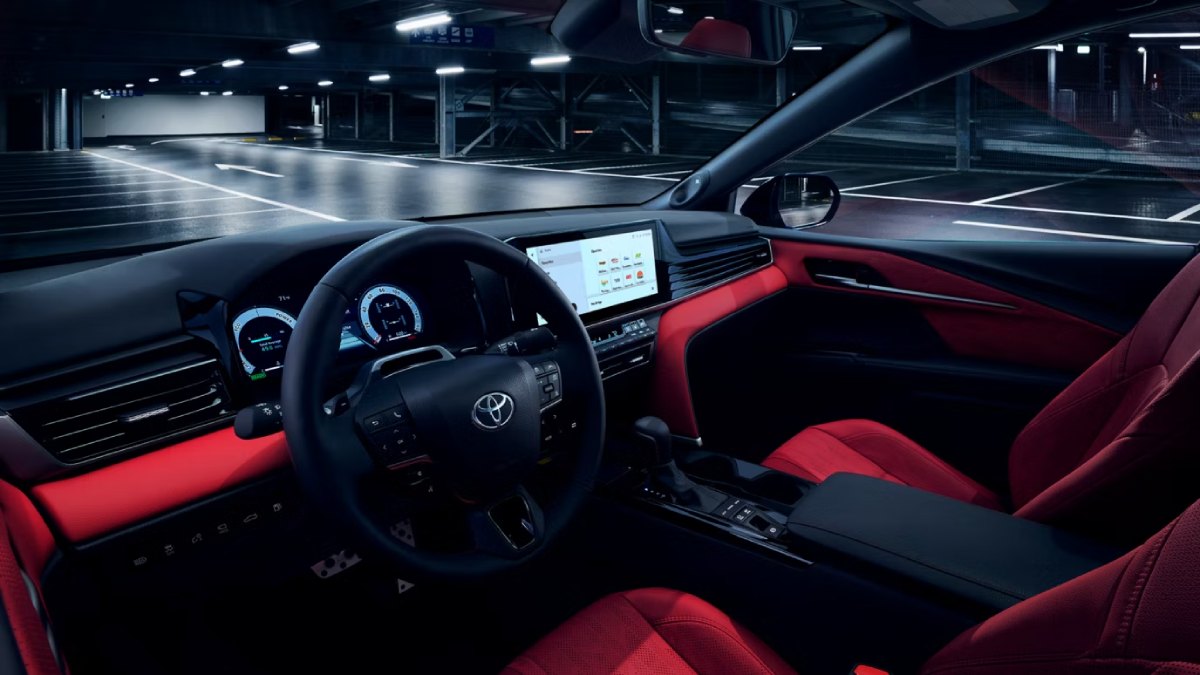
Infotainment and technology
Toyota keeps the technology hierarchy simple.
LE uses an 8-inch Toyota Audio Multimedia touchscreen, and SE and Nightshade remain positioned below the premium XLE and XSE technology package.
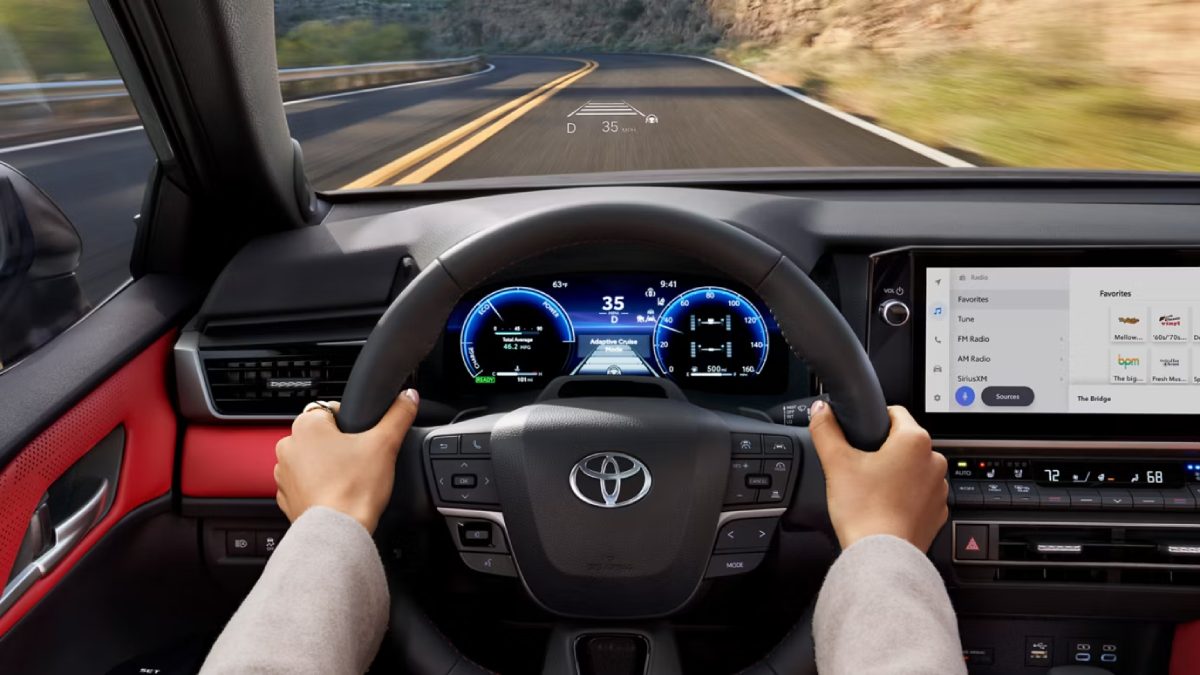
XLE and XSE step up to a 12.3-inch Toyota Audio Multimedia touchscreen. A 12.3-inch digital gauge cluster is also available in the higher-end configuration.
Wireless Apple CarPlay and Android Auto are available, eliminating the need for a cable to connect a phone for normal projection.
Toyota also retains physical controls for frequently used functions rather than moving every operation into the touchscreen.
Higher trims can add features such as:
- Available 9-speaker JBL premium audio
- Head-up display
- Ventilated front seats
- Additional connected-services functions
- Traffic Jam Assist when applicable equipment and service requirements are met
XLE is the trim that makes the most sense if technology and comfort matter more than exterior styling.
2026 Toyota Camry safety
Safety is one of the strongest reasons to keep the Camry near the top of a family sedan shortlist.
The 2026 Toyota Camry earns the Insurance Institute for Highway Safety’s Top Safety Pick+ award, the organization’s highest 2026 award level.
Toyota Safety Sense 3.0 is standard across the lineup and includes systems such as:
- Pre-Collision System with Pedestrian Detection
- Full-Speed Range Dynamic Radar Cruise Control
- Lane Departure Alert with Steering Assist
- Lane Tracing Assist
- Road Sign Assist
- Automatic High Beams
Blind Spot Monitor is also standard on the current Camry lineup.
The IIHS 2026 evaluation gives the Camry good ratings in the major small-overlap, moderate-overlap, and side crashworthiness categories required for the award.
Safety source: Insurance Institute for Highway Safety.
Do not rely on the model name alone when buying used. Safety equipment and test standards vary by model year, so a 2026 Camry’s award should not be automatically applied to an older Camry.
Toyota Camry reliability and warranty
The 2026 Camry is too new for anyone to prove its long-term reliability with 10 years of owner data. A trustworthy review should not pretend otherwise.
What buyers can evaluate objectively is Toyota’s current warranty structure and the fact that the hybrid system is an evolution of technology Toyota has used across multiple generations, rather than an entirely new type of drivetrain.
Toyota provides:
- 3 years / 36,000 miles basic new-vehicle warranty
- 5 years / 60,000 miles powertrain coverage
- 8 years / 100,000 miles hybrid-related component coverage
- 10 years / 150,000 miles hybrid battery coverage
- 2 years / 25,000 miles ToyotaCare scheduled maintenance
- 2 years / unlimited miles roadside assistance
The hybrid battery warranty is particularly important for buyers worried that purchasing a hybrid automatically creates a significant near-term risk of battery replacement.
Our assessment: the Camry has a low-risk ownership profile for a new midsize sedan, but maintenance still matters. A Toyota badge does not make missed oil changes, neglected tires, accident damage, or deferred maintenance harmless.
Owners should also check recalls by VIN rather than relying on an article claiming that a model has “no recalls.” Recall status can change after an article is published.
How much does a 2026 Toyota Camry cost?
Toyota’s current U.S. pricing starts at $29,600 for the 2026 Camry LE FWD.
The current base-MSRP structure is:
| Trim | FWD base MSRP | AWD base MSRP | Best for |
|---|---|---|---|
| LE | $29,600 | $31,125 | Maximum fuel economy and value |
| SE | $32,100 | $33,625 | Sportier styling without premium-trim pricing |
| Nightshade | $33,100 | $34,625 | Blackout styling |
| XLE | $34,800 | $36,325 | Comfort and technology |
| XSE | $36,000 | $37,525 | Maximum styling and sport-oriented equipment |
Base MSRP figures are current Toyota U.S. figures and exclude applicable delivery, processing, and handling charges, taxes, registration, dealer-installed equipment, optional packages, and dealer pricing adjustments.
The table shows why the monthly payment alone is a poor basis for choosing a Camry. Moving from LE FWD to XSE AWD adds almost $8,000 to the base vehicle price before options and fees.
If the Camry will be your first vehicle, compare the purchase against how much a first car should cost before stretching the budget merely to reach XLE or XSE.
Which 2026 Toyota Camry trim should you buy?
Camry LE: best financial choice
The LE is the best Camry for buyers focused on total ownership cost.
You get the same basic hybrid architecture as the expensive trims, the strongest fuel economy in the range, Toyota Safety Sense 3.0, and the lowest purchase price.
The smaller 16-inch wheels also reduce tire replacement costs compared with the 19-inch setups on sportier trims.
Camry SE: best balance for most buyers
The SE is our default recommendation.
It gives the Camry a more attractive sport-oriented appearance without pushing the price into XLE or XSE territory. Fuel economy remains strong, and the premium over LE is manageable for buyers who value the styling.
Camry Nightshade: buy it for the look
Nightshade is essentially a styling decision. Its black exterior details and 19-inch wheels distinguish it visually, but buyers should not expect a major mechanical upgrade over SE.
Choose Nightshade because you genuinely prefer the design, not because you expect better performance.
Camry XLE: best comfort trim
XLE is the strongest choice for drivers who want the Camry’s efficiency with a more upscale cabin.
The larger touchscreen, upgraded seating materials, heated front seats, and available premium features are easier to justify for a driver who spends several hours each week commuting.
Camry XSE: hardest trim to justify financially
XSE is the most visually aggressive Camry and includes the sport-tuned suspension and premium interior equipment.
It is also the trim level where the Camry’s value equation weakens.
An XSE AWD starts at $37,525 before delivery charges and options, and its 43/43 mpg estimate is substantially below LE FWD.
Our recommendation: buy XSE because you want XSE, not because it is objectively the best Camry value.
Financing a Toyota Camry
Purchase price is only one part of the ownership equation. Interest can add thousands of dollars to a five- or six-year loan.
For example, financing $35,000 at a substantially higher APR can erase the savings you negotiated from the dealer.
Before discussing the monthly payment, establish:
- The selling price of the vehicle
- Your down payment
- Trade-in value
- Taxes and fees
- Loan amount
- APR
- Loan term
- Total finance charge
Use our guide to what a good car loan interest rate looks like before evaluating a dealership’s finance offer.
Do not negotiate a Camry by monthly payment. A dealer can lower the payment simply by extending the loan.
How much does a Toyota Camry cost to insure?
Do not choose a Camry trim without first getting an insurance quote.
There is no useful single national insurance price for a 2026 Camry because the driver has a larger effect on the premium than the badge alone.
Insurers can price Camry ownership according to:
- Driver age
- Driving record
- ZIP code
- Annual mileage
- Coverage limits
- Deductibles
- Claims history
- Permitted credit-based insurance factors
- Exact trim and vehicle equipment
Trim choice can still matter. Larger wheels, lighting assemblies, sensors, bodywork, and higher vehicle value can increase the cost of repairing or replacing the vehicle after a loss.
Those factors are part of what determines your car insurance rate, along with the driver’s age, location, record, mileage, and selected limits.
When comparing auto insurance quotes, quote the exact Camry trim you plan to purchase and use identical liability limits and deductibles across every insurer.
For perspective, a vehicle-specific comparison such as Jeep Wrangler insurance rates shows why the model, repair profile, and driver can produce very different premiums.
Auto Insure News recommendation: add annual insurance, annual fuel use, financing cost, tire replacement, and expected maintenance to the purchase price. That gives you a much better picture of whether LE, SE, or XLE is actually the strongest financial choice.
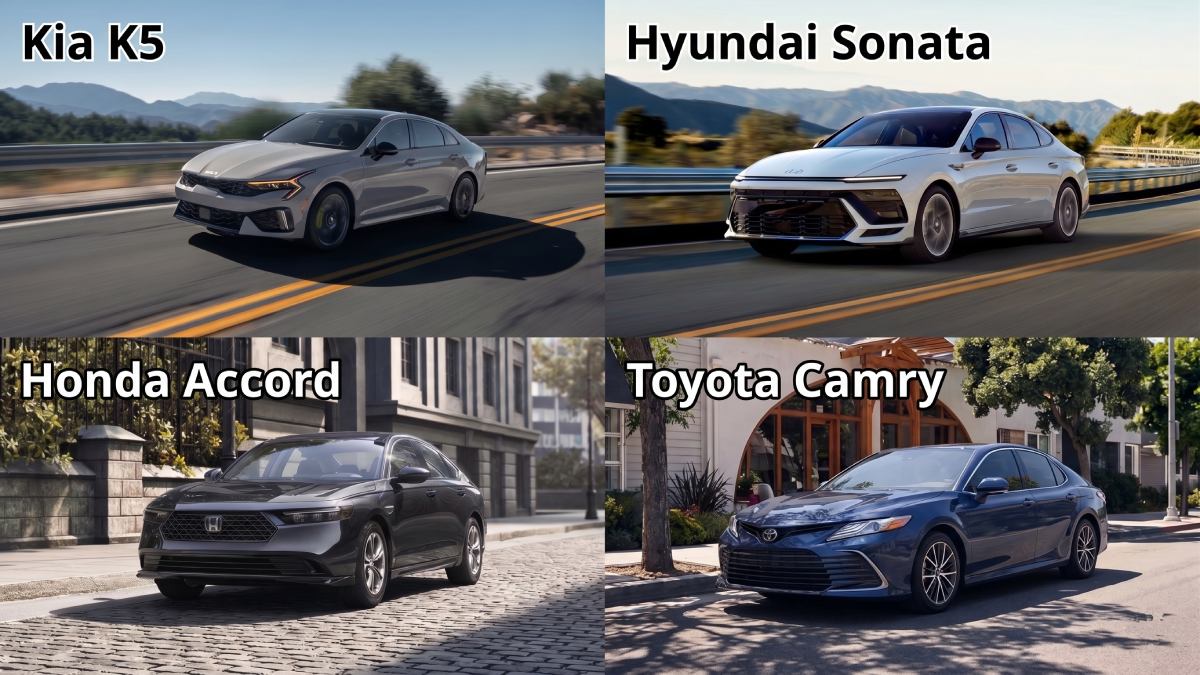
2026 Toyota Camry vs Honda Accord, Hyundai Sonata, and Kia K5
The Camry is not the only strong midsize sedan, and buyers should cross-shop before committing.
| Model | Why consider it | Where Camry has the advantage |
|---|---|---|
| Toyota Camry | Standard hybrid power, available AWD, and strong efficiency | Baseline |
| Honda Accord | Strong hybrid option, spacious cabin, and clean road manners | Camry makes hybrid standard across the entire lineup and offers AWD |
| Hyundai Sonata Hybrid | Strong efficiency and competitive starting price | Camry offers AWD and a broader all-hybrid trim range |
| Kia K5 | Lower entry price, distinctive styling, and available AWD | Camry prioritizes hybrid fuel economy |
The 2026 Honda Accord starts lower than the Camry in gasoline form, while its hybrid lineup begins higher. Honda rates the hybrid system at 204 horsepower.
Hyundai’s 2026 Sonata Blue Hybrid is a particularly credible efficiency rival. It is rated at 47 mpg city, 56 highway, and 51 combined.
Kia’s K5 approaches the segment differently, using a lower starting price and available AWD to appeal to buyers who prioritize styling and conventional gasoline performance.
Our choice: the Camry is the easiest recommendation when hybrid efficiency and AWD need to exist in the same sedan. Accord deserves the strongest cross-shop for drivers who care more about the way the car feels from the driver’s seat.
Who should buy a 2026 Toyota Camry?
- Daily commuters: especially buyers covering substantial annual mileage.
- Small families: five usable seats, strong safety performance, and predictable running costs.
- Hybrid buyers who do not want to plug in: the vehicle operates like a conventional car from the owner’s perspective.
- Drivers who want AWD without moving to an SUV.
- Long-term owners: particularly buyers who value the hybrid battery warranty and ToyotaCare.
- Drivers downsizing from an SUV: the Camry can materially improve fuel economy without moving into a compact car.
The Camry is at its best when it is purchased as transportation rather than entertainment.
Who should skip the Toyota Camry?
- Drivers who prioritize rapid acceleration and aggressive handling.
- Families that genuinely need three seating rows.
- Buyers who regularly transport bulky cargo.
- Drivers who want a plug-in hybrid with meaningful electric-only range.
- Buyers who want a manual transmission.
- Shoppers who want luxury-brand interior materials and prestige.
- Buyers are unwilling to pay close to $40,000 for a heavily equipped midsize sedan.
An SUV is the better answer when cargo configuration and seating flexibility dominate the decision. A more performance-focused sedan is the better answer when driving engagement matters more than fuel efficiency.
If you are comparing Toyota SUVs, the practical differences in a RAV4 vs Highlander decision are useful context for deciding whether the Camry’s sedan layout is enough.
Buyers who regularly haul bulky cargo may also want to understand what is a crew cab before choosing between a sedan, SUV, and pickup.
Should you buy a new or used Toyota Camry?
Buy new if you specifically want the current hybrid-only generation, AWD availability, the current safety package, and a full hybrid warranty.
Buy used when the purchase price matters more than having the latest powertrain and technology.
A used Camry can make excellent financial sense because the nameplate has been around for decades, and the used market offers everything from inexpensive older commuters to nearly new hybrids.
The decision should be based on:
- Purchase price
- Mileage
- Maintenance records
- Accident history
- Open recalls
- Tire and brake condition
- Remaining warranty
- Pre-purchase inspection results
What year of the Toyota Camry should you stay away from?
Do not blacklist a Camry solely because an online complaint database labels one model year “the worst.” At this point, condition and maintenance history are more useful buying signals than complaint count alone.
Older 2007–2009 Camrys deserve a more thorough inspection simply because these cars are now approaching two decades of age. A low purchase price does not compensate for neglected maintenance, oil consumption, suspension wear, accident repairs, transmission problems, rust, or an incomplete service history.
When evaluating any older Camry:
- Check the VIN for outstanding recalls.
- Verify maintenance records.
- Check engine oil level and condition.
- Inspect for leaks.
- Test the transmission from cold and after the vehicle is warm.
- Check suspension noises and tire wear.
- Inspect for previous structural repairs.
- Get an independent pre-purchase inspection.
A properly maintained older Camry can be a better purchase than a newer example with accident damage and poor service history.
If you are shopping the used market, review the best time of year to buy a used car before deciding when to negotiate.
How Auto Insure News evaluates the 2026 Toyota Camry
A vehicle review should answer both financial and product questions. A good car can still be the wrong purchase if the trim, financing, insurance, or ownership costs stretch the household budget.
At Auto Insure News, we evaluate the Camry using four practical questions:
- What are you paying extra for? LE already delivers the core hybrid system and best fuel economy. Every move up the trim ladder needs to justify its added cost.
- How much will you use the upgrade? AWD is valuable in the right climate; 19-inch wheels and blackout trim are primarily preference purchases.
- What is the total ownership cost? Financing, insurance, fuel, tires, maintenance, and depreciation matter more than the monthly payment shown at the dealership.
- Does a rival solve your needs better? Accord, Sonata, K5, and crossover alternatives should remain on the shopping list until after the test drive and final quotes.
Our recommendation: the 2026 Toyota Camry SE is the best overall choice for most buyers, while the LE is the strongest financial choice, and the XLE is the strongest comfort choice. We would skip XSE unless its styling and equipment are specifically worth the additional purchase price and lower AWD fuel economy to you.
The Camry’s hybrid system differs from that of a fully electric vehicle, so buyers comparing the two powertrains should also understand why EVs are so expensive before making a final budget decision.
Once the purchase is complete, review what to do after buying a new car so that insurance, registration, paperwork, recalls, maintenance scheduling, and the first vehicle checks are handled correctly.

RELATED AUTO INSURANCE GUIDES
Safety & Driving
How Does a Learner’s Permit Work? Rules and Next Steps
Safety & Driving
Thunderstorm Safety Tips at Home, Outdoors and in a Car
Auto Insurance
ACV vs Replacement Cost: How Insurance Payouts Differ
Safety & Driving
Black Ice on the Roads: How to spot it and handle a skid