
Driving for Instacart changes how your car is used. A vehicle that normally handles commuting, errands, and family trips can suddenly spend hours each week traveling between stores and customers for paid deliveries. That change matters because not all personal auto policies are written to cover delivery work. This guide from Auto Insure News explains what Instacart drivers should check before accepting a batch, which insurance options actually close a delivery-coverage gap, what happens after a crash, and how to compare coverage without paying for more commercial insurance than you need.
What car insurance do Instacart drivers need?
An Instacart driver needs an auto policy that explicitly allows the vehicle to be used for paid delivery. Do not assume an ordinary personal auto policy covers Instacart simply because the same vehicle is insured for personal driving.
For a part-time shopper, the correct solution is often a personal auto policy with a delivery or rideshare endorsement that specifically covers delivery work. If the insurer will not extend personal coverage to Instacart activity, the driver may need a commercial auto policy or another insurer that supports gig-delivery use.
The important test is not whether the policy is called “personal,” “rideshare,” or “commercial.” The important question is:
Does this policy cover me while I am using this exact vehicle to complete paid Instacart deliveries?
Get that answer from the insurer before starting delivery work. A cheap personal policy that excludes the activity producing the claim is not useful coverage.
Before changing anything, understand the main types of car insurance already on your policy and which of them remain effective during delivery use.
What Instacart requires from full-service shoppers
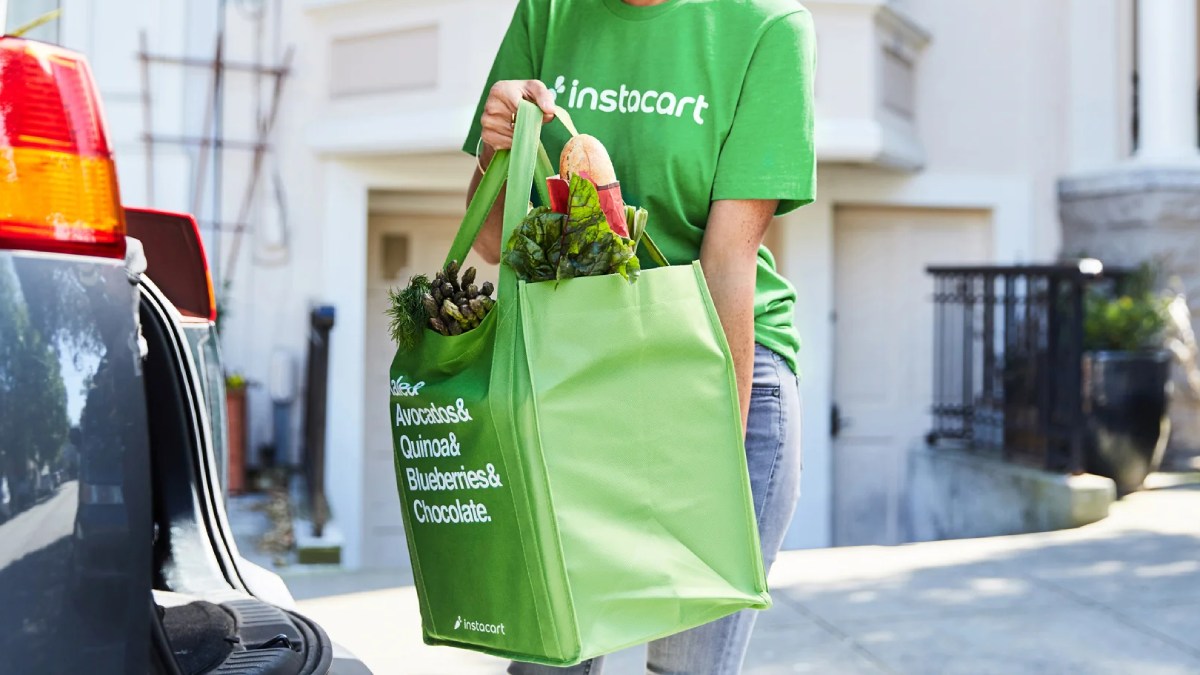
Instacart classifies U.S. full-service shoppers as contractors who shop for orders and deliver them using a vehicle.
Instacart’s current claims materials place responsibility for applicable insurance on the independent contractor. Its claim page states that contractors are responsible for obtaining insurance necessary to perform their services, specifically including automotive liability insurance.
That creates an important distinction:
- Meeting the legal insurance requirement: keeping the vehicle insured in accordance with applicable law and Instacart’s contractor requirements.
- Having insurance that covers paid delivery: determines whether the insurer will actually respond to a claim arising while you are working.
Those are not automatically the same thing.
A driver can carry the state’s required personal auto liability limits and still have a problem if the policy excludes paid delivery.
Does Instacart provide car insurance to shoppers?
Do not rely on Instacart as a substitute for your own auto insurance.
Instacart currently offers an Auto Liability Claim Form that collects information on accidents involving shoppers, third-party injuries, property damage, the shopper’s personal insurer, and the active order.
However, the existence of a claim form does not establish a nationwide Instacart auto policy that automatically replaces the shopper’s own insurance.
Instacart’s own claims materials continue to state that independent contractors are responsible for obtaining applicable automotive liability coverage.
For insurance planning, therefore, treat your own properly endorsed personal policy or commercial policy as the coverage you must have in place.
If Instacart or another insurer becomes involved after a particular accident, that should be evaluated from the actual claim facts and applicable policy – not assumed before the crash.
Will a personal auto policy cover Instacart deliveries?
Never assume that it will. Personal auto policies vary, and delivery exclusions are common enough that paid delivery must be disclosed to the insurer before you rely on the policy.
Texas Department of Insurance guidance illustrates the issue clearly: some personal policies can cover certain paid delivery use, while others exclude business driving altogether. Washington insurance regulators similarly warn that many personal auto policies do not automatically cover losses arising from gig or food-delivery work.
That means the correct question is not:
“Do personal auto policies cover Instacart?”
Ask instead:
“Does my specific policy cover Instacart grocery delivery in my state during every stage in which I am using the vehicle for the platform?”
If the insurer says no, add an eligible endorsement, change insurers, or move to the appropriate commercial policy before accepting deliveries.
Why disclosure matters
Paid delivery changes the vehicle’s use and usually increases the amount of time it spends on the road.
If you tell the insurer about Instacart before the work begins, the insurer can tell you whether:
- Your existing policy already permits the use.
- A delivery endorsement is available.
- A rideshare endorsement also covers grocery delivery.
- You need a different personal product.
- You need commercial auto insurance.
Discovering that answer during underwriting is far better than discovering it after a serious collision.
The best insurance options for Instacart drivers
There is no single Instacart insurance product that fits every shopper. The right solution depends primarily on what the insurer will permit, how heavily the vehicle is used for delivery, and whether you need physical-damage coverage for your own car.
1. Personal auto policy with a delivery or rideshare endorsement
This is the first option most part-time Instacart shoppers should investigate.
The endorsement modifies an otherwise personal policy, so certain commercial or app-based driving is covered according to the endorsement terms.
Do not buy one based on the word “rideshare” alone. Some products are designed around passenger transportation, while others also extend to delivery platforms.
Progressive, for example, currently states that its rideshare insurance applies to delivery service platforms in most states, although the exact coverage depends on state and platform.
Ask the insurer to confirm specifically for Instacart.
2. A personal auto product that explicitly permits delivery use
Not every insurer handles gig work through a product marketed as a “rideshare endorsement.”
An insurer can instead classify the vehicle differently, use another endorsement, or offer a policy form that permits limited business or delivery use.
The label matters less than the contract language.
Confirm that liability and any physical-damage coverage you purchased remain effective while:
- Driving toward a store after accepting an order
- Driving groceries to a customer
- Waiting between orders if the app remains active
- Using more than one delivery platform
3. Commercial auto insurance
Commercial auto becomes the appropriate solution when the personal insurer will not cover the delivery exposure or when the vehicle is operated primarily as a business vehicle.
Commercial coverage becomes especially relevant when:
- Delivery is the vehicle’s primary use.
- You deliver full-time or nearly full-time.
- You work heavily across multiple delivery apps.
- The vehicle is titled to a business entity.
- A personal insurer refuses to endorse the exposure.
- Your business structure creates additional commercial liability needs.
Our guide to who needs commercial auto insurance explains when business use goes beyond what a personal policy can handle.
The vehicle’s business role also affects underwriting; our guide to car hauler insurance shows how specialized commercial use can require a different policy structure.
HNOA is not a replacement for your Instacart auto policy
Hired and non-owned auto insurance is frequently misunderstood in articles about gig drivers.
An individual Instacart shopper should not treat HNOA as a cheap substitute for properly insuring the personal car being used for deliveries.
HNOA is primarily a business liability solution for organizations that face liability from vehicles they do not own – for example, an employee using a personal vehicle on company business.
It normally does not replace the vehicle owner’s own auto policy and should not be expected to provide physical-damage protection for the shopper’s car.
| Insurance solution | Best use | Main issue to confirm |
|---|---|---|
| Personal policy + delivery endorsement | Part-time or moderate Instacart work | Instacart delivery is specifically included |
| Personal policy permitting delivery use | Insurer allows gig delivery within its personal program | Coverage applies throughout delivery activity |
| Commercial auto | Heavy or primarily business vehicle use | Personal and business use are both handled correctly |
| HNOA | Business liability involving hired/non-owned vehicles | Not a substitute for insuring the shopper’s own vehicle |
Do collision and comprehensive cover your car while it’s being delivered?
Only if the policy or endorsement keeps those coverages active during the delivery use.
Having collision coverage listed on a personal declarations page does not automatically prove that collision remains effective during an excluded business activity.
The same principle applies to comprehensive coverage.
Ask your insurer to confirm all of these separately:
- Liability while delivering
- Collision while delivering
- Comprehensive while delivering
- UM/UIM while delivering
- PIP or medical payments, where applicable
- Rental reimbursement
- Roadside assistance
Do not assume that extending liability automatically extends every other coverage on the policy.
When does delivery insurance need to be applied for?
Unlike Uber, Instacart does not publish a nationwide driver insurance schedule that can be divided into the familiar rideshare Period 1, Period 2, and Period 3 framework.
For an Instacart shopper, the safer approach is to ask the insurer how the policy treats each real-world stage of the work.
| Stage | What you are doing | What to confirm with your insurer |
|---|---|---|
| Personal use | App off, ordinary personal driving | Normal personal coverage |
| Available for work | App open and looking for orders | Whether this already counts as business use |
| Batch accepted | Driving toward the store | Delivery coverage must already be active |
| Shopping | Vehicle parked while the order is collected | How vehicle and personal injury coverage apply |
| Customer delivery | Driving groceries from the store to the customer | Liability and physical-damage coverage during active delivery |
| Order complete | Delivery finished | When the insurer considers the business use to end |
The batch-accepted drive to the store matters just as much as the drive from the store to the customer’s house. Do not buy coverage that protects only the period in which groceries are physically inside the car unless you understand the remaining gap.
Instacart vs. DoorDash vs. Uber Eats insurance
Do not assume these platforms provide identical auto protection. They do not.
Current public insurance information from the platforms shows major differences.
| Platform | Platform auto insurance position | Damage to the driver’s own car |
|---|---|---|
| Instacart | Current claims materials place responsibility for applicable automotive liability insurance on the independent contractor; Instacart also operates an auto liability claim intake process | Do not assume platform physical-damage coverage |
| DoorDash | Provides third-party auto liability during qualifying active delivery periods; exact rules and limits vary by state | DoorDash states that damage to the Dasher’s vehicle remains the driver’s responsibility |
| Uber Eats | Uber maintains commercial auto insurance for delivery drivers while online; coverage changes according to app status and state | Contingent physical-damage coverage can apply during qualifying trips if the driver also maintains personal comprehensive and collision coverage |
Uber currently publishes at least 50/100/25 of third-party liability while a driver is online and available, and at least $1 million while en route or on a trip. Its qualifying contingent comprehensive/collision coverage carries a $2,500 deductible for most personally owned vehicles.
For a separate example, see how commercial insurance for Uber Black differs from delivery driver coverage.
DoorDash’s current U.S. program is different. In most states, third-party auto liability applies during its defined Delivery Service Period after a delivery request has been accepted, while the driver’s own vehicle damage remains the driver’s responsibility. Some states have different requirements and limits.
The practical lesson is not that one platform is “better insured.” The lesson is that switching apps changes the insurance structure and requires another coverage review.
Which insurance companies should Instacart drivers ask?
Do not choose an insurer from an old list of “best Instacart insurance companies.” Product availability changes by state.
Instead, ask insurers one question before discussing price:
“Do you insure paid grocery delivery through Instacart on a personal auto policy in my state?”
Progressive is one current example worth checking. Its official rideshare page states that Progressive rideshare insurance applies to delivery service platforms in most states, although the exact interaction between the personal policy, endorsement, and platform coverage varies.
Other large insurers also sell rideshare, business-use, or delivery-related products in selected markets, but availability should be confirmed using Instacart by name.
Ask each insurer:
- Do you cover Instacart?
- Does coverage start when the app is online or only after a batch is accepted?
- Does liability continue during delivery?
- Do collision and comprehensive continue during delivery?
- Does UM/UIM remain active?
- Can I work for DoorDash or Uber Eats on the same policy?
- Is there any weekly-hour, mileage, or percentage-of-business-use restriction?
- At what point would you require commercial auto insurance?
How much does Instacart driver insurance cost?
There is no credible nationwide flat price for adding Instacart delivery coverage.
The exact cost depends on:
- State
- ZIP code
- Driving record
- Vehicle
- Annual personal mileage
- Delivery mileage
- Coverage limits
- Deductibles
- Claims history
- Whether the insurer allows an endorsement or requires commercial coverage
Progressive, for example, does not publish a single fixed delivery endorsement price; it states that the increase depends on factors such as vehicle, state, driving history, and existing coverages.
This is more useful than relying on an article claiming every Instacart endorsement costs $15, $25, or $45 per month. Those figures cannot be applied nationally.
Compare:
- Your current personal premium
- The same policy with permitted delivery coverage
- A competing insurer’s delivery-enabled personal policy
- A commercial policy if required
When comparing auto insurance quotes, keep liability limits, deductibles, drivers, vehicle details, and annual mileage consistent. Otherwise, a cheaper quote may simply offer less protection.
Because many Instacart shoppers work as independent contractors, the tax treatment of a business-use premium is separate from the insurance decision. Review this guide to the car insurance tax deduction and confirm your records and eligibility with a qualified tax professional.
Do not ignore uninsured and underinsured motorist coverage
Instacart shoppers spend more time driving than they would if the vehicle were used only for ordinary errands. That increases the likelihood of encountering another driver with no insurance or insufficient liability limits.
UM and UIM can become important when another driver causes the accident and cannot fully pay the resulting covered loss.
But do not assume your personal UM/UIM automatically follows you into delivery activity. Confirm that the endorsement or policy preserves this protection while you are working.
Coverage definitions also vary by state. UM bodily injury, UIM, uninsured motorist property damage, collision coverage, and health insurance solve different parts of an accident loss.
Our recommendation: do not reduce UM/UIM simply because you added a delivery endorsement. Increased road exposure is a reason to examine your limits more carefully, not less.
State rules matter for delivery drivers
Auto insurance is regulated state by state, and delivery exclusions and endorsements are not uniform nationwide.
Texas
Texas Department of Insurance specifically warns delivery drivers to check their policy before doing paid delivery work.
TDI explains that some personal policies may cover a paid delivery when the vehicle is not the primary means of transportation, while other personal policies do not cover business driving. Its current consumer auto guide also lists accidents that occur while delivering food or other items for a fee as losses that most standard policies do not cover.
Texas drivers should disclose Instacart and ask the insurer whether optional delivery coverage can be added before assuming a commercial policy is necessary.
Washington
Washington’s Office of the Insurance Commissioner warns that many personal policies do not automatically cover paid rideshare or food-delivery work and advises gig drivers to review their policy and contact their insurer before participating.
Washington is a good example of why nationwide articles cannot promise that one endorsement works everywhere.

What to do if you crash while delivering for Instacart
Treat the accident as both a normal auto claim and a business-use claim. Document the crash itself and your exact Instacart status.
- Check for injuries and move to safety when possible.
- Call emergency services when required.
- Photograph the vehicles, road, damage, license plates, and surrounding scene.
- Exchange insurance and contact information.
- Save witness information.
- Screenshot the Instacart batch. Preserve the order status, store, customer route, and delivery information.
- Notify your own insurer promptly. Tell the truth about the delivery activity.
- Follow the applicable Instacart accident-reporting process.
- Preserve receipts, towing invoices, medical records, repair estimates, app messages, and police documentation.
- Do not change your description of whether you were working after discovering which policy might pay.
If you need a broader overview of the process, review how to file an auto insurance claim before authorizing major repairs or submitting incomplete documentation.
Scenario 1: You are hit while delivering
Another driver runs a red light and hits your vehicle while you are taking groceries to a customer.
The at-fault driver’s liability insurance can be one source of recovery, but your own policy still matters for collision, UM/UIM, medical benefits, deductibles, and situations in which the other driver is uninsured or disputes fault.
Your own delivery activity should be disclosed accurately, even when you believe the other driver caused the crash.
Scenario 2: You cause a crash after accepting a batch
You accept an order, drive toward the grocery store, and rear-end another vehicle.
This is exactly the type of accident that should be solved before you begin delivering. Your insurer must tell you whether your policy covers paid delivery from the moment the batch is accepted.
Do not assume Instacart will automatically step in and pay the third party.
Scenario 3: Your own car is damaged
You lose control during an active delivery, damaging your vehicle.
Liability insurance does not repair your car. You need applicable physical-damage coverage that remains effective during delivery use.
If the personal policy’s delivery exclusion removes collision coverage during the batch, merely having “full coverage” during personal use will not solve the problem.
Part-time vs. full-time Instacart insurance
Do not use an arbitrary weekly-hour cutoff to decide whether you need commercial insurance. Insurers classify business use according to their own filed underwriting rules.
| Delivery pattern | Best starting point |
|---|---|
| Occasional side income | Ask whether your personal insurer offers a delivery endorsement that specifically includes Instacart |
| Regular weekly delivery | Compare endorsed personal policies and confirm mileage/business-use limits |
| Heavy multi-app delivery | Ask both personal-market and commercial insurers to determine which policy structure correctly covers the exposure |
| Vehicle primarily operated for business | Commercial auto becomes increasingly appropriate |
| Vehicle owned by a company or LLC | Discuss commercial auto with a licensed insurer or agent |
Twenty hours per week does not automatically make a personal vehicle subject to commercial-auto requirements, and forty hours does not create a single universal legal rule.
The insurer’s underwriting classification and policy wording decide whether the personal product remains appropriate.
Mistakes Instacart drivers should avoid
- Assuming ordinary personal auto insurance automatically covers grocery delivery.
- Assuming Instacart provides the same nationwide platform insurance structure as Uber.
- Buying a rideshare endorsement without confirming that Instacart delivery is included.
- Treating HNOA as a replacement for insuring your own vehicle.
- Assuming collision and comprehensive remain active during delivery merely because they appear on your declarations page.
- Failing to disclose delivery use to the insurer.
- Understating annual mileage after starting gig work.
- Using minimum liability limits solely because they create the cheapest quote.
- Assuming DoorDash, Uber Eats, and Instacart have identical platform insurance.
- Changing your description of app or batch status after an accident.
How Auto Insure News evaluates insurance for Instacart drivers
Gig-driver insurance becomes confusing when the platform, personal insurer, commercial insurer, and app status are treated as though they constitute a single continuous policy. They do not.
At Auto Insure News, we evaluate an Instacart driver’s coverage using four questions:
- Does the insurer know about Instacart? Delivery use must be disclosed before relying on the policy.
- When does the coverage apply? The drive to the store, the customer-delivery trip, and the time spent available for orders can be treated differently.
- Which parts of the policy remain in use for business purposes? Liability, collision, comprehensive, UM/UIM, PIP, and optional benefits should each be confirmed.
- Has the vehicle crossed into commercial use? When personal-market coverage no longer aligns with how the vehicle is operated, commercial auto becomes the appropriate solution.
Our recommendation: before accepting your next Instacart batch, call your insurer and say exactly, “I use this vehicle to make paid grocery deliveries for Instacart. Is every coverage I am relying on valid while I am doing that?” If the answer is no, get an endorsement, move to a carrier that covers delivery work, or buy commercial auto before driving the next order. The right time to discover a delivery exclusion is before an accident, not after one.

RELATED AUTO INSURANCE GUIDES
Safety & Driving
Hot Car Safety Tips for Children, Pets and Drivers
Safety & Driving
How Does a Learner’s Permit Work? Rules and Next Steps
Safety & Driving
Thunderstorm Safety Tips at Home, Outdoors and in a Car
Auto Insurance
ACV vs Replacement Cost: How Insurance Payouts Differ