

Driving without required car insurance is illegal in most states because drivers must show financial responsibility for injuries or property damage they may cause. Liability insurance is the most common way to meet that requirement. Rules and penalties vary by state, and some states recognize other forms of financial responsibility. Auto Insure News explains the key requirements and consequences below.
Why is it illegal not to have car insurance?
The main reason is financial responsibility. When you operate a vehicle, you can cause injuries or damage even if you do not have enough savings to pay for the consequences. A liability policy provides funds for covered claims involving other people, subject to policy limits and exclusions. For the underlying concept, see this auto insurance definition.
Without insurance or another legally accepted form of financial responsibility, an injured person may have difficulty recovering compensation. The uninsured driver may also face a personal lawsuit, judgment, wage garnishment, loss of assets, or substantial out-of-pocket costs, depending on state law and the facts of the crash.
State insurance laws generally do not guarantee that every accident victim will be fully compensated. They set a minimum standard of responsibility for people who operate registered vehicles on public roads. The Tennessee Department of Revenue describes its Financial Responsibility Law as a requirement to demonstrate financial responsibility in the event of an automobile accident.
Is car insurance legally required in every state?
Most states require drivers to maintain liability insurance or another accepted form of financial responsibility, but the details vary. This is why drivers often ask: Is it mandatory to have car insurance? Some states allow qualifying drivers to use a bond, cash deposit, certificate of self-insurance, or another approved alternative instead of a conventional policy.
New Hampshire auto insurance requirements are commonly described as an exception to compulsory auto insurance requirements for drivers who can demonstrate sufficient financial responsibility. That does not mean a driver is free from financial risk or from other vehicle and crash-related obligations. The rule can also change based on vehicle registration, driving history, court orders, and the circumstances of a collision. Because requirements are state-specific, drivers can use the NAIC directory of state insurance departments to find the relevant regulator.
Are there legal alternatives to a standard insurance policy?
Some states recognize alternatives such as a surety bond, cash deposit, certificate of self-insurance, or other proof of financial responsibility. These options are not automatically available to every driver and may require significant assets, approval, registration paperwork, or ongoing reporting.
A lender may also require an actual insurance policy, even if state law allows another financial responsibility option. If the vehicle is financed or leased, check the contract and ask the lender what coverage must be shown before funding or delivery.
An alternative is not the same as simply having money in a bank account. The state may require formal approval, a certificate, a deposit, or continuing proof before recognizing the arrangement.
Why is car insurance required when the driver is financially responsible?
A driver may believe personal savings are enough to cover the costs of a crash, but state law may still require liability insurance or another approved form of financial responsibility. The purpose is not only to protect the driver but also to establish a predictable process for addressing claims involving other road users.
Some states allow self-insurance or deposits, but those alternatives typically require formal approval. Simply having money available does not necessarily satisfy a state’s legal requirement.
What does liability insurance actually pay for?
Liability insurance is designed primarily to protect other people when the insured driver is legally responsible for a covered accident. It usually includes two broad categories:
| Coverage | What it generally addresses |
| Bodily injury liability | Injuries or death suffered by other people in a covered accident for which the insured is legally responsible |
| Property damage liability | Damage to another person’s vehicle or property in a covered accident |
Liability insurance generally does not pay to repair the at-fault driver’s own vehicle. Protection for the insured vehicle may require collision or comprehensive coverage. For a broader overview, review what are the types of car insurance. Policy limits, exclusions, deductibles, and state rules apply.
The Pennsylvania Department of Transportation explains that vehicle liability insurance covers property damage or injuries a driver may cause to others in a crash.
What is the difference between state minimum coverage and stronger protection?
State minimums are the lowest limits a driver must generally carry to satisfy that state’s insurance law. They are not necessarily enough to protect a driver’s income, savings, or vehicle.
For example, a state might require limits written as 25/50/25. That typically means $25,000 for bodily injury to one person, $50,000 for bodily injury to multiple people in a single accident, and $25,000 for property damage. The exact limits and coverage structure vary by state.
A serious crash can quickly exceed minimum limits. Medical treatment, lost income, multiple injured people, vehicle replacement, legal fees, and property damage may exceed the policy’s coverage. Drivers should compare the state minimum with limits they could reasonably afford, rather than treating the legal minimum as a recommendation for every household.
Why do states require proof of insurance, and how do they check?
Proof of insurance allows law enforcement, registration agencies, lenders, and other authorized parties to verify that a vehicle has required financial protection. Depending on the state, proof may be an insurance card, an electronic document, a binder, a policy declaration, or an electronic verification record.
Florida requires proof of Personal Injury Protection and Property Damage Liability coverage before registering a vehicle with at least four wheels. California requires drivers to carry proof of financial responsibility when driving and to show it after a collision. These examples show why the timing and form of proof matter, but they should not be treated as the rule in every state.
A quote is not proof of active coverage. Before driving, confirm that the insurer has accepted the application and that the policy is bound or issued for the intended effective date.
What can happen if you get caught driving without insurance?
Penalties depend on the state, the length of the lapse, whether the vehicle was driven, and whether the driver was involved in a collision. Common consequences may include:
| Possible consequence | How can it arise |
| Fine | The state imposes a civil or administrative penalty for uninsured operation or lapse |
| Registration suspension | The vehicle’s registration or license plate may be suspended |
| Driver’s license suspension | Driving privileges may be suspended, especially after a violation or a crash |
| Reinstatement fees | The driver may need to pay fees and provide proof of insurance before driving again |
| Vehicle impoundment | Some jurisdictions may impound a vehicle operated without required coverage |
| Higher future premiums | A coverage lapse may affect underwriting and future pricing |
| Personal liability | The driver may have to pay injury, property, medical, and legal costs personally |
| Required filing | A state may require an SR-22 or similar proof after certain violations |
These are general categories, not a universal penalty schedule. For example, Pennsylvania states that a lapse in insurance can suspend vehicle registration for three months and may require proof of insurance, restoration fees, or an alternative civil penalty. Florida warns that failure to maintain required coverage can lead to suspension of driving privileges and license plates, along with a reinstatement fee of up to $500.
What happens if an uninsured driver causes a crash?
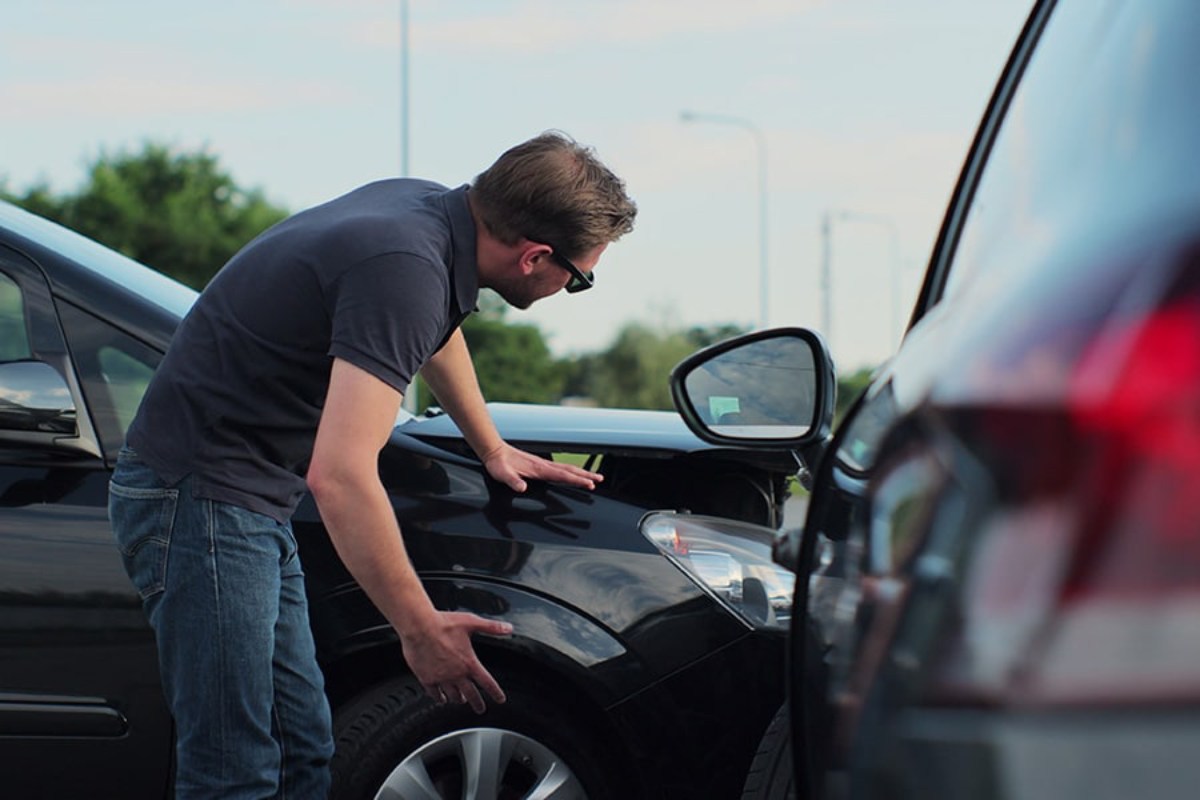
The financial consequences can be more serious than the initial ticket. If you are wondering what happens if you cause an accident without insurance, the driver may be responsible for the other person’s vehicle damage, medical expenses, lost wages, rental costs, and other legally recoverable damages.
The injured party may file a claim or lawsuit. If a court enters a judgment, collection methods may be available under state law. The driver may also lose access to certain protections that an insurance policy would have provided, including insurer defense, subject to the policy terms.
Even when the uninsured driver did not cause the crash, driving without required coverage can still create separate penalties. California, for example, states that a driver’s privilege may be suspended for up to four years if the driver is involved in a collision without proper insurance, regardless of fault.
Is it illegal to let car insurance lapse if the car is just parked?
Possibly. A vehicle that remains registered may still be subject to continuous insurance or financial responsibility requirements, even if it is temporarily unused. Some states allow a driver to avoid a lapse by surrendering the license plate or registration before canceling insurance; others have different procedures.
Do not cancel a policy simply because the car is parked. First, ask the state DMV or insurer whether you must maintain coverage, suspend registration, store the vehicle under a specific status, or file another form. Florida, for example, instructs vehicle owners to surrender the license plate before canceling insurance in circumstances covered by its rules.
How can you avoid driving uninsured?
Before driving a newly purchased, borrowed, or previously uninsured vehicle, complete these steps:
- Check your state’s official insurance and registration requirements.
- Ask an insurer or licensed agent for a quote using the correct driver, address, vehicle, mileage, and usage information.
- Compare the same liability limits and deductibles across providers.
- Confirm whether collision and comprehensive coverage are required by a lender.
- Verify the policy’s effective date and time.
- Obtain an insurance card, binder, or other accepted proof of coverage.
- Ask what to do if you sell, replace, store, or stop driving the vehicle.
- Keep proof of insurance available when driving.
It is illegal to drive without required car insurance because states want drivers to demonstrate financial responsibility before they create risks for other road users. Liability coverage helps cover injuries and property damage, while the law imposes penalties when drivers operate vehicles without the required protection. The exact obligation is state-specific. Check your DMV or insurance department, confirm the policy’s effective date, and keep proof of coverage before driving.

RELATED AUTO INSURANCE GUIDES
Safety & Driving
How Does a Learner’s Permit Work? Rules and Next Steps
Safety & Driving
Thunderstorm Safety Tips at Home, Outdoors and in a Car
Auto Insurance
ACV vs Replacement Cost: How Insurance Payouts Differ
Safety & Driving
Black Ice on the Roads: How to spot it and handle a skid