

Indiana drivers can choose from national insurers, regional carriers, local agents, and specialty providers. The best company for one driver may not be the best for another because premiums and eligibility depend on the driver, vehicle, address, coverage limits, deductible, driving history, and claims record.
This guide by Auto Insure News compares standard auto insurance companies in Indiana with specialty providers for collector vehicles. It also explains Indiana coverage requirements, published rate benchmarks, how to compare companies fairly, and what to check before requesting a quote. The tables are reference points, not personalized offers.
Auto insurance companies in Indiana at a glance
The following companies appear in published Indiana comparison tables or operate in the Indiana market.
| Company | General market position | What to compare |
| Auto-Owners | Regional/national carrier distributed through agents | Agent availability, claims service, coverage options, and rate |
| Allstate | National carrier with local agent and direct channels | Discounts, bundling, coverage options, and claims service |
| American Family | Regional/national carrier | Eligibility, discounts, coverage, and premium |
| Encompass | Carrier available in selected markets | Availability, agent support, and underwriting requirements |
| Farmers | National carrier | Endorsements, discounts, claims process, and quoted price |
| GEICO | National direct and agent-supported carrier | Online service, coverage limits, discounts, and price |
| Indiana Farmers Mutual | Indiana-focused regional carrier | Local availability, agent service, coverage, and premium |
| Progressive | National carrier with direct and agent channels | Coverage choices, Snapshot, discounts, and price |
| SafeAuto | Carrier serving selected driver profiles | Eligibility, payment terms, coverage limits, and restrictions |
| State Farm | National carrier with a large local agent network | Agent support, bundling, discounts, and claims service |
| Travelers | National carrier | Coverage flexibility, discounts, financial strength, and price |
| USAA | Membership-restricted carrier | Eligibility, military-family service, coverage, and price |
| Westfield | Regional carrier with agent distribution | Indiana availability, agent service, coverage, and premium |
The Indiana Department of Insurance does not recommend specific companies. It explains that consumers may work with local or non-local agents. A captive agent generally represents one company, while an independent agent may represent several. The department encourages consumers to speak with more than one agent and more than one company while researching auto insurance.
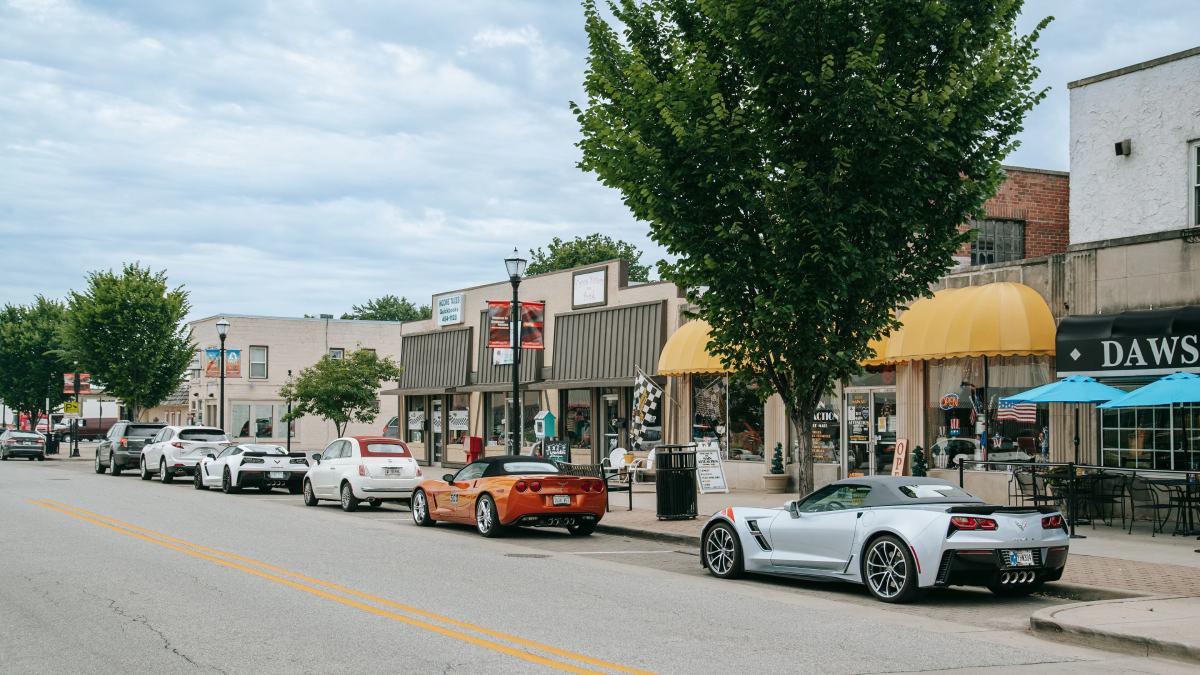
Specialty classic-car insurance companies serving Indiana
A driver looking for classic auto insurance in Gary, Indiana, or elsewhere in the state may need a specialty collector-car policy instead of a standard personal auto policy. Collector policies may address agreed value, limited mileage, secure storage, restoration work, spare parts, club events, and pleasure use differently from ordinary daily-driver insurance. Before comparing specialty policies, confirm how old a car must be to qualify as an antique in Indiana and then review each insurer’s separate eligibility rules.
Read our guide to classic auto insurance in Gary, Indiana for a closer look at agreed value, historic registration, storage, eligibility, and collector-car questions.
The following providers are options to research, not a ranking. Confirm Indiana availability, licensing, eligibility, policy form, and valuation method before relying on any description.
| Specialty provider | May be relevant for | Questions to ask |
| Hagerty | Collector vehicles, show cars, restorations, and valuation support | Is the vehicle eligible, and how are agreed value, mileage, storage, and event use handled? |
| Grundy | Collector vehicles used for pleasure and collector activities | Is daily use excluded, and does the household need another regular-use vehicle? |
| American Collectors Insurance | Restored vehicles, project cars, and collector-car coverage | Are restoration work, spare parts, inflation protection, and mileage options included? |
| J.C. Taylor | Antique, classic, and low-mileage collector vehicles | What age, condition, storage, mileage, and event-use rules apply? |
| Heacock | Specialty collector-car programs or agency options | Which carrier underwrites the policy, and is the valuation the agreed value? |
| Safeco or another major-carrier program | Possible bundling or mainstream-carrier convenience | Is the policy a true collector policy or standard actual-cash-value coverage? |
| State Farm, Progressive, or another major carrier | Owners who prefer one carrier for several policies | Does the specific product cover collector use, restoration, and agreed value? |
Do not assume that a company’s ordinary auto policy provides classic-car coverage. Ask whether the policy pays agreed value, uses stated value auto insurance, or pays actual cash value after a covered total loss. Also confirm mileage restrictions, storage requirements, daily-driver requirements, modifications, restoration coverage, spare parts, and roadside assistance.
Indiana auto insurance requirements
Indiana drivers must maintain financial responsibility when operating a vehicle. A standard auto policy commonly includes bodily injury liability and property damage liability. Collision, comprehensive, medical payments, rental reimbursement, and roadside assistance may be added depending on the policy. Insurance is only one part of driving law, so it also helps to understand the Indiana rules of the road.
Indiana’s commonly cited minimum liability limits are 25/50/25:
| Coverage limit | General meaning |
| $25,000 bodily injury per person | Maximum payable for bodily injury to one person, subject to policy terms |
| $50,000 bodily injury per accident | Maximum payable for bodily injury to two or more people in one accident, subject to policy terms |
| $25,000 property damage per accident | Maximum payable for damage to another person’s property |
Traffic violations can also affect a driver’s record and future premiums. Indiana drivers can review the Indiana distracted driving law to understand the state’s hands-free rule, possible penalties, and license-point consequences.
Minimum limits may satisfy the law but may not fully protect a household’s income, savings, or property after a serious accident. A lender may also require comprehensive and collision coverage even when those coverages are not required by Indiana law. For state-specific requirements and consumer information, review the Indiana Department of Insurance auto insurance guidance.
Published minimum-coverage rates by company in Indiana
The following table reproduces a published Indiana comparison from The Zebra. It shows average six-month premiums and simple monthly equivalents for the source profile.
| Company | Average six-month premium | Approximate monthly equivalent |
| GEICO | $194 | $32 |
| Progressive | $194 | $32 |
| USAA | $201 | $34 |
| Travelers | $210 | $35 |
| Auto-Owners | $238 | $40 |
| Encompass | $256 | $43 |
| Indiana Farmers Mutual | $290 | $48 |
| SafeAuto | $295 | $49 |
| State Farm | $343 | $57 |
| Allstate | $441 | $74 |
| American Family | $474 | $79 |
| Farmers | $499 | $83 |
Published full-coverage rates by company in Indiana
The same Zebra comparison reports the following full-coverage benchmarks:
| Company | Average six-month premium | Approximate monthly equivalent |
| Travelers | $583 | $97 |
| GEICO | $601 | $100 |
| USAA | $627 | $105 |
| Progressive | $668 | $111 |
| Encompass | $767 | $128 |
| State Farm | $1,044 | $174 |
| Indiana Farmers Mutual | $1,091 | $182 |
| Farmers | $1,172 | $195 |
| SafeAuto | $1,181 | $197 |
| American Family | $1,221 | $204 |
| Allstate | $1,360 | $227 |
“Full coverage” is not a standardized policy name. It commonly means liability coverage combined with collision and comprehensive coverage. The actual policy may include different limits, deductibles, exclusions, and endorsements.
A liability-only rate and a full-coverage rate should not be compared as if they provide the same protection. Before choosing the lower premium, compare the vehicle’s value, lender requirements, deductible, ability to pay for repairs, and risk exposure.
Which auto insurance company is the cheapest in Indiana?
There is no company that is the cheapest for every Indiana driver. In the published table used above, GEICO and Progressive have the lowest listed minimum-coverage benchmark, while Travelers has the lowest listed full-coverage benchmark. Those results apply to that source profile and do not guarantee a lower quote for a specific household.
The Indiana Department of Insurance lists age, sex, marital status, driving record, vehicle use, residence, policy limits, deductibles, type of car, driver training, claims history, and credit scores among factors companies may use when setting auto rates. To see how those inputs shape a price, learn what determines your car insurance rate. The company with the lowest average for one profile may be more expensive for another.

How to compare Indiana insurance companies besides price
Coverage limits and exclusions
Request the same bodily injury, property damage, uninsured-motorist, medical-payments, collision, and comprehensive coverage from each company. Read exclusions for rideshare, business use, permissive use, custom equipment, rental vehicles, household drivers, and recreational or collector use.
Deductibles
A lower premium may result from a higher collision or comprehensive deductible. Choose a deductible that the household could pay after a covered loss. The cheapest monthly quote may be expensive if the deductible is unaffordable.
Claims service
Ask how claims are reported, whether repairs are managed through a network, how rental benefits work, and whether original-equipment parts can be requested. Complaint information and financial-strength ratings can provide context, but neither guarantees a particular claim outcome.
Agent and service model
A direct carrier may offer online quoting and centralized service. A captive agent may have detailed knowledge of one company. An independent agent may compare several carriers, but the available markets depend on the agent’s appointments and the driver’s profile.

Discounts
Ask about good-driver, defensive-driving, driver-training, good-student, multi-vehicle, multi-policy, low-mileage, anti-theft, telematics, and paid-in-full discounts. Confirm the eligibility rules and whether the discount changes data sharing, coverage, or policy terms.
Licensing and availability
Verify that the insurer and agent are authorized to sell the relevant coverage in Indiana. If you need classic-car insurance, verify that the company is licensed for the specialty product; a company licensed for standard auto insurance does not automatically mean its collector-car program is right for your vehicle.
Local agent or direct insurer?
Neither option is always better. Direct insurers may be convenient for online quotes and policy service. Local agents may help explain limits, identify endorsements, and coordinate changes. Independent agents may provide access to several carriers, while captive agents may offer deeper knowledge of one company’s products.
Before choosing an agent, ask which companies they represent, whether they are licensed in Indiana, how they are compensated, and whether they can provide written comparisons with identical limits and deductibles. Keep the quote, application information, and declarations page for your records.
How to compare quotes in Indiana
Use consistent information for every quote. If you are unsure how to get an insurance quote on a car, start by gathering the same driver, vehicle, address, and coverage details for each insurer:
| Quote variable | What to keep consistent |
| Driver | Age, license status, driving record, household drivers, and prior insurance |
| Address | Correct Indiana residence and vehicle garaging ZIP code |
| Vehicle | Year, make, model, trim, ownership, mileage, and use |
| Liability | Same bodily injury and property-damage limits |
| Optional coverage | Same UM/UIM, medical payments, rental, roadside, collision, and comprehensive selections |
| Deductibles | Same collision and comprehensive deductibles |
| Discounts | Confirm that each discount is actually available |
| Effective date | Same intended policy start date |
Do not use an inaccurate address, omit a regular household driver, misstate mileage, or describe personal use as occasional use to obtain a lower estimate. Incorrect information can create underwriting or claim problems.
What if a company declines your application?
A declined application does not mean you have no options. Ask whether the issue relates to the driver, vehicle, address, coverage, or underwriting rules. You may also ask an Indiana-licensed independent agent about other available markets.
The Indiana Department of Insurance states that drivers who have difficulty obtaining insurance may apply to the Indiana Auto Insurance Plan through an Indiana agent. The plan may have assignment rules and is not necessarily the least expensive option, so compare ordinary markets first when possible.

RELATED AUTO INSURANCE GUIDES
Safety & Driving
Black Ice on the Roads: How to spot it and handle a skid
Auto Insurance
Car Insurance Umbrella Policy: Coverage, Cost and Limits
Auto Insurance
Michigan Car Insurance: Rates, Companies & PIP Coverage
Safety & Driving
Texting and driving: risks, statistics, laws and prevention