

Indiana’s hands-free law makes one rule clear: drivers generally may not hold or manually use a phone while operating a moving vehicle. A quick glance at a notification can lead to a citation, points, and a higher insurance bill. This guide by Auto Insure News explains Indiana’s distracted driving law, its exceptions and penalties, and how a ticket or crash can affect a driving record and auto insurance.
How the Indiana hands-free driving law works
Indiana’s hands-free law took effect on July 1, 2020. It prohibits drivers from holding a mobile device while operating a moving motor vehicle. The rule applies to smartphones, tablets, and other covered telecommunications devices. The law is found in Indiana Code 9-21-8-59. It replaced the state’s narrower approach to texting while driving with a rule that is easier to apply during a traffic stop. For the state’s current summary, read Indiana’s official hands-free guidance.
A driver does not have to be writing a text message to violate the law. Holding the phone to make a call, check a notification, or operate an app may still lead to a citation while the vehicle is moving.
Drivers may use hands-free or voice-operated technology. A phone can be connected to the vehicle via Bluetooth, a speakerphone, or another hands-free device. Indiana also allows a covered device to be held or used when calling 911 to report a genuine emergency. The practical rule is simple. If the vehicle is moving, the phone should not be in the driver’s hand. These requirements are part of the broader Indiana rules of the road.
What the law prohibits
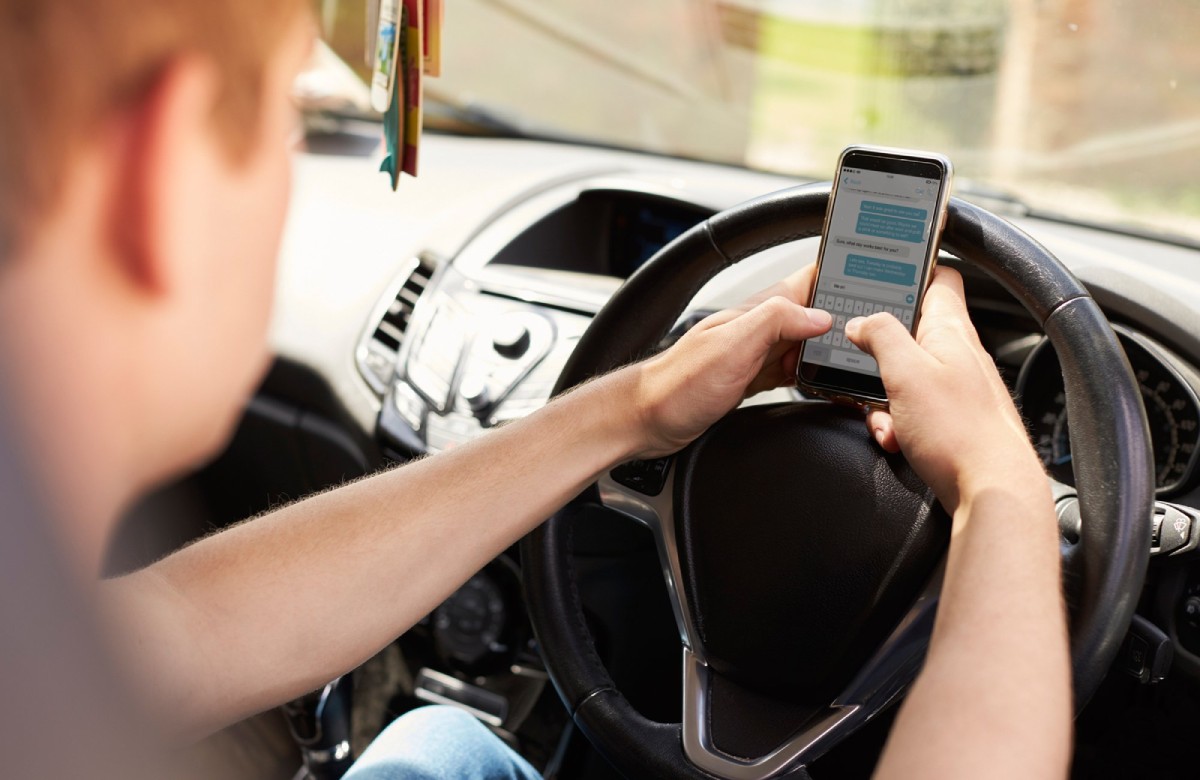
The Indiana distracted driving law focuses on holding or manually operating a covered device while driving.
Activities that may violate the law include:
- Holding a phone during a call
- Typing or reading a text message
- Checking email
- Browsing social media
- Searching for a contact
- Dialing a telephone number by hand
- Holding a phone to watch a video
- Manually entering an address into a navigation app
- Taking photographs or recording video
- Changing music by operating a handheld phone
- Holding a tablet while driving
The law applies even when the driver believes the task will only take a few seconds. Looking away from the road can prevent the driver from noticing a stopped vehicle, pedestrian, cyclist or changing traffic signal.
Indiana’s official hands-free guidance states that a driver cannot hold a phone to dial, answer, or end a call while the vehicle is moving. Voice commands should be used instead. If hands-free operation is unavailable, the driver should leave the roadway and stop in a safe location before handling the phone.
What drivers are allowed to do
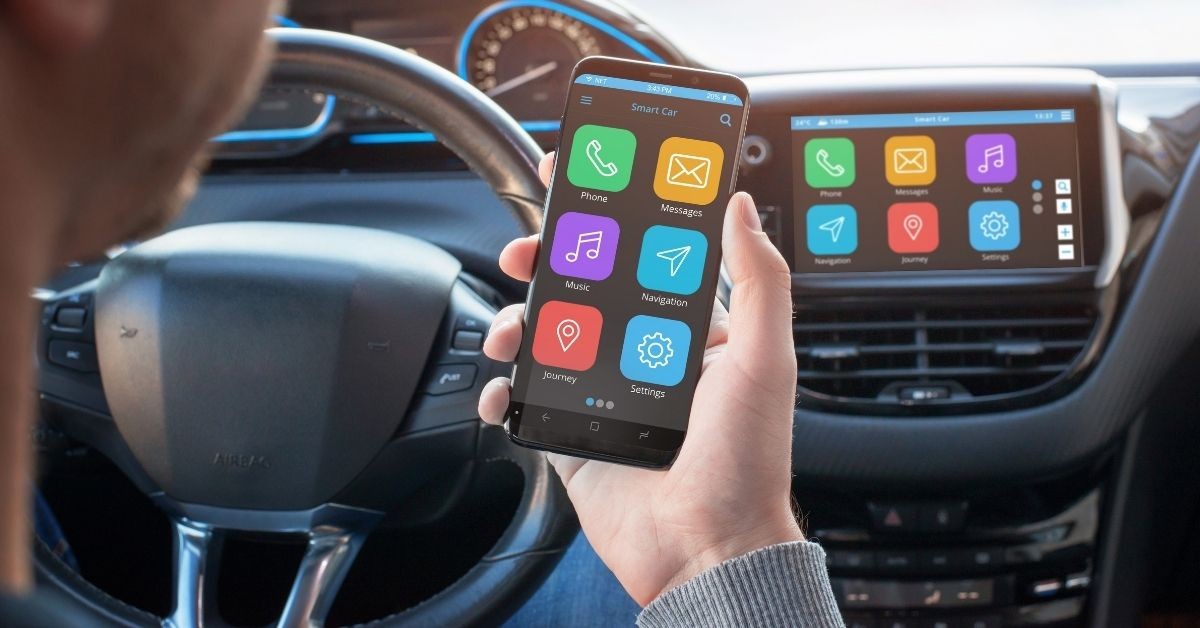
Indiana does not ban every use of a mobile device inside a vehicle. The law allows drivers to use hands-free and voice-operated technology.
Permitted activities may include:
- Making a call through Bluetooth
- Answering a call with a steering wheel control
- Using voice commands to dial a number
- Listening to spoken navigation directions
- Playing music or podcasts without holding the phone
- Using a properly mounted phone for navigation
- Calling 911 during a genuine emergency
A phone mount can make navigation easier, but it does not give the driver permission to type or repeatedly touch the screen while the car is moving. Set the destination before starting the trip or use voice controls when available.
Indiana’s official guidance states that drivers may use Google Maps, Waze, and similar navigation tools, provided the device is used hands-free while the vehicle is moving. Hands-free use is legal, but it can still be distracting. A long or emotional conversation may take the driver’s attention away from traffic, even when both hands remain on the steering wheel.
Which devices are covered?
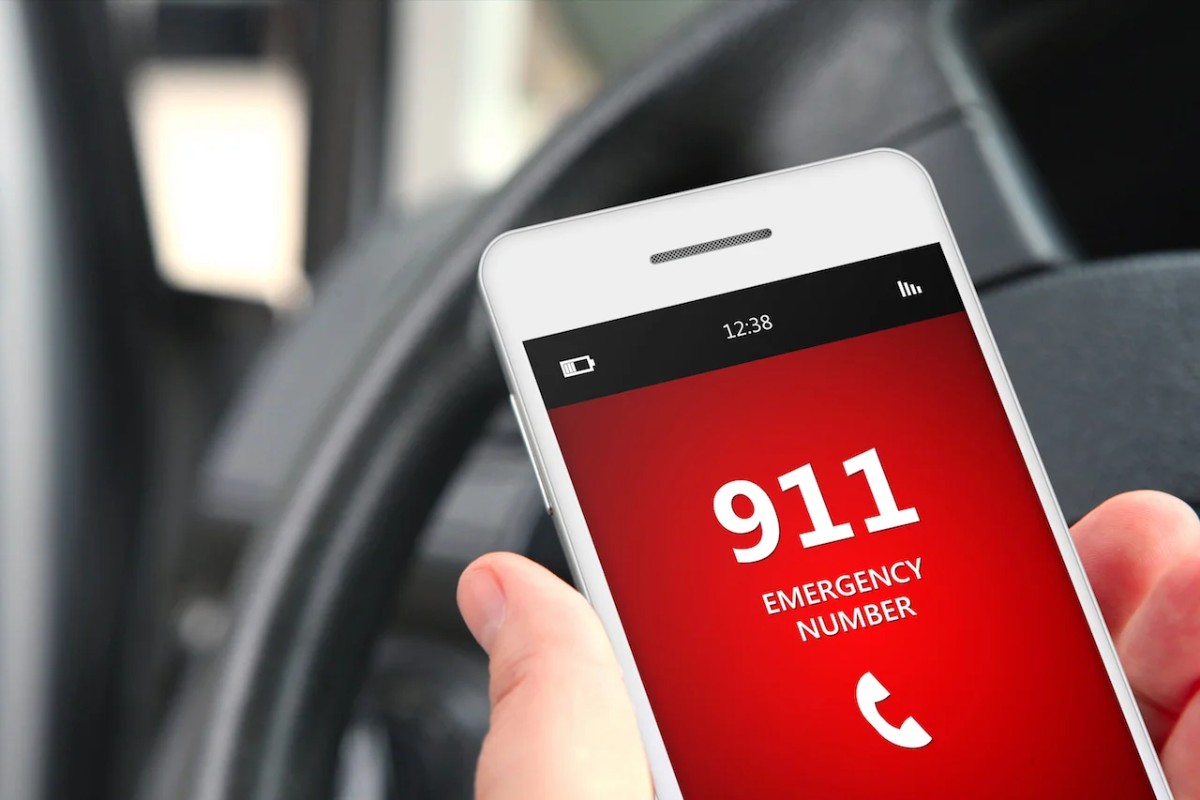
The law is not limited to traditional cellphones. Indiana’s hands-free guidance says it applies to electronic communication devices such as:
- Smartphones
- Tablets
- Smartwatches
- Other handheld communication devices
A smartwatch may be used like a normal watch to check the time. Using it to read messages or operate communication features while driving may create a distraction and could violate the law. The state’s official guidance also identifies limited exceptions for amateur radio, two-way radio, and citizens’ band radio. These devices must still be operated safely.
Built-in dashboard controls are not generally treated the same as a handheld phone under the hands-free statute. However, a driver can still be stopped or cited for other traffic violations if operating the dashboard system results in unsafe driving.
Does the law apply at a red light?
The wording of Indiana Code 9-21-8-59 refers to operating a moving motor vehicle. Indiana’s official public guidance repeatedly tells drivers not to hold a device while the vehicle is moving. A driver should not rely on a brief stop in traffic as an opportunity to use a phone. A car waiting at a red light remains part of active traffic, and the driver needs to watch the signal, pedestrians, and surrounding vehicles.
The safer option is to wait until the vehicle is parked away from moving traffic. If a message, call, or navigation change cannot wait, pull into a parking lot, rest area, gas station, or another legal parking space.
Do not stop on the shoulder of an interstate solely to use a phone. Indiana’s guidance notes that interstate shoulder parking is limited to emergencies. Drivers who need to handle a device should leave the road completely and find a safe place to stop.
What qualifies as an emergency?
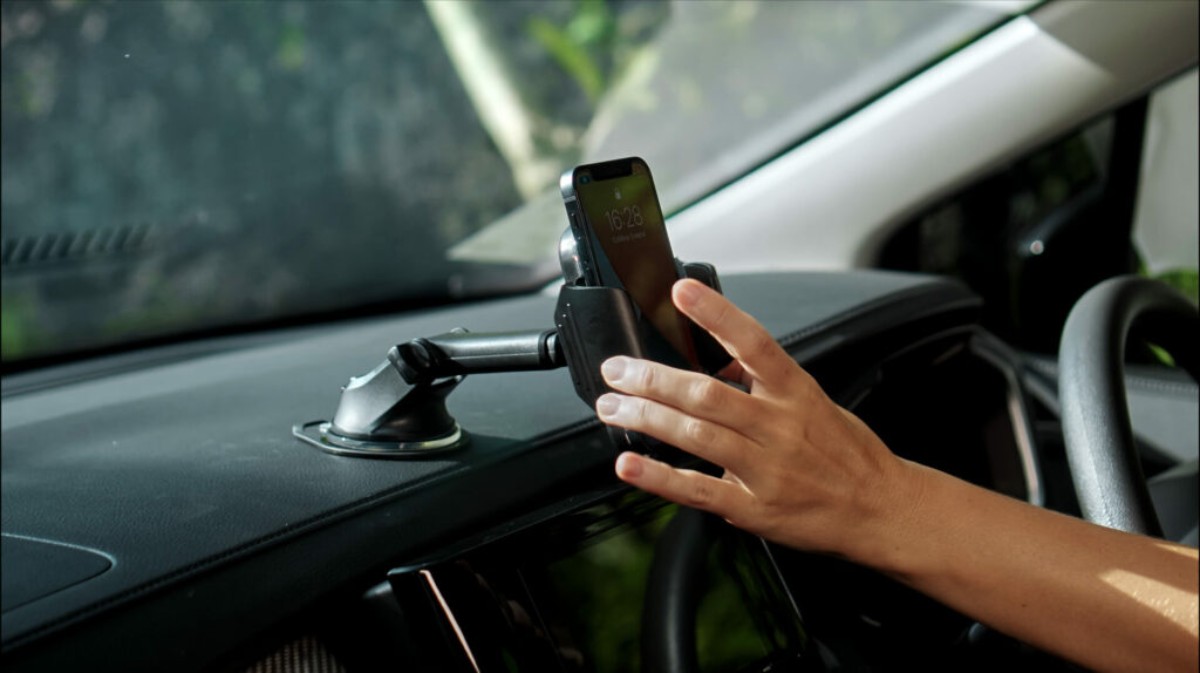
Indiana permits a driver to hold or use a telecommunications device to call 911 and report a genuine emergency.
Examples may include:
- A serious traffic crash
- A fire
- A medical emergency
- A crime in progress
- A dangerous driver is creating an immediate risk
- A person who appears to be in immediate danger
- A major road hazard that threatens traffic
The exception is specifically connected to contacting 911. It should not be treated as permission to call a friend, employer, roadside assistance provider, or family member while holding the phone in a moving vehicle. When possible, a passenger should make the call. If the driver is alone and can safely leave the roadway, stopping before calling is still the better option.
Penalties for violating the law
A violation of Indiana’s hands-free law is a Class C infraction. A driver may face a fine of up to $500 and receive points on their driving record. A handheld device violation currently carries four points, according to the Indiana Driver’s Manual. Indiana BMV points remain active for two years from the conviction date.
The amount a driver pays may exceed the stated fine. Court costs and other fees may apply. The final amount depends on the citation and the court handling the case. The penalties become more concerning when the driver already has points on their record. Multiple moving violations may lead to additional BMV requirements.

How points can affect an Indiana driver
Indiana assigns points to moving violations based on the seriousness of the offense. Points remain active for two years from the date of conviction. A driver convicted of two or more traffic offenses within a 12-month period may be required to complete a BMV-approved Driver Safety Program. Drivers younger than 21 are required to complete the program after two or more traffic convictions within that period.
The BMV sends notice when a course is required. Failure to complete it within the stated period may result in suspension of driving privileges. Any Indiana driver may voluntarily complete an approved Driver Safety Program and receive a four-point credit. The credit can generally be applied once every three years. Completing the course does not remove the citation or conviction from the driver’s history.
Drivers should use only a provider approved by the Indiana BMV. A course from an unapproved provider may not qualify for the point credit.
Can a distracted driving ticket affect insurance?
A distracted driving conviction may affect auto insurance because it becomes part of the driver’s record. Insurers may review moving violations when setting a rate or deciding whether to renew a policy. The result can vary among Indiana auto insurance companies.
The effect varies between companies. To understand the rating factors behind a renewal price, see how insurers determine car insurance rates. It may depend on:
- The driver’s previous record
- Other recent violations
- Whether a crash occurred
- The seriousness of the incident
- The type of policy
- The insurer’s rating rules
- How long the conviction remains visible
A single ticket does not produce the same insurance result for every driver. Some companies may increase the rate at renewal, while others may treat the violation differently. Do not assume that paying the fine prevents the insurer from seeing the violation. Payment usually resolves the citation as directed by the court, but the resulting conviction may still appear on the driving record.
Drivers who receive a higher renewal price can review how to get quotes for car insurance before comparing offers from other insurers. Each quote should use the same coverage limits and deductibles so the comparison is fair. For broader consumer guidance, Auto Insure News covers related insurance and driving questions.
What happens when distracted driving causes a crash?
A traffic citation and a civil insurance claim are separate matters. After a crash, drivers may need to understand how to file an auto insurance claim and how citations are handled.
When distracted driving contributes to a crash, police and insurance companies may review:
- Statements from the drivers
- Witness accounts
- Vehicle damage
- Traffic camera footage
- Dash camera recordings
- Photographs and video
- The police report
- Phone records obtained through lawful procedures
- Evidence from the crash scene
A violation of the hands-free law may become relevant when the parties dispute responsibility. However, receiving a citation does not automatically resolve every issue in an insurance claim or lawsuit. Fault can be more complicated in a three-car collision, where more than one driver may be involved.
Indiana law limits what a police officer may do with a device solely for the purpose of investigating a hands-free violation. Under Indiana Code 9-21-8-59, an officer generally may not confiscate or download information from the device without consent unless there is probable cause connected to a crime, a valid search warrant, or another legal basis.
A person involved in a serious crash should preserve photographs, witness information, medical records, and communications from insurers. Legal advice may be appropriate when injuries, disputed fault, or significant damage are involved.
Other forms of distracted driving
Indiana’s hands-free law focuses on telecommunications devices, but phones are not the only source of distraction.
The Indiana Criminal Justice Institute defines distracted driving as any activity that takes attention away from driving. Examples include eating, drinking, talking to passengers, and adjusting a stereo, entertainment system, or navigation system. Driver distraction is commonly divided into three types.
Visual distraction
A visual distraction takes the driver’s eyes away from the road.
Examples include:
- Reading a message
- Looking at a map
- Watching a passenger
- Searching for an object
- Looking at a crash beside the road
Manual distraction
A manual distraction takes one or both hands off the steering wheel.
Examples include:
- Holding a phone
- Eating
- Reaching into the back seat
- Adjusting loose cargo
- Searching inside a bag
Mental distraction
A mental distraction takes the driver’s attention away from traffic.
Examples include:
- An emotional phone conversation
- An argument with a passenger
- Thinking about work
- Driving while extremely tired
- Focusing on something outside the vehicle
An activity can involve more than one type of distraction. Texting may simultaneously take the driver’s eyes, hands, and attention away from driving. Not every distraction creates a violation of the hands-free statute. However, unsafe behavior may lead to a citation under another traffic law or become evidence of fault after a crash.

How to use a phone legally and safely
The easiest way to avoid a violation is to prepare the phone before the vehicle starts moving.
Before driving:
- Enter the destination into the navigation app.
- Place the phone in a secure mount.
- Connect the phone to Bluetooth.
- Select music or a podcast.
- Turn on voice controls.
- Enable a driving mode that limits notifications.
- Tell passengers that you will not answer messages while driving.
While driving:
- Keep the phone out of your hands.
- Use steering wheel controls or voice commands.
- Let a passenger handle messages and navigation changes.
- Ignore notifications that can wait.
- Leave the road completely before handling the device.
- Use 911 only for a genuine emergency.
If the phone falls to the floor, do not reach for it while driving. Wait until the car is parked safely. A phone mount should be positioned where it does not block the driver’s view. Navigation instructions should be easy to see without requiring the driver to look away from traffic for long periods.
What to do after receiving a citation
Read the citation carefully and note the court, deadline, and instructions. Do not ignore it.
A driver may need to:
- Pay the citation by the stated deadline
- Appear in court
- Contact the court to confirm available options
- Review the current driving record
- Complete a Driver Safety Program if ordered
- Notify an employer if driving is part of the job
- Speak with an attorney before contesting the citation
Paying a ticket may be treated as an acceptance of responsibility. A driver who believes the citation was issued incorrectly should learn about the available legal options before making payment. Keep copies of the citation, payment confirmation, court notices, and course records. Check the Indiana BMV record after the case is resolved to confirm that the information is accurate.
Drivers who also insure an antique or collector vehicle should ask whether a recent conviction affects eligibility or pricing for classic car insurance options in Gary, Indiana. Specialty insurers may apply their own driver-record standards.
The Indiana distracted driving law prohibits drivers from holding a covered mobile device while operating a moving vehicle. Hands-free and voice-operated use is allowed, and a device may be held to call 911 during a genuine emergency.
A violation can lead to a Class C infraction, a fine of up to $500, and four points on the driver’s record. Those points remain active for two years from the conviction date. Drivers should set navigation, music, and communication controls before beginning a trip. If a phone must be handled, the safest approach is to leave traffic and park in a legal location first.

RELATED AUTO INSURANCE GUIDES
Auto Insurance
Is it bad to switch insurance companies? what to check before changing
Auto Insurance
Car Insurance for Roommates: Cost and Quotes
Safety & Driving
How to protect a classic car from theft in Gary Indiana
Safety & Driving
Indiana distracted driving law: rules, fines and license points