

Classic car winter storage involves more than parking the vehicle in a garage and covering it. A car that sits unused for several months can develop stale fuel, a weak battery, flat spots on the tires, corrosion, or rodent damage. At Auto Insure News, we recommend treating winter storage as a preventive maintenance routine rather than simply leaving the car under a cover. The main jobs are to choose a dry location, clean the vehicle, check its fluids, protect the fuel system, and manage the battery.
Storage requirements can vary between vehicles. An original carbureted classic may need different care from a later fuel-injected model. Follow the owner’s manual for model-specific storage instructions.
Classic car winter storage checklist
Complete these jobs before putting the car away:
- Choose a dry and secure storage location.
- Confirm that the vehicle remains insured.
- Wash and completely dry the exterior.
- Clean the interior and remove all food.
- Change old engine oil and check other fluids.
- Fill the fuel tank and add a compatible stabilizer.
- Maintain, disconnect, or remove the battery.
- Check and adjust the tire pressure.
- Leave the parking brake off.
- Block possible rodent entry points.
- Fit a clean and breathable car cover.
- Record anything that must be removed before starting the car.
Owners who are unsure whether their vehicle qualifies for collector coverage can first review when a car becomes a classic for insurance.
Choose the right storage location
Indoor storage is the best option for most classic cars. Look for a clean building with a solid floor, good ventilation, and no signs of water leaks. A dry concrete floor is preferable to soil or gravel. Moisture can rise from the ground and remain around the underside of the car.
If a solid floor is unavailable, place a suitable moisture barrier beneath the vehicle. Hagerty and AAA recommend using a ground barrier when a car must be stored on dirt or gravel. A heated garage is helpful but not essential. Dry and stable conditions matter more than high temperatures. Repeated changes between warm and cold conditions can cause condensation.
When comparing professional storage facilities, ask:
- Is the building dry and weatherproof?
- How is humidity controlled?
- What security and fire protection are provided?
- How does the facility control rodents?
- Can you inspect the car during storage?
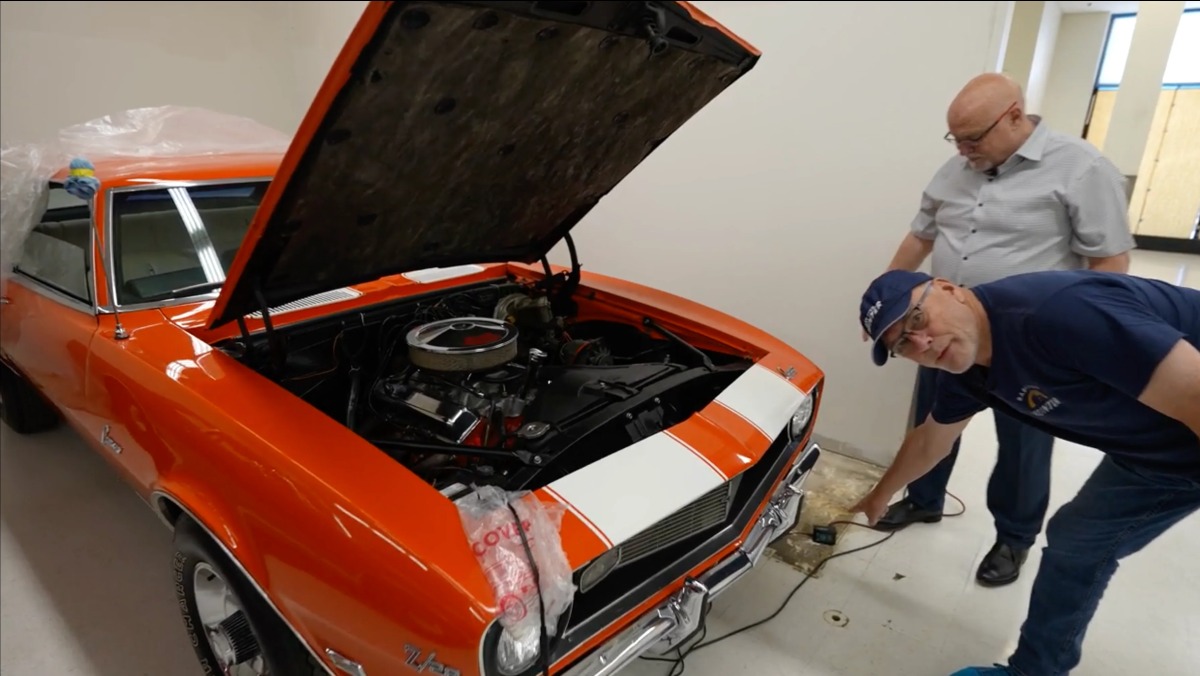
- Are battery maintainers permitted?
- Is the facility insured for damage to stored vehicles?
Avoid parking beneath leaking pipes, overloaded shelves, or areas where snow and rain may enter. If outdoor storage is unavoidable, review whether snow damage is covered by car insurance before winter.

Review your insurance
A stored car can still be damaged by fire, theft, vandalism, severe weather, or falling objects. These are the types of non-collision losses commonly associated with comprehensive car insurance. Do not cancel the entire policy simply because the vehicle will be off the road.
Contact your insurer and confirm what coverage remains active during storage. Before reducing coverage, review the question “can I take insurance off my car if I’m not driving it?” and confirm the registration requirements in your state. Tell the provider if the car will be moved to another address or a professional facility. Coverage can depend on where the car is kept, how secure the building is, and whether the vehicle is financed.
Collector-car owners should also understand how stated value car insurance differs from agreed-value coverage because the valuation method can affect a total-loss payment.
Insurance rules can also vary by location. Owners in Northwest Indiana can read this guide to classic auto insurance in Gary, Indiana, for more information on local collector-car coverage.
Ask your insurer:
- Does the policy cover theft, fire, and weather damage?
- Do I need to report the storage address?
- Are there security requirements for the garage?
- Can driving-related coverage be adjusted during winter?
- Does a lender require continuous coverage?
Keep written confirmation of any policy changes with the vehicle’s records.
Wash and dry the car
Never store a classic car while it is dirty or wet.
Bird droppings, insects, road grime, and salt can remain on the paint and metalwork for months. Hagerty recommends cleaning the body, wheel arches, and underside, then drying areas where water may collect.
Wash the car on a dry day and pay attention to:
- Wheel arches
- Lower body panels
- Door and trunk openings
- Chrome trim
- Body seams
- Rubber seals
- Wheels and tires
- The underside of the vehicle
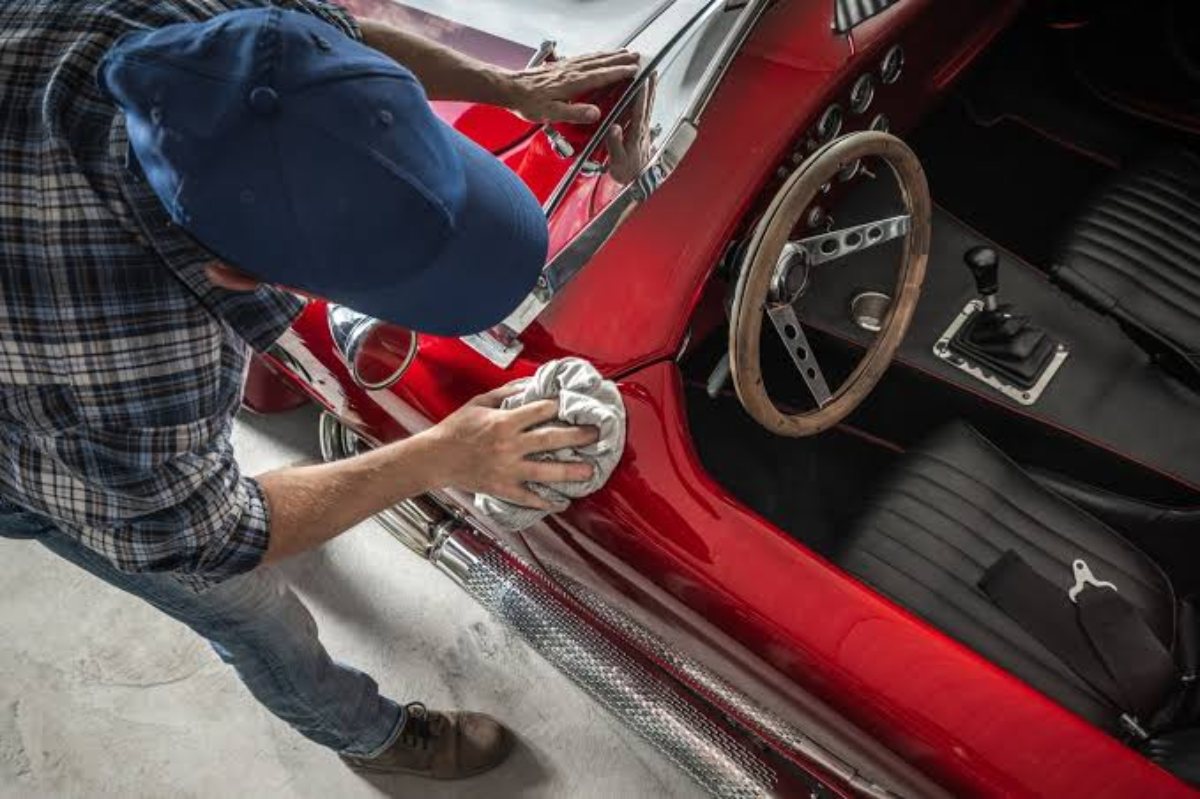
If the car has been driven on salted roads, rinse the wheel arches and underside carefully. Salt left on metal can speed up corrosion when moisture is present. Allow the vehicle to dry completely. Remove trapped water from seals, trim and narrow openings with a microfiber towel or gentle airflow. Apply a suitable wax once the paint is clean and dry. Wax adds a protective layer, but it should not be applied over dirt.
Prepare the interior
Vacuum the seats, carpets, trunk, and areas beneath the seats. Remove food, wrappers, damp towels, and anything that could freeze, leak, or attract rodents. Use cleaning products intended for the vehicle’s materials. Leather, vinyl, cloth, and wood trim require different care. Test unfamiliar products in a hidden area first.
If the car has a convertible roof, leave it raised unless the manufacturer recommends another position. Storing a soft top folded for several months can create creases and trap moisture. Moisture-absorbing packs may help in a damp climate. Place them in a tray to prevent leaks or stains on the carpet, and check them during storage.
Check the oil and other fluids
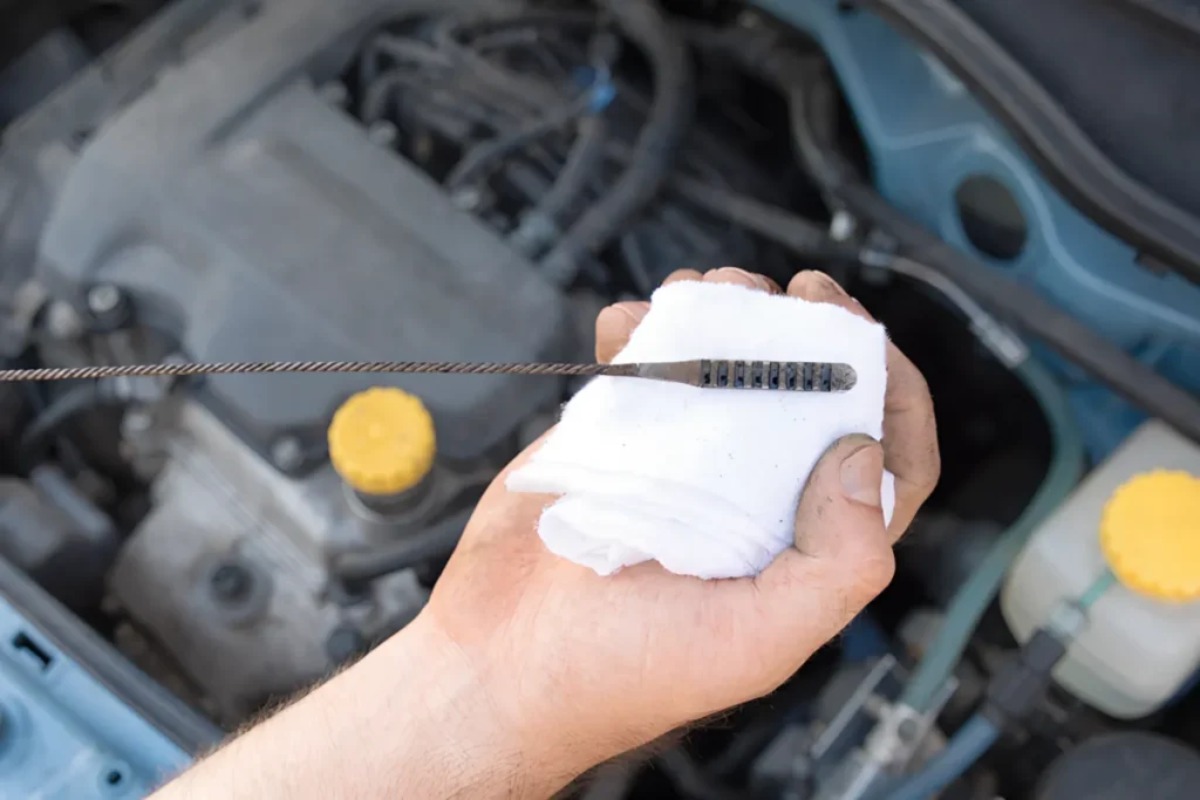
If the engine oil is old or an oil change is due soon, replace the oil and filter before storage. Used oil can contain combustion by-products and other contaminants. AAA advises changing the oil and filter if they have not been serviced recently.
Oil that was changed recently does not normally need to be replaced again solely because winter has arrived. Use the vehicle’s mileage, service history, and maintenance schedule to make the decision.
Check these fluids:
- Engine oil
- Coolant or antifreeze
- Brake fluid
- Transmission fluid
- Power steering fluid, if fitted
- Windshield washer fluid
The coolant must provide enough freeze protection for the lowest expected temperature. Do not judge its condition by color alone. A workshop can test its freezing point if you are unsure. Inspect visible hoses, clamps, and seals for leaks. Repair small leaks before storage rather than allowing fluid to drip for several months. Older vehicles may also have model-specific lubrication points. Consult the owner’s manual or workshop manual before applying grease or lubricant.
Protect the fuel system
For normal seasonal storage, many automotive sources recommend filling the fuel tank and adding a compatible fuel stabilizer. A full tank leaves less room for moist air, while a stabilizer slows fuel deterioration. Follow the dosage on the stabilizer container. Using extra product does not provide better protection.
After adding the stabilizer, run the engine for the period recommended by the product manufacturer. This allows treated fuel to reach the lines, the pump, the carburetor, or the injectors. Hagerty recommends circulating stabilized fuel through the system rather than treating only the fuel in the tank.
Some specialists use different methods for older fuel systems or very long storage periods. Hagerty UK notes that opinions differ on whether certain vehicles should be stored with a full or nearly empty tank. For a rare car, an unusual fuel system, or storage lasting longer than one season, check the owner’s manual or ask a mechanic familiar with the model.
Never drain gasoline in an enclosed area or near a flame, heater, electrical spark, or other source of ignition.
Manage the battery
A battery slowly loses charge while the car is parked. Electrical equipment that remains active can increase the loss. A compatible smart battery maintainer is often the most convenient option. It monitors the battery and supplies power as needed, rather than charging continuously at a high rate.
Before connecting one, confirm that:
- It supports the correct voltage.
- It is suitable for the battery type.
- The cables are undamaged.
- The storage facility permits its use.
- The electrical outlet is reliable.
If electricity is unavailable, disconnecting the battery can reduce power loss. It may also be removed and stored in a dry location where it will not freeze. Follow the manufacturer’s procedure when disconnecting or reinstalling the battery. Removing power may reset the clock, radio, alarm, or other electronic settings on later collector cars.
Keep the battery upright and away from open flames, children, and pets.
Protect the tires and brakes
A car left in one position for several months puts constant pressure on the same area of each tire. This can produce temporary or lasting flat spots. Check the tire pressure before storage and inflate each tire to an approved level. Do not exceed the tire or vehicle manufacturer’s maximum limit. AAA advises owners not to exceed the approved inflation pressure.
Tire cradles can help spread the load. Moving the car slightly during storage may also change the contact area. Do not place the vehicle on bricks or improvised supports. If it needs to be raised, use properly rated stands and the approved lifting points. Some classic cars can be damaged when supported in the wrong places for extended periods.
Leave the parking brake released. Keeping it applied for several months can allow parts of the braking system to stick or corrode. Hagerty, AAA, and The Hartford recommend leaving it off during long-term storage. Park on a level surface and use proper wheel chocks. An automatic car can normally be left in Park. A manual car may be left in gear, depending on the manufacturer’s instructions.
Keep rodents out
Mice and other small animals may build nests in the air intake, the heating system, or the exhaust. They can also damage wires, insulation, and hoses. If chewing damage is discovered, review whether rodent damage is covered by car insurance before arranging repairs.
Reduce the risk by:
- Removing all food from the cabin and trunk.
- Vacuuming crumbs from beneath the seats.
- Checking the garage for holes and gaps.
- Covering the exhaust and accessible air intakes.
- Inspecting the area during winter.
- Using pest-control methods that are safe for children and pets.
AAA recommends blocking the engine air intake and tailpipes before covering the car. Do not push loose material deep into an opening. Attach a visible note to the steering wheel so every blockage is removed before the engine is started.

Use a breathable car cover
The car must be clean and dry before it is covered. A cover placed over dirt can scratch the paint, while trapped moisture can contribute to mold and corrosion. For indoor storage, use a clean, fitted, and breathable cover with a soft inner surface. Avoid placing a plastic tarp directly against the body. Plastic can trap moisture and rub against the paint.
Before fitting the cover, check that the antennas, mirrors, hood ornaments, and other raised parts will not be subjected to excessive pressure.
Outdoor storage should be a fallback option. If indoor space is unavailable, use a weatherproof cover designed for the vehicle. Check it regularly to make sure:
- Water is not collecting on top.
- Wind is not moving the cover against the paint.
- The straps remain secure.
- Moisture is not trapped beneath it.
- Animals have not damaged it.
A waterproof cover is not automatically suitable for long-term storage. It must also allow trapped moisture to escape.
Avoid short periods of idling
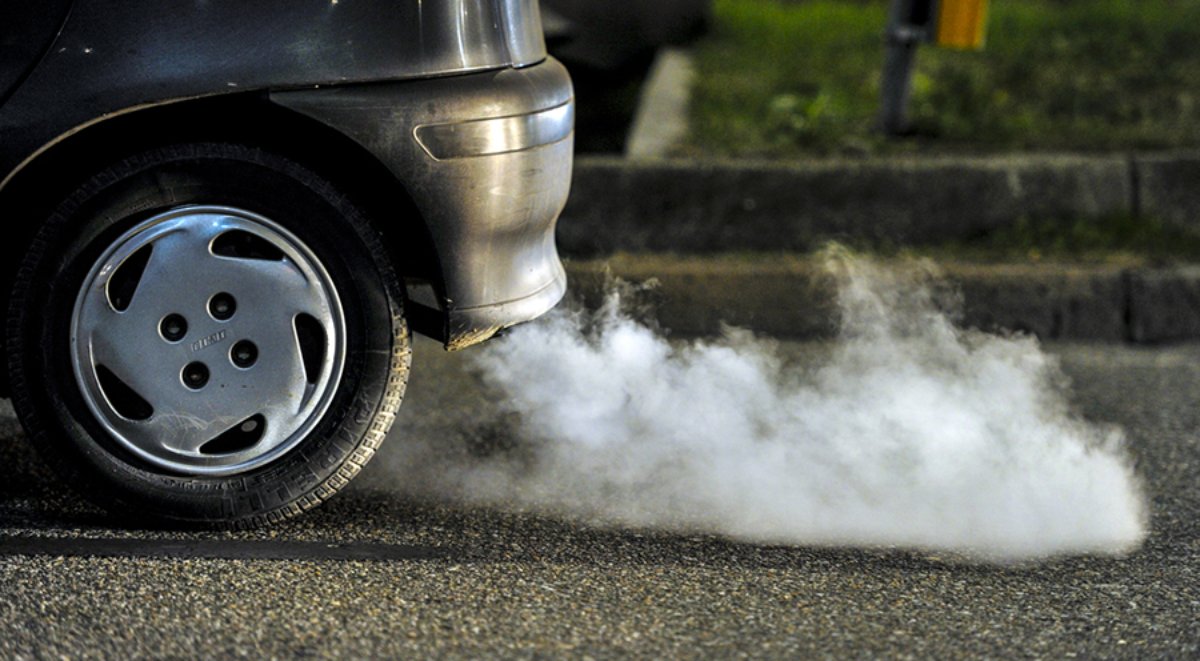
Starting a car that has been stored for a few minutes may seem helpful, but it can create new problems. If the engine and exhaust do not reach normal operating temperature, moisture may remain inside the system. Short idling sessions can also add contaminants to the engine oil.
AAA states that a correctly stored vehicle does not need to be started during winter. Hagerty gives similar advice and warns against running an engine inside a garage because exhaust gases can build up. If you decide to use the car during winter, drive it long enough for the engine, transmission, and brakes to reach normal operating temperature. Only do this when road and weather conditions are safe.
Avoid salted roads when possible. Wash the wheel arches and underside of the car if it is driven on a treated road. Never run an engine in a closed garage. Carbon monoxide has no color or smell and can be fatal.
Inspect the car during storage
A monthly visual inspection can identify problems early. There is usually no need to start the engine.
Look for:
- Fluid beneath the car
- Falling tire pressure
- Moisture or mold inside the cabin
- Rodent droppings or nesting material
- Chewed wires or hoses
- Damage to the cover
- Problems with the battery maintainer
- Water is entering the building
- New signs of rust
Keep a simple storage log with the date and findings from each inspection. Take photographs if you notice a leak or a change in the vehicle’s condition. Do not move the car if the battery has been removed or the air intake and exhaust are still blocked.
Taking the car out of winter storage
Do not start the engine immediately after removing the cover. First, remove all exhaust plugs, intake covers, moisture packs, pest-control products, and warning tags. Check your written storage list so nothing is missed.
Inspect the engine bay and the area beneath the car. Look for nests, damaged wiring, loose hoses, and fluid leaks. Do not start the engine if you find damaged fuel lines or electrical wires. Check the engine oil, coolant, brake fluid, and other serviceable fluids. Investigate any unexplained drop before driving.
Reconnect or reinstall the battery according to the manufacturer’s procedure. Make sure the terminals are clean and secure. If the battery was not connected to a maintainer, test or charge it before attempting to start the engine. Return the tires to their normal driving pressure. Inspect them for cracks, bulges, cuts, or persistent flat spots.
After starting the engine, watch the gauges and warning lights. Listen for unusual sounds and check for leaks. Do not rev a cold engine unnecessarily.
Test the brakes at low speed in a safe area. Stop driving if:
- The brake pedal feels unusually soft.
- The car pulls strongly to one side.
- A wheel appears to remain locked.
- Grinding or scraping continues.
- Brake fluid is leaking.
Drive gently during the first trip. Give the engine, transmission, suspension, brakes, and tires time to warm up. Have the car inspected if an unusual noise, vibration, or warning light does not clear quickly.
Final check
Before leaving the car for winter, take photographs and write down everything that has been disconnected, removed, or blocked. Attach a reminder to the steering wheel if the exhaust or air intake has been covered. Keep the storage checklist with the vehicle’s maintenance and insurance records. This simple record makes the spring inspection easier and reduces the risk of starting the car with a blocked opening, disconnected component, or overlooked leak.

RELATED AUTO INSURANCE GUIDES
Auto Insurance
Is gap insurance worth it on a used car?
Auto Insurance
Car insurance for not driving: What coverage do you need?
Auto Insurance
How does insurance determine the value of a totaled car?
Auto Insurance
Agreed Value vs. Stated Value for Classic Cars in Gary, IN