

Which of the codes printed on a driver’s license is the license number? Cards carry a handful of them, and the differences between states make it easy to guess wrong from memory of an old card or a relative’s. Auto Insure News checked how the number is displayed on cards from several states, what the look-alike codes are for, and how to recover the number without the physical card.
Where Is My Driver’s License Number?
On a U.S. driver’s license, the number is printed on the front of the card, usually in the upper portion, beside a short label such as DL, DLN, LIC NO or ID. The label, the exact position and the length of the number all depend on the state that issued the card.
Format varies as much as placement. Pennsylvania’s number is eight digits long. New York’s has nine digits and sits near the top of the front. Florida’s begins with a letter and runs considerably longer than either. Because no two states design the card the same way, the most dependable guide is the sample image published by the agency that issued the license, and Pennsylvania’s licensing agency, for one, posts annotated sample cards that mark the number on a license, a photo ID and a learner’s permit.
Labels and field numbers on newer cards
Some newer designs, Colorado’s among them, replace plain labels with numbered fields. The license number sits in field 4d and is called the customer identifier, and a separate code marked DD appears in field 5. A form that asks for a driver’s license number wants the field 4d value in that case.
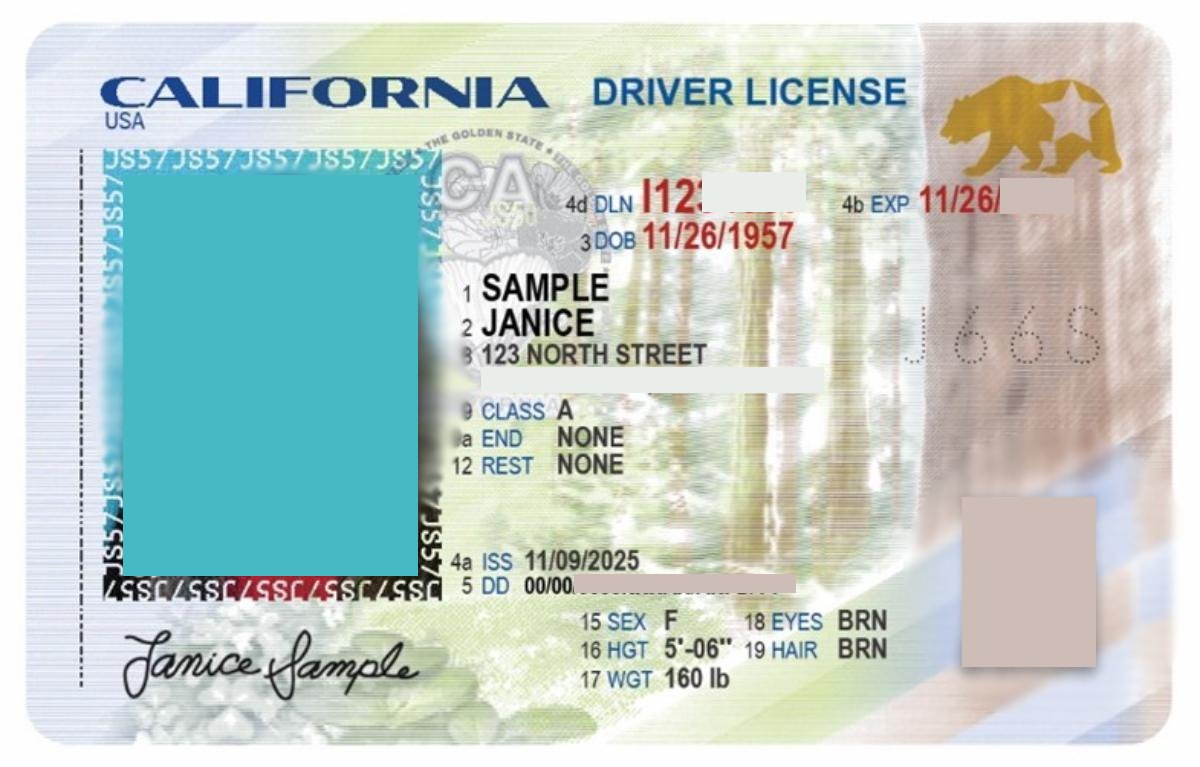
Permits and non-driver ID cards
Permits and photo IDs carry their own version of the number. Pennsylvania calls it a Driver’s License Number on a license and a Photo Identification Card Number on an ID card, and it appears on learner’s permits as well. New York describes its nine-digit ID number as an identifier for the person rather than the card, one that does not change when a license, a permit or an ID card is replaced.
Other Numbers on the Card That Are Not the License Number
Most cards carry at least one more code, and some look similar enough to cause mistakes. Pennsylvania’s agency singles out the DD number at the bottom center of its card as neither the license number nor the photo ID number. DD stands for document discriminator, a code tied to the individual card rather than to the person, so a reissued card receives a new one while the license number can stay the same.
Texas prints an audit number on the card and requires it for online card replacement. The state will not supply the figure on request, for security reasons, which means it has to be read off the card itself.
New York separates the pair most visibly, with a nine-digit ID number on the front and a document number of eight or ten characters, a mix of letters and numbers, on the back. The two are close in length, which makes it easy to type the wrong one into a form.

How to Find a Driver’s License Number Without the Card
A missing card does not always mean a missing number. The number tends to surface in paperwork generated around the license, and the licensing agency holds it as a last resort.
Paperwork and records that may carry the number
Pennsylvania’s page lists several places beyond the card: most letters from the licensing agency, the bottom-left corner of its license and photo ID renewal applications, and the old card itself, which is handed back when a new photo is taken. Florida’s agency has said that any new credential, printed report or receipt shows the current number, so a recent transaction receipt can do the same job.
Insurance records are another route. Pennsylvania’s guidance suggests asking the insurance company, which may be able to read the number back from the policy file. Quote forms ask for it for the same reason, a point covered in the guide to getting auto insurance quotes.
Asking the licensing agency
When paperwork fails, the agency has the record. Pennsylvania will provide the number by phone through its customer call center after asking questions meant to verify the caller’s identity. Other states set their own rules, and the issuing agency’s website shows whether a phone, online or in-person request is available.

Why a “free lookup” website is not a substitute
No public directory of license numbers exists. The federal Driver’s Privacy Protection Act of 1994 limits what state motor vehicle agencies may release from driver records, with exceptions for purposes such as insurance underwriting and claims. Handing a name, a birth date and other identifiers to a third-party site in exchange for a number carries its own risk, and the agency remains the safer route.
Does a Driver’s License Number Change After a Replacement or Renewal?
The answer depends on the state, and it catches some drivers off guard. New York ties the number to the person and leaves it unchanged when a card is replaced. Florida went the other way. Since July 31, 2024, license and ID numbers there are generated with at least four randomly assigned digits, and a driver who renews or replaces a card, in person or online, receives a new number. Once issued, that number changes again only if the last name does.
Texas leaves the call to its staff in at least one situation. When a stolen card has been used by someone else, a police report is required, and driver license office personnel decide whether a new number is warranted. A license from a different state generally brings that state’s own number, since each state assigns its own.
For policyholders in a state that reissues numbers, the practical effect is that an insurer’s file can hold a number that no longer matches the card. Confirming the current number at renewal time keeps the record aligned.
Replacing a Lost License and Guarding the Number
A lost card raises two separate problems, getting a replacement and limiting misuse. California runs an online Replacement Driver’s License Application for lost, stolen or damaged licenses, while ID cards and commercial licenses require a trip to a DMV office, where the photo is validated and a thumbprint is scanned. Texas allows online replacement only with the audit number from the latest card. The card holds that number and the state will not provide it, so a driver who no longer has the card has to use another route, such as a driver license office.
A card that may have been stolen calls for quicker action. The licensing agency should hear about the loss early, and Texas additionally requires a police report when the card has been used by someone else. The Federal Trade Commission’s IdentityTheft.gov then builds a personalized recovery plan and generates the reports and letters needed to dispute fraudulent accounts.

The number has value to anyone assembling a false identity, which is why it rarely belongs in an email, a text message or a photo stored in an unsecured folder. Legitimate requests come from a rental counter, an insurer, an employer’s onboarding system or a government portal reached by typing the address, not from an unsolicited message.
Auto Insurance and the Driver’s License Number
Insurers lean on the number more than most businesses do. It lets an insurer pull a driving record when pricing a policy, and the federal privacy law lists rating and underwriting among the permitted uses of motor vehicle record data. That is why quote forms ask for it early, and why accuracy matters.
Drivers with no license number to supply face a different set of questions, and the guide to auto insurance without a license in Texas looks at that situation under one state’s rules.
Card designs and replacement rules change, so the issuing agency’s website remains the final word. The state details above come from agency pages reviewed in November 2026.

RELATED AUTO INSURANCE GUIDES
Auto Insurance
Factors affecting high-risk driver auto insurance cost
Auto Insurance
Actual cash value of my car: how it is set and disputed
Safety & Driving
What to do if car won’t start after driving through water
Safety & Driving
Water damage car repair cost: what drives the bill