

Need to meet your state’s SR-22 requirement but don’t own a car? Free online SR-22 insurance quotes can help you find affordable coverage without having to insure a vehicle of your own. This type of policy is designed for drivers who need to prove financial responsibility to their state’s DMV but still rely on borrowed or rented vehicles. By comparing free online quotes, you can explore available insurers, compare rates, and find a policy that fits your driving history and state requirements. Before choosing an insurance policy, it’s important to understand how SR-22 insurance for non-car owners works, what it covers, and how to get the best price. At Auto Insure News, you’ll find practical information on coverage, costs, and choosing the right policy.
Can you get non-owner SR22 insurance for free?
You can get free quotes, not free insurance. An online quote shows an estimated premium based on your driving history, ZIP code, and coverage requirements. After choosing a policy, you’ll pay the premium and any filing or installment charges.
An SR-22 filing typically costs around $25, though the insurer and state determine the actual charge. Some companies waive the filing fee entirely. State license reinstatement fees are separate from these insurance expenses.
Watch out for comparison websites that request payment before revealing basic pricing. Also check whether the site sells insurance or simply passes your contact information to other agencies.
How much does non-owner SR22 insurance cost in 2026?
According to CarInsurance.com’s 2026 rate analysis, the average non-owner SR-22 policy costs approximately $574 per year, or $48 per month. For drivers with a DUI on their record, the study reports an average of $1,040 annually, roughly $87 per month.
These figures come from modeled driver profiles, not guaranteed market prices. The same research found state averages ranging from $262 to $1,487 per year. Your insurer, location, violation history, and required liability limits determine the quote you actually receive.
| Cost category | Published estimate |
|---|---|
| Average non-owner SR-22 policy | $574/year |
| Average with a DUI | $1,040/year |
| Lowest state average in the study | $262/year |
| Highest state average in the study | $1,487/year |
| Common SR-22 filing fee | Around $25 |
A non-owner policy excludes collision and comprehensive coverage for an owned vehicle, which helps reduce the premium. A recent DUI, repeated violations, or an insurance lapse can still make liability-only coverage expensive.
Before choosing the cheapest monthly rate, calculate the full cost over the policy term. Include the initial payment, installment charges, and filing fees. Finding ways to reduce insurance costs starts with comparing equivalent coverage, not simply reducing your liability limits.
Which companies offer non-owner SR22 insurance online?
Several national and high-risk insurance providers offer SR-22 filing services. Five companies are worth checking, particularly if your driving record makes standard insurance difficult to obtain.
| Insurance company | Online options | Published filing information |
|---|---|---|
| Dairyland | Start a quote online or by phone | Generally no SR-22 filing fee; electronic filing by the following day where available |
| Progressive | Online quote and agent assistance | Electronic filing immediately after purchase in most states; filing fee commonly around $25 |
| The General | Free online quotes | SR-22 documents can be available within minutes after purchase; charges vary |
| GEICO | Free quotes and agent support | Electronic or mail filing; fee disclosed at purchase |
| Kemper | Online quoting and agent assistance | Supports eligible non-owner SR-22 policies; same-day filing can be available |
The published timelines describe the insurers’ filing processes, not guaranteed DMV acceptance times. Availability, underwriting approval, and filing procedures vary by state. A provider that issues a standard SR-22 online may still require agent assistance for a non-owner policy.
Dairyland and The General for high-risk drivers
Dairyland is worth checking first if you want to begin the process online and avoid an additional SR-22 filing fee. The company says it generally doesn’t charge for filing and can submit electronically by the following day in participating states. Confirm that it can issue a non-owner policy for your particular driving record.
The General also handles non-owner SR-22 coverage and markets its services to drivers with difficult insurance histories. Its website provides free online quotes, although eligibility and filing arrangements still need to be confirmed. Having an SR-22 document available quickly doesn’t guarantee the DMV has accepted it.
Progressive, GEICO, and Kemper
Progressive states that it electronically files SR-22 certificates immediately after policy purchase in most states. GEICO handles electronic and mail filings and provides the applicable fee during purchase. Both offer non-owner SR-22 information, making them useful comparisons alongside high-risk specialists.
Kemper is another option for drivers with violations or license suspensions. It supports non-owner SR-22 policies for eligible customers and reports that same-day filing can be available. Contact an agent to confirm the applicable state, payment requirements, and whether your policy can be issued online.
Do you qualify if you don’t own a car?
Non-owner coverage is intended for drivers who need liability protection without owning a vehicle. It can satisfy an SR-22 requirement when the state accepts that policy arrangement.
A driver who sold their car after a DUI suspension is a straightforward example. They still need an insurance certificate but have no vehicle to insure. A qualifying non-owner policy addresses that situation.
But regularly borrowing your roommate’s Honda Civic creates a different insurance problem. The insurer may treat you as a regular household driver, making you ineligible for non-owner coverage. You might need to be added to the vehicle owner’s policy instead. The rules surrounding roommates and shared car insurance can help clarify the difference.
Non-owner coverage also doesn’t provide collision or comprehensive protection for the borrowed vehicle. If you damage that car, don’t assume your non-owner policy will pay for repairs.
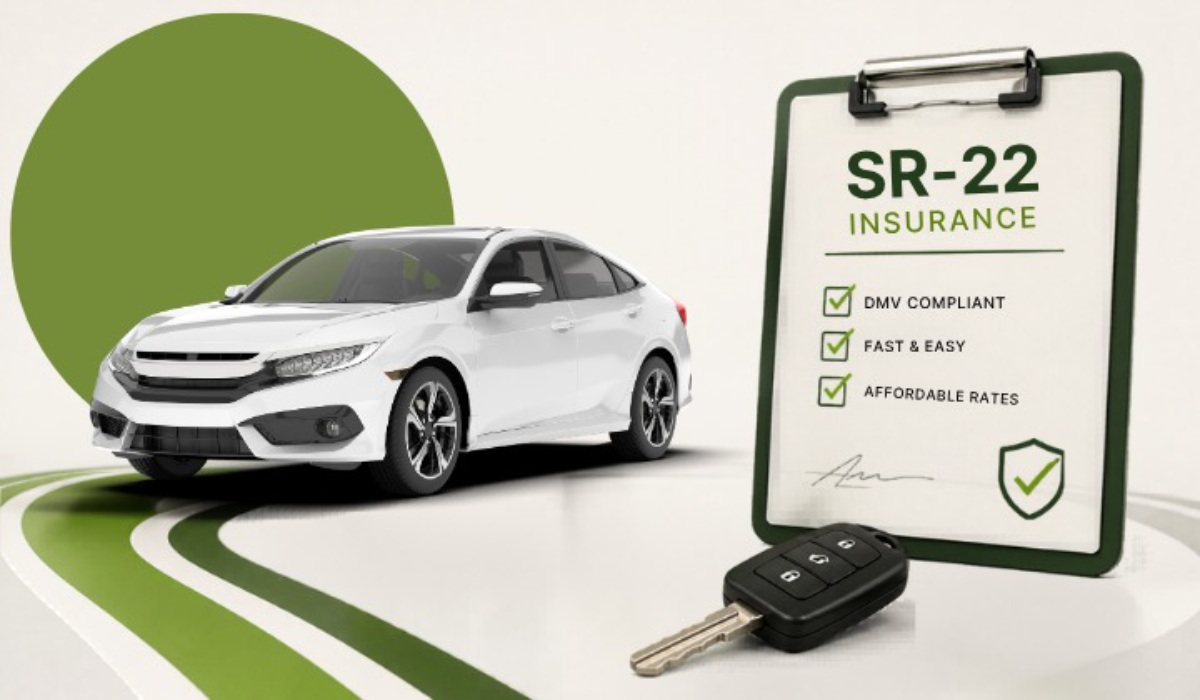
Check your state’s requirements before buying
An SR-22 requirement depends on the state and the violation that triggered it. Buying the wrong certificate can delay reinstatement, even if you’ve already paid for insurance.
Eight states are commonly identified as not using the standard SR-22 filing system for license reinstatement: Delaware, Kentucky, Minnesota, New Mexico, New York, North Carolina, Oklahoma, and Pennsylvania. They use other methods of verifying financial responsibility.
Florida and Virginia have additional FR-44 requirements for certain serious violations, particularly DUI convictions. The FR-44 requires higher liability limits than an ordinary SR-22. Both states also use SR-22 filings for other qualifying circumstances, so the two forms shouldn’t be treated as interchangeable.
California, for example, recognizes an operator’s SR-22 policy covering vehicles the driver doesn’t own. The California DMV’s financial responsibility guidance explains which insurance certificates are accepted and how drivers can obtain them.
If you moved after your violation, the original state’s requirement can still apply. Tell the insurer which state ordered the filing, not merely where you currently live. Your reinstatement notice is the starting point; if the requirements are unclear, confirm them with the issuing DMV or state agency.
How to get a quote and complete the filing
1. Confirm the insurer handles non-owner SR-22 policies
Before completing a lengthy form, ask whether the company offers non-owner liability coverage with SR-22 filing in the state that requires your certificate. Some standard insurance applications demand a vehicle identification number (VIN) because they’re designed for car owners. Don’t enter a borrowed vehicle’s VIN just to bypass the form.
2. Prepare your information
Have your ZIP code, date of birth, driver’s license details, violation history, and state filing notice ready. Explain whether you occasionally rent vehicles or have access to a household car. Incomplete information can produce a misleading estimate or an application that fails during underwriting.
3. Compare at least three quotes
Request the same liability limits from every company and compare the entire policy term. The process of comparing auto insurance quotes works best when every provider receives identical information.
Ask each insurer for the total premium, first payment, filing charge, installment fees, and expected filing method. Confirm whether the quote is final or subject to driving-record verification.
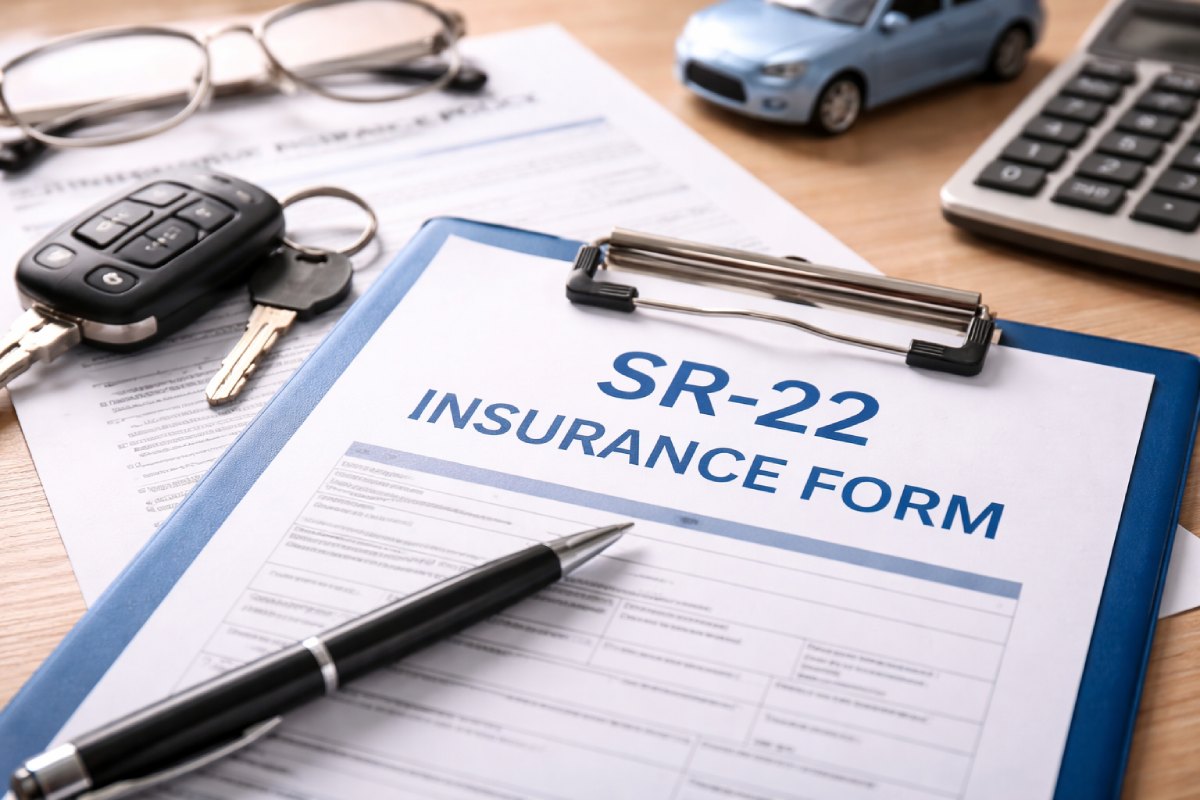
4. Buy coverage and request filing confirmation
After the insurer approves your application and activates the policy, it prepares the certificate for submission. Electronic filings can move quickly, but acceptance depends on the state’s system and procedures. Request confirmation from the insurer, then verify the filing with the responsible agency.
An insurance receipt isn’t permission to drive. You must complete any remaining reinstatement conditions and confirm that your license is valid.
Mistakes that delay reinstatement
The first mistake is buying a policy without confirming the required certificate. A standard non-owner liability policy doesn’t automatically include SR-22 filing. Check the actual filing type, state, and coverage limits before payment.
Another problem is relying on a comparison website that collects leads rather than issuing insurance policies. A site that repeatedly redirects you to unrelated offers or provides no clear agency information isn’t helping you complete the process. Contact a licensed insurer or agency directly if the website cannot explain who will issue the policy.
Finally, don’t cancel your insurance immediately after the certificate reaches the DMV. The requirement continues for the period specified by the state. If you change companies, coordinate the new filing and policy dates to prevent a coverage gap when switching insurers. Losing required coverage can put your driving privileges at risk.
Before you pay
Check that the insurer offers non-owner coverage for your situation, handles filing in the correct state, and provides a written quote that shows all charges. Compare at least three providers using identical limits, then confirm the submission process and filing status before driving.
The lowest advertised monthly premium isn’t always the best offer. Choose a policy you qualify for, can afford to maintain, and can use to satisfy your state’s actual filing requirement.

RELATED AUTO INSURANCE GUIDES
Auto Insurance
Factors affecting high-risk driver auto insurance cost
Auto Insurance
Actual cash value of my car: how it is set and disputed
Safety & Driving
What to do if car won’t start after driving through water
Safety & Driving
Water damage car repair cost: what drives the bill