

Your car is registered in New York, but you keep it at your Florida home all winter. The address on your policy, the length of your stay, and Florida’s insurance rules all need to be checked. Auto Insure News recommends discussing those details with your insurer before you leave.
Can you have car insurance in two different states?
Drivers who keep a car at each of two homes can have separate insurance policies in those states. A sedan left at your Massachusetts home and an SUV kept in Florida each have their own location and use for the insurer to assess. The same company may be able to insure both, although separate state policies are often needed. For a single car that travels between the homes, one policy is generally enough at a time. Its suitability depends on the car’s regular location, registration, and the length of each stay. A weekend trip and a six-month stay can have different insurance implications.
| Where the car stays | Insurance arrangement |
|---|---|
| You commute across a state line and bring the car home each night. | The policy generally uses your home garaging location. The insurer also needs your commuting details. |
| A different car stays at each of your two homes. | Each car needs coverage appropriate to its location and registration. This often involves separate state policies. |
| The same car moves between seasonal homes for several months at a time. | The insurer needs both addresses and the schedule. Coverage may need to be updated or replaced for the other state. |
| The car moves with you permanently. | A policy for the new state and changes to registration may be required. |
During a move, the old and new policies may overlap for a short period. Disclose that overlap to both insurers so a claim can be handled under their policy terms. Agree on the start and end dates when arranging the replacement.

Which address should you use for car insurance?
The garaging address indicates where your car is usually kept, typically overnight. Local traffic, theft, weather, and repair costs can affect the premium. The address where you receive mail may be different from where the car stays. If you live in Connecticut and bring your car home after work in New Jersey, Connecticut is its usual overnight location. A second car left at your New Jersey workplace needs its own location disclosed, even if all your mail goes to Connecticut. That location is part of what determines car insurance rates, along with the vehicle, drivers, mileage, and coverage. An address change can alter the price without any change to your driving record. Using a relative’s lower-cost ZIP code while keeping the car elsewhere gives the insurer inaccurate information. A material misrepresentation can lead to a premium adjustment, cancellation, or a coverage dispute under the applicable policy terms and state law. For a seasonal car, disclose both locations and the time it spends at each.
Can you insure a car in one state and register it in another?
The state registering your vehicle decides what proof of insurance it accepts. Coverage for an out-of-state trip can continue even when that policy would be unsuitable for registering the car in the state you are visiting. Under New York DMV insurance requirements, a New York-registered vehicle needs coverage from a New York-licensed, DMV-authorized insurer. Out-of-state insurance is unacceptable for that registration, and the names on the insurance and registration must match exactly. A Florida policy, therefore, cannot replace the required New York coverage while you keep the New York registration. A Florida-registered car being driven into New York for a visit is a different situation. Any proposed arrangement involving insurance and registration in different states needs to be checked with the insurer and the motor vehicle agency in each state. They will need the registration state, your residence, and the car’s actual location. Student or military status may also matter where a state provides an exception.
What if you live in two states during the year?
Seasonal homes and extended stays
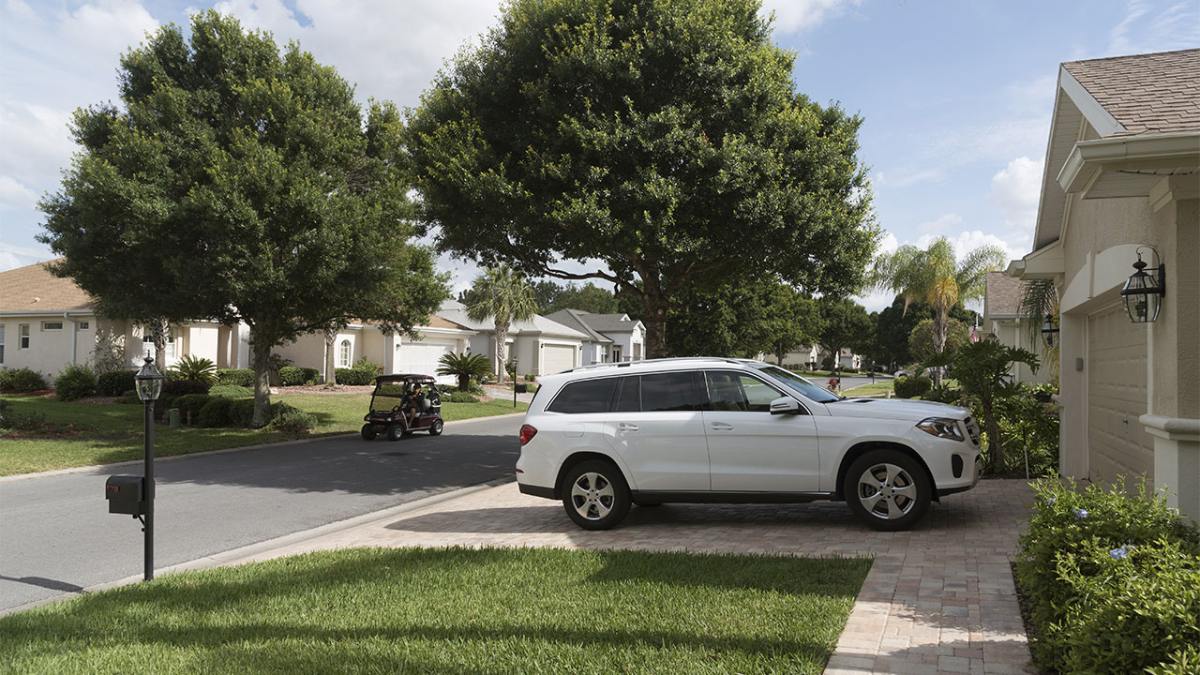
Taking your car south for the winter gives the insurer two regular locations to consider. Leaving a different car at each property means each vehicle has its own garaging location. Owning both homes gives you a reason for the arrangement, but the policy still needs to fit each car’s use and the applicable state requirements. For a six-month stay in each state, give the insurer the dates, both addresses, and the current registration details. Ask whether it can keep the existing policy in place throughout that schedule or needs to issue a replacement for the other state.
A policy rewrite replaces the current contract with one issued for the other state. It can change the coverage requirements, price, and policy documents. The insurer’s rules and the states involved determine when this is necessary; six months is not a nationwide switching deadline. Florida has a specific requirement worth checking before a long stay. Under Florida Statute 627.733(2), a nonresident’s motor vehicle physically present in Florida for more than 90 days during the preceding 365 days must meet that law’s insurance or approved financial-security requirements while it remains there. The days can be spread across several visits, and a parked vehicle counts too. That provision concerns insurance or financial security. Registration obligations need checking separately. For a driver keeping New York plates during a Florida stay, the insurer needs to account for the requirements that apply in both states before coverage changes.
College students and military families
A car taken to an out-of-state campus or military assignment may qualify for a registration or residency exception, depending on the state and circumstances. The insurer still needs to know where it will be kept and who will drive it. Confirm any exceptions with the motor vehicle agency and ask the insurer how the temporary location affects the policy.
Does your policy cover you when visiting another state?
A standard personal auto policy generally covers travel throughout the United States and Canada, subject to its terms. For an ordinary road trip, your existing policy usually continues to protect you across state lines. Many policies include an out-of-state coverage provision that may increase liability protection when the state where the accident occurs requires a higher minimum coverage requirement. The provision’s wording determines when and how that adjustment applies. Suppose your policy carries Pennsylvania’s $15,000 minimum bodily injury liability limit per person. Ohio’s minimum for that same limit is $25,000. If the policy’s out-of-state provision applies to a covered accident in Ohio, it may raise the per-person limit to meet Ohio’s requirement. Both figures refer only to bodily injury per person; other required limits and coverages are separate. The higher liability limit you already carry remains in place. Collision and comprehensive depend on what you purchased. After moving or during an extended stay, you still need to meet the applicable registration and insurance requirements.

How to change car insurance when moving to another state
Your current company may be able to issue a policy in the new state, so changing insurers is not always necessary. It will need the new address, moving date, vehicle details, and expected use. The registration process is handled by motor vehicle agencies and may involve separate deadlines and plate-return instructions.
Changing your policy and registration
- The new policy. Contact your insurer before moving day to arrange coverage for the destination address. Ask whether the move requires a replacement policy and what information or documents it needs.
- Registration timing. Check the destination state’s deadline and required proof of insurance. New York requires a new resident to obtain New York registration within 30 days of establishing residence. Other states have their own deadlines.
- Prices and coverage. Request quotes for car insurance at the new address using the same liability limits and deductibles. Differences in limits, optional coverage, or deductibles can account for part of a price difference.
- Effective dates and insurance proof. Confirm that replacement coverage starts before the old coverage ends. Check the names, VIN, address, insurance documents, and any required electronic filings.
- The old registration and plates. Complete the applicable transfer or surrender procedures. When leaving New York, surrender the New York plates before the required New York liability coverage ends. Keep the surrender receipt.
- Cancellation confirmation. Follow the old insurer’s procedure for cancelling your previous auto insurance after arranging replacement coverage and completing the applicable registration requirements. Keep written confirmation of the end date. Simply stopping payments can leave the cancellation date unresolved and may result in unpaid premiums or a coverage lapse.
If you move in with roommates
If a roommate will drive your car to work every weekday, give the insurer that driver’s details when updating your address. Regular use may require the person to be listed on the policy. Insurance for roommates who share a car also depends on ownership and the company’s household-driver rules. A named-driver exclusion can leave the excluded roommate without coverage under the policy even when you gave them permission to drive.

What if you leave a second car in storage?
A car parked at your other home for several months remains exposed to theft, fire, and weather damage. Comprehensive coverage may protect against such losses, subject to the deductible and policy terms. Ask whether the insurer offers a storage arrangement for that vehicle. With active registration, you may still have to keep insurance on a car you don’t drive. A loan or lease may also require collision and comprehensive. Removing coverage can therefore require changes to the registration or conflict with the financing agreement. Give the insurer the storage address and the expected period off the road. Comprehensive-only coverage provides no liability protection for driving. Before using the car again, restore the required coverage and confirm that its registration permits road use.

RELATED AUTO INSURANCE GUIDES
Safety & Driving
Black Ice on the Roads: How to spot it and handle a skid
Auto Insurance
Car Insurance Umbrella Policy: Coverage, Cost and Limits
Auto Insurance
Michigan Car Insurance: Rates, Companies & PIP Coverage
Safety & Driving
Texting and driving: risks, statistics, laws and prevention