

In the U.S. market, the Honda HR-V vs CR-V choice usually comes down to space, power, fuel economy, and budget. The HR-V is smaller, cheaper, and easier to park, while the CR-V gives you more cargo room, more power, and an available hybrid powertrain. Auto Insure News compares the two Honda SUVs by size, performance, fuel economy, safety, ownership cost, and daily-use practicality so you can decide which one actually fits your driving needs.
Honda HR-V vs CR-V quick comparison
The CRV is the bigger vehicle by every measurement. Here’s how the two compare on key specs:
| Specification | Honda HR-V | Honda CR-V |
|---|---|---|
| Current Honda U.S. model year | 2027 HR-V | 2026 CR-V |
| Vehicle class | Subcompact / small crossover SUV | Compact SUV |
| Starting MSRP | $26,600 | $30,920 |
| Engine | 2.0L 4-cylinder | 1.5L turbo gas or 2.0L hybrid |
| Horsepower | 158 hp | 190 hp gas / 204 hp hybrid |
| Hybrid available | No | Yes |
| Max cargo volume | 55.1 cu ft | Up to 76.5 cu ft |
| Seating capacity | 5 seats | 5 seats |
| Towing | Not rated for towing | 1,500 lbs gas / 1,000 lbs hybrid |
| Best fit | Urban drivers, couples, and lower budgets | Families, road trips, cargo space, hybrid shoppers |

Honda HR-V vs CR-V size and space
The CR-V is the larger SUV, and that size difference is most evident in rear-seat comfort and cargo space. The HR-V is easier to park and maneuver, but the CR-V gives families more room to stretch out and carry luggage, groceries, strollers, sports gear, or road-trip cargo. Both the Honda HR-V and Honda CR-V seat up to five people, but the CR-V gives rear passengers more legroom and offers significantly more cargo space behind the second row.
| Specification | Honda HR-V | Honda CR-V |
|---|---|---|
| Length | 179.8 in | 184.8 in |
| Rear legroom | 37.7 in | 41.0 in |
| Passenger volume | 98.7 cu ft on LX/Sport; 97.3 cu ft on EX-L | 106.0 cu ft on LX; 103.5 cu ft on most other trims |
| Cargo behind rear seats | 24.4 cu ft | Up to 39.3 cu ft |
| Max cargo volume | 55.1 cu ft | Up to 76.5 cu ft |
| Turning diameter | 35.1 ft on LX/EX-L; 37.1 ft on Sport | 37.3 ft on many trims |
The practical takeaway is simple: choose the HR-V if parking ease and a lower price matter more. Choose the CR-V if rear-seat space and cargo room matter more. If you need even more passenger and cargo capacity, this comparison can help you need the right family suv before moving up to a larger model.

Honda HR-V vs CR-V engine and performance
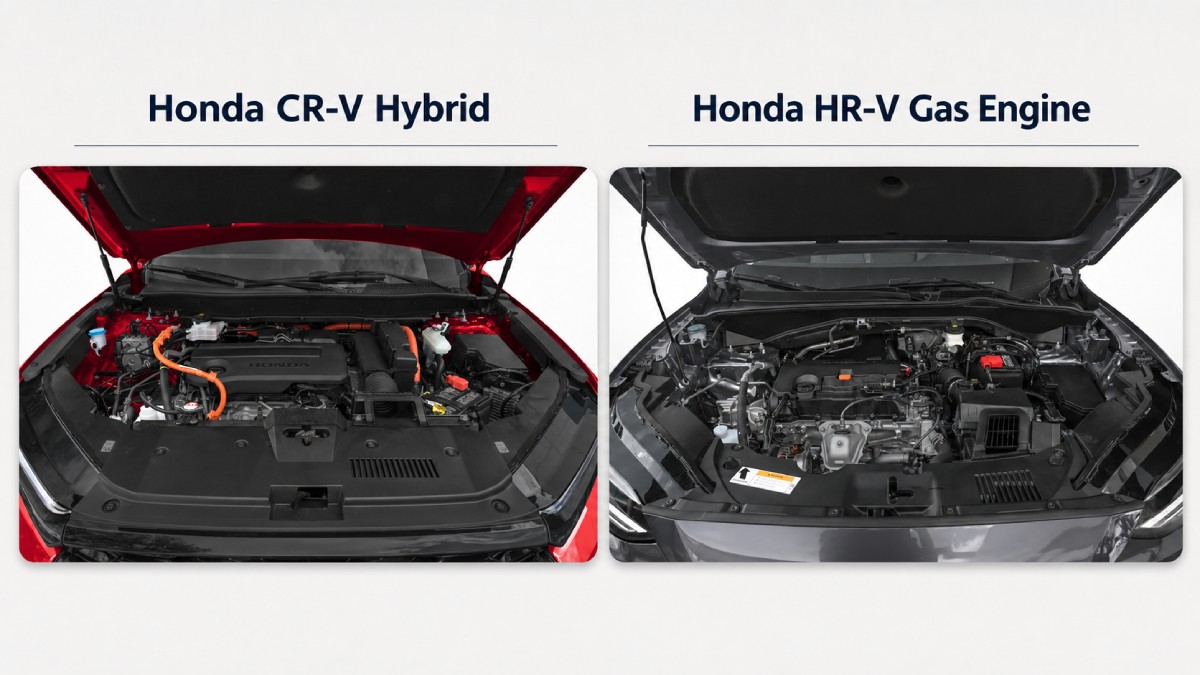
The HR-V keeps things simple with one engine, while the CR-V gives buyers both gas and hybrid choices.
| Engine | Honda HR-V | Honda CR-V |
|---|---|---|
| Base engine | 2.0L 4-cylinder | 1.5L turbo 4-cylinder |
| Horsepower | 158 hp | 190 hp gas / 204 hp hybrid |
| Torque | 138 lb-ft | 179 lb-ft gas; hybrid electric motor listed at 247 lb-ft |
| Transmission | CVT | CVT on gas models / e-CVT on hybrid models |
| Hybrid option | Not available in the U.S. | Available |
The HR-V is fine for city driving, commuting, and light daily use. The CR-V feels stronger on highways, during passing, and when carrying passengers or cargo. If you want a hybrid Honda SUV, the CR-V is the clear choice because the U.S. HR-V does not offer a hybrid powertrain.
Honda HR-V vs CR-V fuel economy
The CR-V can actually beat the HR-V on fuel economy when you choose the hybrid. If you compare gas-only versions, the difference is smaller. Shoppers also considering a sedan can use these figures alongside a toyota camry reviews comparison before choosing an SUV.
| Model | City MPG | Highway MPG | Combined MPG |
|---|---|---|---|
| Honda HR-V FWD | 26 | 32 | 28 |
| Honda HR-V AWD | 25 | 30 | 27 |
| Honda CR-V gas FWD | 28 | 33 | 30 |
| Honda CR-V gas AWD | 27 | 31 | 29 |
| Honda CR-V Hybrid FWD | 43 | 36 | 40 |
| Honda CR-V Hybrid AWD | 40 | 34 | 37 |
| Honda CR-V TrailSport Hybrid AWD | 38 | 33 | 35 |
If fuel savings are a major priority and you drive a lot each year, the CR-V Hybrid is the strongest option. If you drive fewer miles and want the lowest purchase price, the HR-V can still make more financial sense. Buyers comparing a hybrid with a full EV should also consider why are electric vehicles so expensive before focusing only on fuel savings.
Interior quality & comfort
The HR-V has a modern cabin for its price, with a clean dashboard layout and useful standard features. It feels more upscale than many shoppers expect from a smaller, lower-priced SUV.
The CR-V has the advantage in passenger comfort and space. Its rear seats offer more room, and the cabin feels better suited for families, road trips, and regular passenger use.
The choice comes down to priorities: the HR-V gives you a lower price and a fresh interior feel, while the CR-V gives you more space and comfort over longer drives.
Cargo space
If you regularly haul groceries, sports gear, luggage, or anything bulky, cargo space becomes the most important part of the Honda HRV vs CRV decision. And the CR-V easily takes the win.
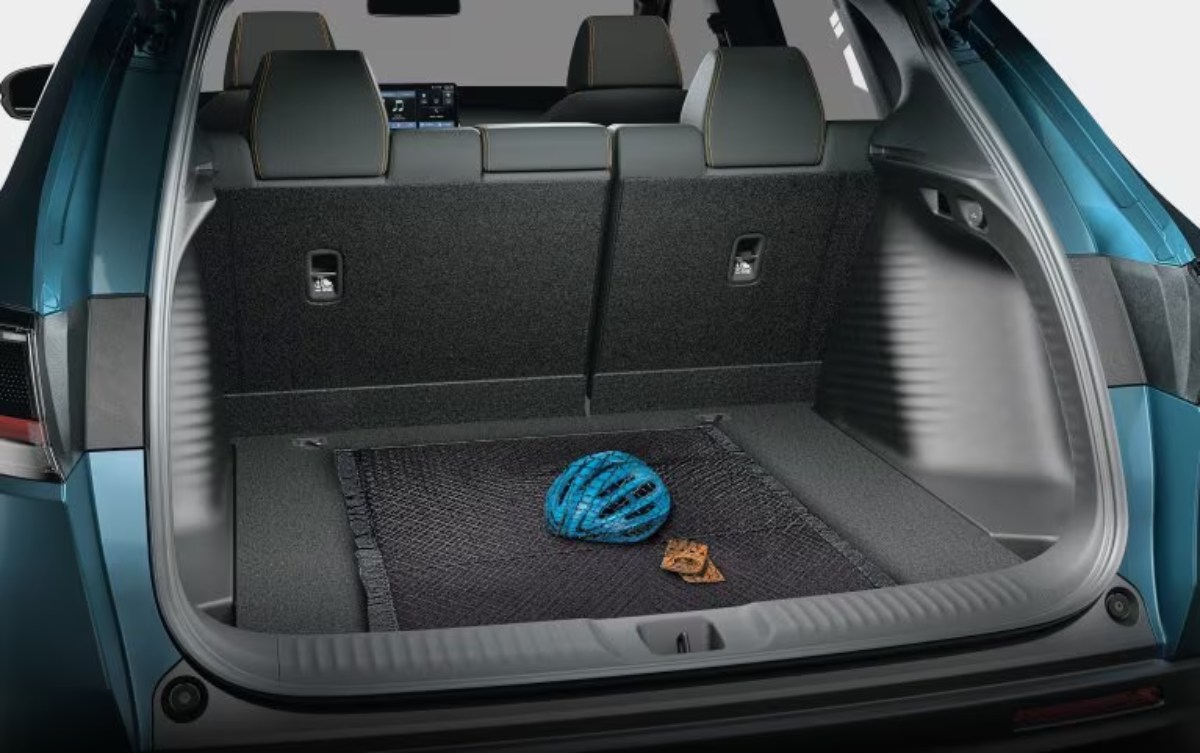
The CR-V’s cargo advantage is easy to feel in daily use. It gives you more room for strollers, luggage, sports gear, grocery runs, and road-trip bags, while the HR-V works better for lighter everyday cargo and smaller households. If your cargo needs come from a pickup-style cabin rather than an SUV, review the crew cab truck layout before changing vehicle categories.

The CR-V is the safer pick if you regularly carry bulky items such as a full-size stroller, large dog gear, sports equipment, or multiple road-trip bags. The HR-V can handle normal grocery runs and weekend luggage, but larger items may require folding seats or checking exact cargo dimensions before buying.
AWD and all-weather capability
Both the HR-V and CR-V offer Honda’s Real Time AWD system, so both can help in rain, light snow, and slippery conditions. The HR-V is a good fit for city and suburban drivers who want extra traction without moving into a larger SUV. Buyers who need more serious trail capability may also compare typical jeep wrangler insurance costs before choosing an off-road vehicle.
The CR-V has the advantage if you deal with longer winter drives, rougher roads, or regular family travel in bad weather. Its larger platform, stronger powertrain options, and extra passenger/cargo space make it the more versatile choice, while the HR-V remains easier to maneuver in tight urban areas.
Tech & infotainment
In the current U.S. model lineup, both the 2027 Honda HR-V and 2026 Honda CR-V offer a 9-inch touchscreen with wireless Apple CarPlay and Android Auto. The HR-V no longer feels as basic as older comparisons suggest, but the CR-V still has the higher tech ceiling. Upper CR-V trims add features such as a 10.2-inch digital instrument cluster, Google built-in, HondaLink subscription services, Wi-Fi hotspot capability, and a Bose 12-speaker premium audio system.

Safety features
Both the HR-V and CR-V come standard with Honda Sensing, so their core driver-assistance features are similar. That includes features such as collision mitigation braking, road departure mitigation, lane keeping assist, adaptive cruise control, and traffic sign recognition.
The bigger difference is in the IIHS award status. The 2025 Honda HR-V earns Top Safety Pick+, while the 2025 Honda CR-V earns Top Safety Pick. That gives the HR-V a slight edge in IIHS award designation, although shoppers should still check the latest IIHS and NHTSA ratings for the exact model year they plan to buy.
| Safety Feature | HRV | CRV |
| Forward Collision Warning + Auto Emergency Braking | Standard | Standard |
| Lane Departure Warning + Lane Keep Assist | Standard | Standard |
| Adaptive Cruise Control | Standard | Standard |
| Automatic High-Beam Headlights | Standard | Standard |
| Traffic Sign Recognition | Standard | Standard |
| Blind-Spot Monitoring | Higher trims | Higher trims |
On the IIHS side, the HR-V earns the highest Top Safety Pick+ designation, while the CR-V achieves Top Safety Pick. This gives the HR-V an edge in IIHS award designation for the 2025 model year, but it does not mean the HR-V is automatically safer in every test category. Buyers should still compare the exact IIHS and NHTSA ratings for the model year and trim they plan to buy.
J.D. Power gives the 2025 HR-V an overall consumer rating of 82/100 and the 2025 CR-V an overall consumer rating of 83/100. For Quality & Reliability, both are listed at 83/100, so this source does not show a meaningful reliability advantage for either SUV.

Honda HR-V vs CR-V price and trims
The HR-V is still the cheaper SUV to start. On Honda’s current U.S. site, the HR-V starts at $26,600, while the CR-V starts at $30,920. That price gap matters if you are shopping on a strict budget or trying to keep monthly payments low.
| Model | Starting MSRP | Top trim MSRP | Trim count |
|---|---|---|---|
| Honda HR-V | $26,600 | $30,450 EX-L | 3 trims |
| Honda CR-V | $30,920 | $42,550 Sport Touring Hybrid | 7 trims |
The HR-V gives you a lower entry price and simpler trim structure. The CR-V costs more, but it offers more room, more powertrain choices, hybrid trims, stronger tech availability, and more family-friendly features.
Honda HR-V vs CR-V ownership costs
The HR-V usually has a lower upfront cost because it starts cheaper and has a simpler trim lineup. The CR-V costs more to buy, but the hybrid version can save fuel for drivers who put on a lot of annual miles. Insurance costs can also vary by ZIP code, driver profile, coverage level, trim, repair cost, and claims history, so understanding what determines your car insurance rate can help shoppers compare real quotes instead of assuming one model is always cheaper to insure.
Honest drawbacks – What reviewers don’t always say
| Honda HR-V drawbacks | Honda CR-V drawbacks |
| The 158-hp engine can feel modest during freeway merging or passing. | The CR-V costs more to buy than the HR-V. |
| No U.S. hybrid option is available. | Hybrid trims tow less than gas trims. |
| It is not rated for towing. | Top trims can become expensive, with the Sport Touring Hybrid listed at $42,550 on Honda’s current U.S. site. |
| It has less cargo and rear-seat room than the CR-V. | Its larger size makes it less convenient in tight parking areas. |
Which should you buy: Honda HR-V or CR-V?
Choose the Honda HR-V if you want the lower starting price, easier parking, simple daily driving, and enough space for one or two people or a small household. It is the better fit for city drivers, commuters, and buyers who do not need a hybrid or towing capability.
Choose the Honda CR-V if you need more rear-seat room, much more cargo space, stronger acceleration, an available hybrid powertrain, or light towing ability. It costs more, but it is the most flexible SUV for families, road trips, and buyers who want more room to grow.
The short answer: the HR-V is the value-and-city choice; the CR-V is the space-and-family choice.

RELATED AUTO INSURANCE GUIDES
Safety & Driving
How Does a Learner’s Permit Work? Rules and Next Steps
Safety & Driving
Thunderstorm Safety Tips at Home, Outdoors and in a Car
Auto Insurance
ACV vs Replacement Cost: How Insurance Payouts Differ
Safety & Driving
Black Ice on the Roads: How to spot it and handle a skid