

When it comes to car insurance, some terms can sound straightforward but become surprisingly confusing when you actually need to use your policy. No-fault insurance is one of them. Whether you’re comparing coverage, researching your state’s insurance requirements, or trying to understand what happens after a car accident, knowing the basics can make the process much easier to navigate. In this guide, Auto Insure News breaks down what you need to know about no-fault insurance, how the system works, and why it can matter to drivers.
What is no-fault insurance?
No-fault insurance generally means that you use your own auto insurance to pay certain injury-related expenses after a crash, regardless of who caused it. This protection usually comes through personal injury protection, or PIP.
In plain English, you may turn to your own insurer first for eligible medical bills and other economic losses. The other driver’s fault can still matter when the claim involves vehicle damage, liability, serious injuries, or a lawsuit.
The describes no-fault insurance as a system in which each insurer compensates its own policyholder for certain injury losses regardless of fault. The exact rules depend on the state and policy.
How does no-fault insurance work after a crash?
Imagine that another driver rear-ends you at a red light. You have medical bills, missed two weeks of work, and need to repair your car.
In a no-fault system, the process may look like this:
- You report eligible injuries to your own PIP insurer.
- Your PIP coverage covers medical bills and lost wages up to its limit.
- Your vehicle damage is handled separately through collision coverage or the other driver’s property damage liability.
- Fault may still matter if the injury is serious or the loss exceeds your first-party coverage.
This is the central idea: no-fault changes the first source of payment for certain injuries. It does not erase responsibility for the crash. One accident can also involve 2 claims on car insurance, such as an injury claim and a separate vehicle-damage claim.
What does PIP cover?
Depending on the state and policy, PIP may help pay for:
- Medical treatment.
- A portion of lost wages.
- Replacement services, such as household help.
- Funeral expenses in some situations.
- Certain transportation or accident-related costs.
PIP has limits. The policy may include a deductible, documentation requirements, time limits, or rules about how PIP coordinates with health insurance. This can raise the question of whether health insurance covers car accident injuries.
New York, for example, has detailed no-fault rules for benefit limits and claim notice (New York no-fault insurance rules). For a state-specific overview, see is New York a no-fault state. The law generally requires a written notice of the accident within 30 days, subject to limited exceptions. Michigan also has several PIP medical coverage choices, so drivers should not assume that no-fault benefits work the same way in every state.
What does no-fault insurance cover?
No-fault insurance mainly covers injury-related first-party losses. The person making the claim usually starts with their own applicable coverage instead of waiting for the other driver’s insurer to accept fault.
| Coverage | What it may help pay for |
| PIP | Medical bills, part of lost wages, and replacement services, depending on state law |
| Medical payments | Medical or funeral expenses, usually without the broader wage benefits provided by PIP |
| Liability | Injuries or property damage you cause to other people |
| Collision | Damage to your own car after a covered collision |
| Comprehensive | Theft, fire, hail, vandalism, animal damage, and other non-collision losses |
| Uninsured/underinsured motorist | Certain losses caused by a driver with no insurance or insufficient limits |
PIP and liability are not interchangeable. PIP generally helps protect you and eligible passengers. Liability generally protects you when you are legally responsible for injuring another person or damaging their property.
The explains that liability, collision, comprehensive, PIP, and uninsured motorist coverage serve different purposes. For a broader breakdown of each type of auto insurance, your declarations page is more useful than the general phrase “full coverage” or “no-fault insurance” when you need to know what your policy actually does.
What does no-fault insurance not cover?
No-fault insurance does not automatically pay for every loss connected to a crash.
PIP usually does not pay for damage to your own vehicle. That damage may require collision coverage. If another driver caused the crash, their property damage liability coverage may respond, subject to the investigation and policy limits.
A standard policy may also exclude or limit:
- Routine maintenance and normal wear and tear.
- Mechanical breakdown or engine failure.
- Personal items were stolen from inside the car.
- Business, delivery, or rideshare use without the right endorsement.
- Damage caused intentionally or by an excluded driver.
- The gap between a vehicle’s market value and the remaining loan balance.
- Losses above the policy limit.
Collision and comprehensive coverage may protect your vehicle, but they typically do not cover mechanical failure or routine maintenance. Understanding liability vs. full coverage can help clarify which losses each policy setup addresses. GAP insurance may help with a loan balance above the vehicle’s insured value, but it is separate coverage.
Does fault still matter?
Yes. No-fault insurance describes how certain injury benefits are paid. It does not mean that the crash has no responsible driver.
Fault can still affect:
- Damage to your vehicle or the other driver’s vehicle.
- Bodily injury and property damage liability claims.
- Insurance premiums and future underwriting.
- Traffic citations or other legal consequences.
- Lawsuits involving serious injuries or losses above PIP limits.
Can you sue in a no-fault state?
Sometimes. Many no-fault states limit lawsuits for bodily injury. An injured person may need to meet a legal threshold based on the type or seriousness of the injury, or on the amount of medical expenses.
Some states use a verbal threshold, such as permanent impairment or significant disfigurement. Others use a monetary threshold. New Jersey, Pennsylvania, and Kentucky are commonly described as choice no-fault states because drivers have different options regarding restrictions on lawsuits.
No-fault, therefore, does not mean that an injured person can never sue. It means the state may require specific conditions to be met before certain damages, especially pain and suffering, can be pursued.

Which states use no-fault insurance?
These states have no-fault auto insurance laws: Florida, Hawaii, Kansas, Kentucky, Massachusetts, Michigan, Minnesota, New Jersey, New York, North Dakota, Pennsylvania, and Utah.
This is a general guide, not a substitute for state-specific information. PIP limits, deductibles, medical benefits, lost-wage rules, and lawsuit thresholds can vary significantly.
| State | General classification |
| Florida | No-fault |
| Hawaii | No-fault |
| Kansas | No-fault |
| Kentucky | Choice no-fault |
| Massachusetts | No-fault |
| Michigan | No-fault |
| Minnesota | No-fault |
| New Jersey | Choice no-fault |
| New York | No-fault |
| North Dakota | No-fault |
| Pennsylvania | Choice no-fault |
| Utah | No-fault |
A detailed article on no-fault insurance, with state-by-state requirements, would be better for state-by-state rules. This article focuses on the basic meaning of no-fault insurance.
No-fault vs. at-fault insurance
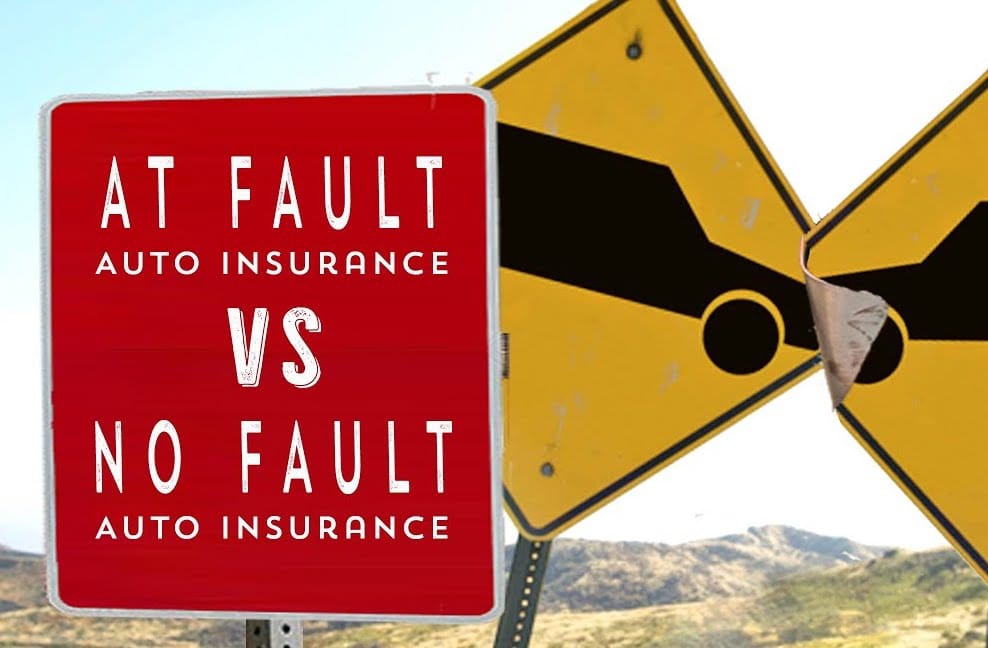
The main difference is who generally pays first for eligible injury-related losses.
| Feature | No-fault system | At-fault system |
| First injury claim | Usually filed with your own insurer | Usually filed against the responsible driver’s insurer |
| Main injury coverage | PIP or another first-party benefit | Bodily injury liability |
| Fault needed for the initial injury claim | Usually not for eligible PIP benefits | Usually yes |
| Vehicle damage | Handled separately through collision or property damage liability | Usually claimed from the at-fault driver or your collision coverage |
| Lawsuit rights | Often limited by a serious injury threshold | Generally broader, subject to legal requirements |
No-fault may provide faster access to certain injury benefits because you do not always have to wait for a complete fault investigation. The tradeoff is that PIP benefits are limited, and lawsuits may be restricted.
Premiums are not automatically lower in no-fault states. Required benefits, medical costs, claim frequency, fraud, population density, and lawsuit rules can all affect insurance prices.
What should you check in your policy?
When reviewing your auto insurance, start with these five questions:
- What are my bodily injury and property damage liability limits?
- How much PIP or medical payments coverage do I have?
- What are my collision and comprehensive deductibles?
- Do I have uninsured and underinsured motorist coverage?
- Does my policy cover my actual vehicle use, including work, delivery, or rideshare driving?
Also, check whether a lender requires collision and comprehensive coverage. The notes that lenders may require these coverages for financed or leased vehicles, even when state law does not.
After a crash, notify the appropriate insurer promptly and keep copies of the accident report, photographs, medical records, receipts, wage documentation, and claim correspondence. If a claim is denied or delayed, request the reason in writing and review the policy language.

RELATED AUTO INSURANCE GUIDES
Safety & Driving
Black Ice on the Roads: How to spot it and handle a skid
Auto Insurance
Car Insurance Umbrella Policy: Coverage, Cost and Limits
Auto Insurance
Michigan Car Insurance: Rates, Companies & PIP Coverage
Safety & Driving
Texting and driving: risks, statistics, laws and prevention