

If you’re reviewing an auto insurance quote, chances are you’ve seen comprehensive car insurance listed alongside liability and collision coverage. Before deciding whether to add it to your policy, it’s important to understand what this coverage actually protects against and whether it’s worth the additional cost. Auto Insure News examines how comprehensive insurance works, who benefits from it, and the key situations where it can provide valuable financial protection.
What is comprehensive car insurance? Is it required?
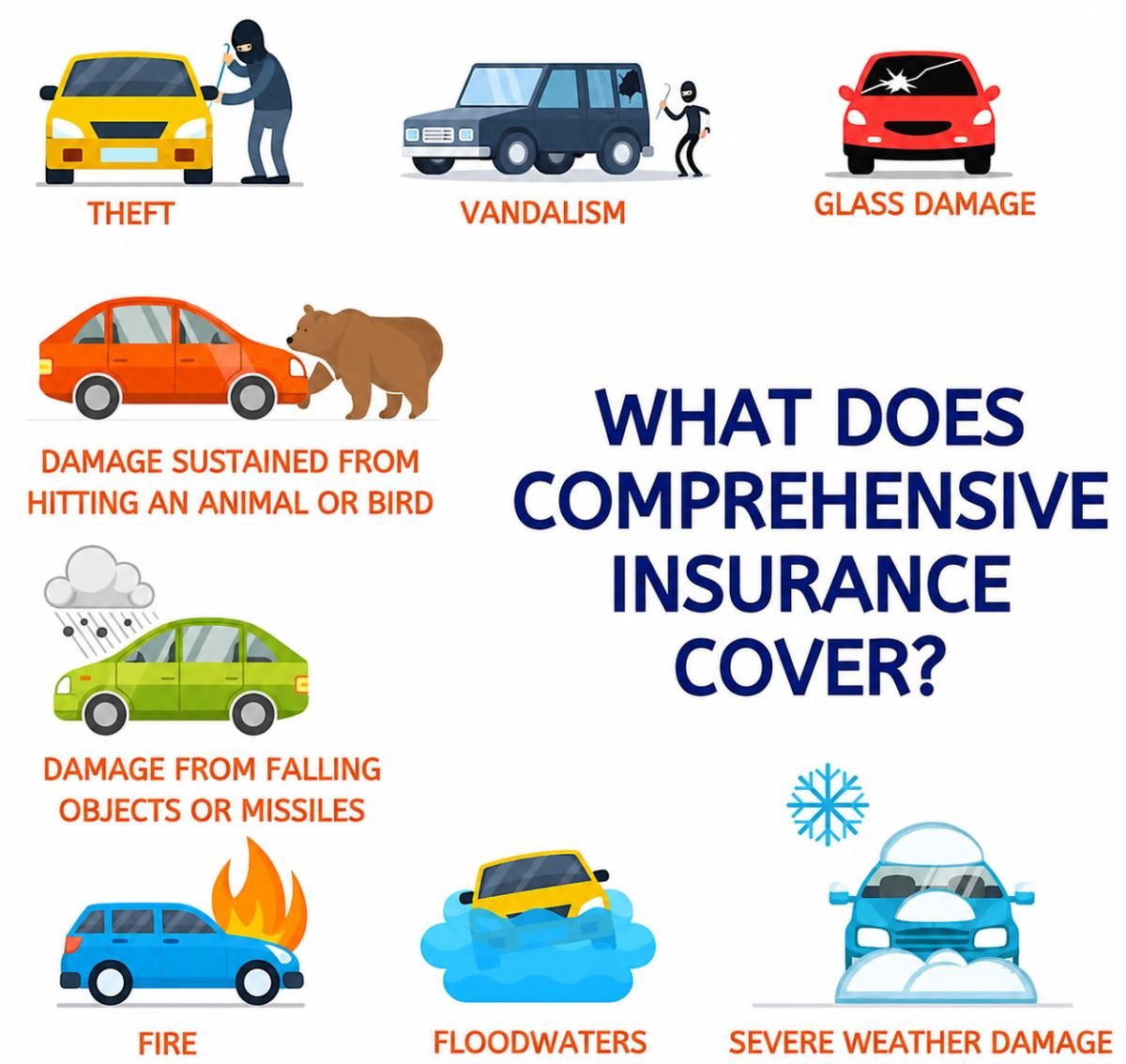
Comprehensive car insurance helps pay to repair or replace your vehicle after covered non-collision events, such as theft, vandalism, fire, severe weather, falling objects, glass damage, and animal-related losses. Insurers may also refer to it as “other than collision” coverage.
No state requires comprehensive coverage by law. However, lenders and leasing companies usually require both comprehensive and collision insurance while a vehicle is financed or leased. Once the loan or lease ends, you can generally decide whether keeping comprehensive coverage is worth the cost.
What does comprehensive car insurance cover?
What types of situations will comprehensive insurance cover?
- Theft: including theft of the vehicle or covered parts, such as a catalytic converter
- Vandalism: such as broken windows, keying, or slashed tires
- Fire: including accidental or electrical fires
- Weather events: such as hail, flooding, windstorms, hurricanes, and wildfires. Drivers dealing with storm dents can review does auto insurance cover hail damage for a closer look at deductibles, repair costs, and claim requirements. Drivers in areas with unstable ground can also ask whether car insurance covers sinkholes.
- Falling or flying objects: such as tree limbs, rocks, or debris that falls or is thrown into the vehicle
- Animal strikes: such as hitting a deer or another animal. Drivers should also know what to do if they hit a deer and which coverage may apply.
- Glass damage: including windshield or window damage not caused by a collision. Because state rules can affect glass deductibles, Florida drivers should review whether Florida car insurance covers windshield replacement before filing a claim.
- Civil disturbance: such as covered damage resulting from riots
- Rodent damage: Some policies may cover direct chewing or nesting damage to wiring, hoses, or insulation. Review does auto insurance cover rodent damage to understand how pest exclusions, gradual damage, and mechanic documentation can affect a claim.
Driving into an object already lying in the road is generally handled under collision coverage rather than comprehensive coverage.
What does comprehensive insurance exclude?
Comprehensive coverage generally does not pay for:
- Damage from colliding with another vehicle or object (collision coverage handles this)
- Normal wear and tear or mechanical breakdown. If the engine stops working, review whether auto insurance covers engine failure because coverage usually depends on whether the damage resulted from a crash, fire, flood, animal damage, or ordinary mechanical failure.
- Injuries to people (liability, MedPay, or PIP coverage applies instead)
- Personal belongings stolen from inside the car (typically a renters’ or homeowners’ insurance matter)
- Damage tied to unapproved vehicle modifications
Who needs comprehensive auto coverage?
Comprehensive auto coverage is most useful for:
- Drivers financing or leasing a vehicle, since lenders and leasing companies typically require it.
- Owners of newer or higher-value vehicles may find it expensive to repair or replace them.
- Drivers who could not comfortably pay for major vehicle damage or theft out of pocket.
- People living in areas with elevated risks of vehicle theft, hail, flooding, wildfire, vandalism, falling objects, or animal collisions.
Drivers who own an older, low-value vehicle outright may have less reason to keep comprehensive coverage. Because claim payments are limited to the vehicle’s actual cash value minus the deductible, the potential payout may not justify the annual premium.

Advantages and disadvantages of comprehensive insurance
| Advantages | Disadvantages |
|---|---|
| Covers a wide range of unpredictable events (theft, weather, vandalism, animal strikes) | Adds cost on top of state, required liability coverage |
| Payouts apply no matter who’s at fault | Only pays up to the vehicle’s actual cash value, which declines over time |
| Often, the only practical way to recover from a stolen or totaled vehicle | Can cost more than it’s worth on an older, low-value vehicle |
| Usually required, and therefore already budgeted for, on financed or leased vehicles | Doesn’t cover collision damage, injuries, or belongings inside the car |
How much does comprehensive car insurance cost?
Comprehensive coverage typically costs a few hundred dollars per year, but the actual price depends on the vehicle, location, insurer, claims history, and deductible selected.
The National Association of Insurance Commissioners reported an average annual comprehensive premium of $207 for 2022. More recent rate data analyzed by Insurify estimated average annual rates of $202 with a $1,000 deductible and $79 with a $2,000 deductible.
These figures should be viewed separately because they come from different years, driver profiles, deductibles, and methodologies. A higher deductible generally lowers the premium but increases the amount the policyholder must pay when filing a claim.
Full coverage policies cost substantially more because they combine liability, collision, and comprehensive coverage. Their total price should not be used to estimate the cost of comprehensive coverage alone.
Factors that move the price include:
- The vehicle’s value and replacement cost
- Theft and weather risk tied to the driver’s ZIP code
- The deductible selected
- Driving record and claims history
- Credit-based insurance score, where state law permits its use

How to file a comprehensive insurance claim
A complete auto insurance claim should include photos, repair estimates, police reports when required, receipts, and clear communication with the adjuster. Knowing the steps ahead of time can shorten how long it takes to get a vehicle repaired or replaced.
- Document the damage with photos or video before anything is moved or repaired.
- File a police report for theft or vandalism; most insurers require this before processing a claim.
- Contact the insurer promptly to open the claim.
- Get a repair estimate or adjuster inspection, depending on the insurer’s process.
- Pay the deductible; the insurer covers the remaining cost up to the vehicle’s actual cash value.
A comprehensive claim can affect a renewal premium, though usually by less than an at-fault collision claim would, since the loss generally isn’t considered the driver’s fault.
When can comprehensive coverage be added to a policy?
Adding comprehensive vehicle insurance doesn’t require waiting until the renewal date; most insurers allow it to be added mid-term with a simple policy endorsement. That flexibility matters for drivers who buy a more valuable car, pay off a loan, or simply reconsider their coverage partway through the year.
In most cases, a driver can contact their insurer or agent at any point to add comprehensive coverage, and the additional premium is prorated for the remainder of the current policy term. Common triggers for adding it include financing or leasing a new vehicle, buying a car outright, and wanting protection anyway, or moving to an area with higher theft or weather risk.
Can you buy comprehensive insurance by itself?
In most cases, no, comprehensive coverage can’t be purchased on its own without also carrying the liability coverage that states legally require. Insurers frequently add a further condition on top of that, tying comprehensive coverage to collision coverage as a package rather than selling them separately.
Every state sets its own minimum liability insurance requirements, and those minimums must already be in place before comprehensive coverage can be added to a policy. Many insurers also require collision coverage to be purchased alongside comprehensive, rather than allowing comprehensive to stand alone. In practice, this means comprehensive insurance is almost always one part of a broader policy rather than a single, isolated purchase.
How much comprehensive coverage do you need?
Unlike liability insurance, comprehensive coverage does not have a coverage limit for you to choose. The insurer generally pays up to your vehicle’s actual cash value, minus the deductible. Your main decisions are whether to carry comprehensive coverage and which deductible to select. You do not choose a dollar limit such as $50,000 or $100,000, as you would with liability coverage.
How to choose a deductible
Choosing a comprehensive deductible means balancing a lower premium with the amount you would pay when filing a claim. A higher deductible, such as $1,000 or $2,000, generally lowers the premium but increases your out-of-pocket cost. A lower deductible, such as $100 or $500, costs more but reduces your out-of-pocket costs after a covered loss.
Choose a deductible you could comfortably pay from savings without creating financial strain. Before raising it, compare the premium savings to the additional amount you would pay if you filed a claim.
Comprehensive insurance deductibles explained
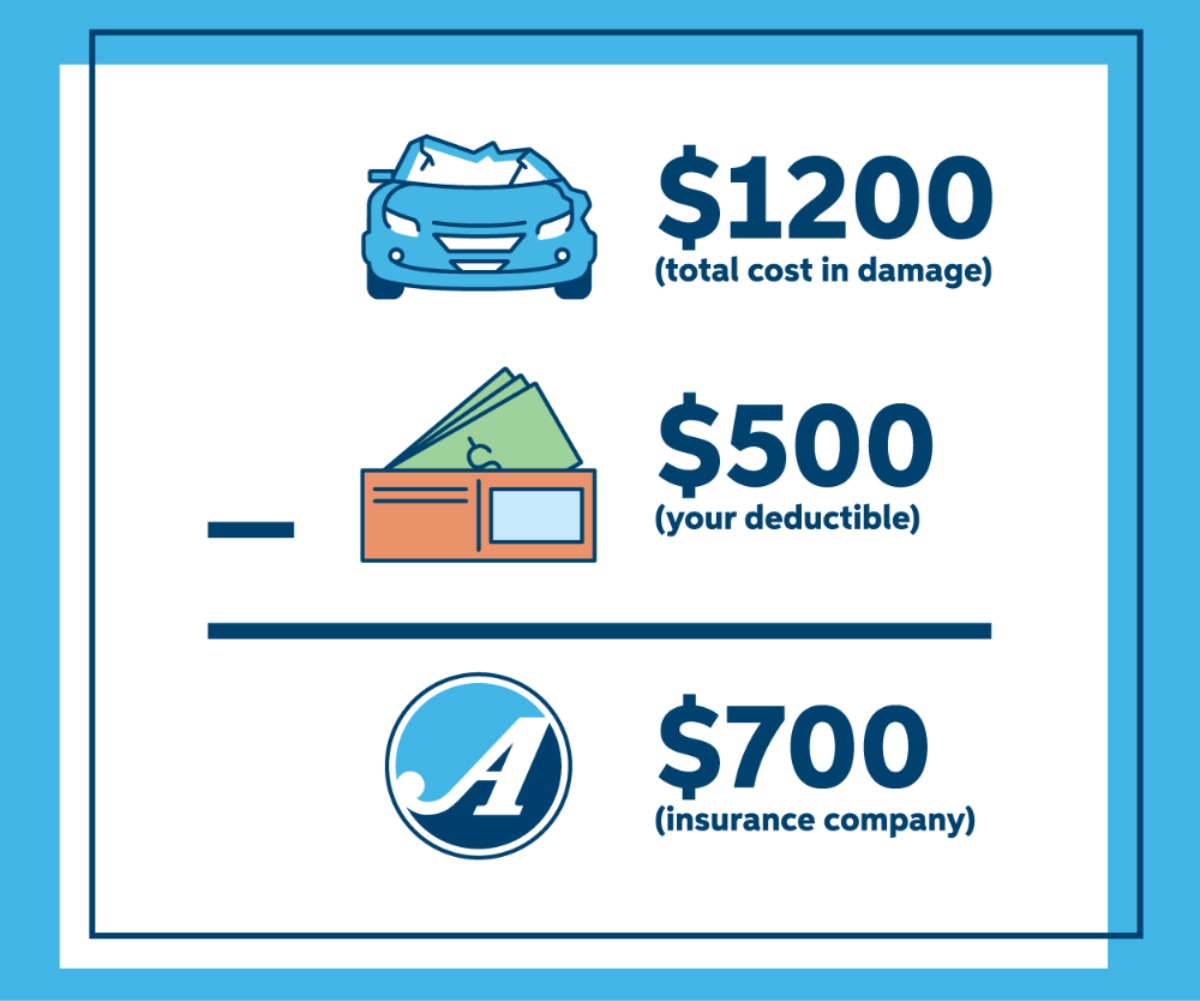
A comprehensive deductible is the amount you pay out of pocket for each approved claim before the insurer pays the remaining covered cost. Most insurers allow you to choose from several deductible options.
Comprehensive deductibles typically range from $100 to $2,000, with $500 and $1,000 being common choices. The deductible applies to each claim, not once per year. Therefore, if you file two separate comprehensive claims in the same year, you generally pay the deductible for both.
For example, if hail causes $3,000 in covered damage and your deductible is $500, you pay $500, and the insurer pays the remaining $2,500.
How comprehensive insurance claims are paid
Once a comprehensive claim is approved, how the payout actually reaches the vehicle owner depends on a few specific factors, most importantly, the vehicle’s actual cash value and whether a lender has a financial stake in the car. The concepts below explain how that payment is calculated and where it goes.
Actual cash value
Actual cash value (ACV) is the vehicle’s market value immediately before the damage occurred, based on its age, mileage, condition, and comparable sales in the local market. Insurers use ACV, not the original purchase price, as the ceiling for any comprehensive payout, which is why older vehicles receive smaller settlements for identical damage than newer ones do.

What is a total loss?
A vehicle is declared a total loss when the cost of repairing it exceeds a set percentage of its actual cash value, typically 70–80% of ACV, though the exact threshold varies by state. Once a vehicle crosses that threshold, the insurer typically pays the ACV (minus the deductible) rather than covering repairs and takes possession of the vehicle to sell for salvage.
Who receives the settlement?
If a vehicle has a lienholder, meaning it’s financed or leased, the insurer pays the lienholder first, since the lender holds a legal financial interest in the car until it’s paid off. Any amount remaining after the loan balance is paid in full goes to the vehicle’s owner. If the payout is less than what’s still owed, the owner remains responsible for the difference unless gap insurance is in place. For vehicles owned outright with no lienholder, the full ACV payout, minus the deductible, goes directly to the owner.
Comprehensive insurance vs. gap insurance
Comprehensive insurance and gap insurance solve two different problems, and confusing them can leave a real financial exposure unaddressed. Comprehensive coverage pays the vehicle’s actual cash value if it’s stolen or totaled; gap insurance covers the difference between that ACV payout and whatever is still owed on a loan or lease. Gap insurance is typically only available to drivers who already carry comprehensive and collision coverage, and it matters most for buyers who made a small down payment, financed for 60 months or longer, or bought a vehicle that depreciates quickly.
How to check if you already have comprehensive coverage
The fastest way to check is to review the policy’s declarations page, the summary document issued with every auto policy, which itemizes each coverage type, limit, and deductible separately. Most insurers also display this same breakdown inside their online account portal or mobile app. If neither is available, a quick call to the insurer or agent will confirm whether comprehensive coverage is active and what deductible applies.

Comprehensive vs. collision vs. liability insurance
Comprehensive car insurance is often confused with collision and liability coverage, even though each protects against a distinctly different kind of loss. Understanding the boundaries among the three makes it much easier to build a policy that accurately reflects a driver’s risk.
Comprehensive vs. collision
The clearest way to separate the two: comprehensive applies when the damage wasn’t caused by driving into something, and collision applies when it was.
| Scenario | Comprehensive | Collision |
|---|---|---|
| Hit a deer | Yes | No |
| Hail damages the hood | Yes | No |
| Vehicle stolen | Yes | No |
| Rear-ended another car | No | Yes |
| Hit a pothole or curb | No | Yes |
| Vandalism | Yes | No |
Liability vs. Comprehensive
Liability and comprehensive coverage protect entirely different parties. Liability insurance pays for injuries or property damage a driver causes to someone else, and it’s required in nearly every state as the legal minimum to drive. Comprehensive coverage, by contrast, protects the driver’s own vehicle from non-collision damage and isn’t required by any state. A driver can legally carry liability alone; carrying comprehensive without at least the state-required liability minimum isn’t an option insurers generally allow.
FAQ about comprehensive insurance
The questions below reflect what drivers most often ask when weighing comprehensive vehicle insurance against the rest of their policy. Each answer is kept short and direct, matching how these questions are typically typed into a search bar.
Does comprehensive insurance cover pothole damage?
No. Damage caused by driving into a pothole is generally handled under collision coverage because the vehicle struck an object or road hazard.
Does comprehensive insurance cover theft?
Yes. Theft of the vehicle or covered parts, such as a catalytic converter, is one of the primary losses that comprehensive coverage is designed to handle.
How to lower comprehensive insurance costs
- Raise the deductible if the higher out-of-pocket cost is affordable in an emergency.
- Bundle auto coverage with home or renters insurance for a multi-policy discount.
- Ask about discounts for anti-theft or tracking devices.
- Park in a garage or a covered area, if available.
- Shop the policy annually, as rate movements have been uneven in 2026.
- Consider a usage-based insurance (telematics) program, understanding that savings aren’t guaranteed.
Is comprehensive insurance full coverage?
Not on its own. “Full coverage” is informal industry shorthand for a policy that bundles liability, collision, and comprehensive together; it isn’t a specific product sold under that name. Comprehensive coverage is one piece of that bundle, not a substitute for the whole thing.
What are the key differences between comprehensive and liability coverage?
Liability coverage is the legal minimum in nearly every state and pays for damage or injuries a driver causes to others; comprehensive coverage protects the driver’s own vehicle from non-collision events like theft or weather. For an older, low-value vehicle, liability alone may be a reasonable choice. For a newer or higher-value vehicle, adding comprehensive coverage, typically alongside collision coverage, provides much more comprehensive protection.

RELATED AUTO INSURANCE GUIDES
Safety & Driving
Hot Car Safety Tips for Children, Pets and Drivers
Safety & Driving
How Does a Learner’s Permit Work? Rules and Next Steps
Safety & Driving
Thunderstorm Safety Tips at Home, Outdoors and in a Car
Auto Insurance
ACV vs Replacement Cost: How Insurance Payouts Differ