

Geological events such as sinkholes pose an unusual risk to vehicles because damage can occur while a car is parked, while it is moving, or when a road suddenly collapses beneath it. That makes insurance coverage less obvious than a typical crash or weather claim. In this guide, Auto Insure News explains how insurers classify sinkhole damage, which part of an auto policy responds, how parked and moving vehicle claims differ, and what to do if your car is damaged by a sudden ground collapse.
Does car insurance cover sinkholes?
Yes. Comprehensive car insurance is the coverage used when a sinkhole directly damages your vehicle. If the ground collapses beneath a parked car, a sinkhole swallows the vehicle, or falling debris from a collapse damages it, the loss is handled under examples of comprehensive claims, subject to the deductible and policy exclusions.
Liability insurance does not pay for sinkhole damage to your own vehicle. Collision becomes relevant when the vehicle itself strikes the collapsed roadway, pavement edge, barrier, or another object.
The distinction is therefore straightforward: direct ground-collapse damage points to comprehensive; vehicle-impact damage points to collision.
Sinkholes are not distributed evenly across the country. The U.S. Geological Survey identifies Florida, Texas, Alabama, Missouri, Kentucky, Tennessee, and Pennsylvania as the states where sinkhole damage has historically been most serious because large areas are underlain by soluble rock such as limestone and other carbonate formations.
Quick answer: If a sinkhole directly damages your parked vehicle, file the loss under comprehensive coverage. If you drive into a collapsed section of roadway and the car suffers impact damage, collision coverage can apply. Liability-only insurance does not repair your own vehicle.
Why sinkhole claims are different
Sinkhole claims are unusual because insurers classify a loss based on how the vehicle was damaged, not simply on the event occurring nearby.
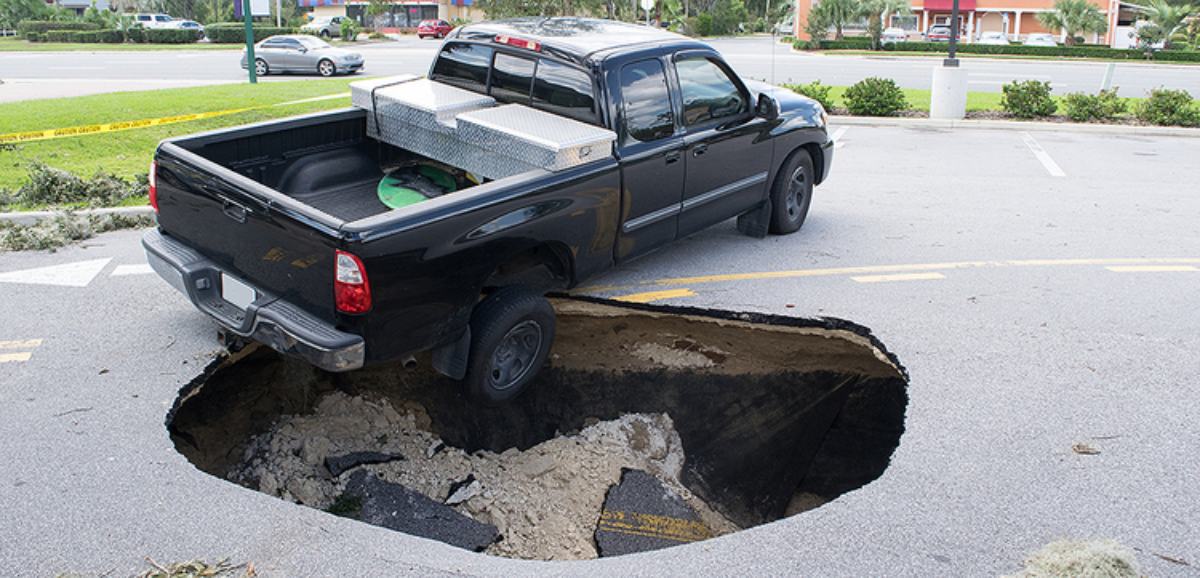
Consider two vehicles damaged by the same sinkhole. One car is parked when the ground beneath it disappears. The second car is moving and strikes the exposed edge of the collapsed roadway. Both incidents involve the same sinkhole, but the physical causes of the damage differ.
The parked vehicle has suffered a direct ground-collapse loss. That belongs under comprehensive. The moving vehicle has sustained impact damage, which may qualify the claim for auto collision coverage.
This cause-of-loss analysis is the key to understanding sinkhole insurance claims.
Three common sinkhole scenarios
Most vehicle sinkhole claims fall into one of three practical scenarios.
1. A parked car falls into a sinkhole
This is the clearest and most comprehensive claim. The vehicle was stationary when the ground collapsed beneath it. There was no driving error and no conventional vehicle collision.
Comprehensive pays for covered physical damage to the vehicle after the deductible. If the car cannot be economically repaired, the insurer evaluates it as a potential total loss.
2. A moving car drives into a collapsed road
When a driver hits the exposed edge of a collapsed road, drops into a depression, or strikes another object due to the collapse, collision coverage covers the resulting impact damage.
For example, a road suddenly opens ahead of you, and your front suspension strikes the pavement edge before the vehicle drops into the depression. The immediate damage was caused by the vehicle striking an object or the roadway surface, so collision coverage is appropriate.
If the earth simply collapses beneath a vehicle without the driver’s movement creating an impact, the loss belongs on the comprehensive side. The physical mechanism of damage controls the classification.
3. Debris from a collapse falls onto the vehicle
Suppose a retaining wall, garage, tree, sign, or another object falls onto your parked car after the ground beneath it gives way. Falling-object damage is handled under comprehensive.
Auto insurance protects the vehicle itself. Laptops, tools, luggage, merchandise, and other property inside the vehicle fall under the applicable homeowners, renters, business property, or specialty coverage rather than ordinary comprehensive auto coverage.

How each type of car insurance handles sinkhole damage
| Coverage | Sinkhole damage to your car? | When it applies |
|---|---|---|
| Liability | No | Does not pay for physical damage to your own vehicle |
| Collision | Yes, for impact damage | Applies when the vehicle strikes the collapsed roadway or another object |
| Comprehensive | Yes | Applies to direct ground collapse, falling objects, water, and other covered non-collision damage |
| Full coverage, including comprehensive and collision | Yes | The cause of damage determines whether comprehensive or collision handles the claim |
“Full coverage” is not an official insurance product. It is simply shorthand commonly used to refer to a policy that includes liability, collision, and comprehensive coverage. Always verify the actual coverages listed on the declarations page.
Sinkhole vs. pothole vs. road collapse
These events can look similar from behind the wheel, but they do not automatically belong under the same coverage.
| Damage type | Coverage | Why |
|---|---|---|
| Pothole impact | Collision | The vehicle strikes a road hazard |
| A sinkhole opens beneath a parked car | Comprehensive | Direct ground-collapse loss |
| A moving car strikes the edge of a sinkhole | Collision | Vehicle impact causes the damage |
| Ground collapses beneath a vehicle | Comprehensive | Ground movement directly damages the vehicle |
| Falling debris damages a parked car | Comprehensive | Falling-object loss |
| Floodwater undermines or damages a parked vehicle | Comprehensive | Covered water damage is a non-collision loss |
The same principle applies to other catastrophic events. For example, wind, fallen trees, hail, and debris from severe storms are handled under comprehensive rather than collision. Our guide to car insurance coverage for tornado damage explains that distinction in detail.
Hail is another non-collision loss, but the deductible and proof requirements still depend on the policy. See whether hail damage is covered by car insurance before assuming every storm-related repair is automatically paid.
Other comprehensive questions involve causes such as rodents, where exclusions and proof of damage can matter; review whether rodent damage is covered by car insurance for comparison.
Mechanical breakdown is a different category from sudden external damage, so a sinkhole claim should not be confused with whether insurance covers engine failure.
The Florida question
Florida deserves special attention because sinkholes are a significant geological risk there, but the sinkhole law for homeowners should not be confused with auto insurance.
Florida Statute §627.706 requires authorized property insurers to provide coverage for catastrophic ground cover collapse and to make broader sinkhole-loss coverage available for an additional premium under qualifying property policies.
Those rules deal with property insurance covering structures and their contents. They do not replace comprehensive auto coverage for a damaged vehicle.
If a sinkhole opens beneath your Florida home and damages both the house and the car parked outside, you can end up with two separate claims: a property claim for the structure and a comprehensive auto claim for the vehicle.
That separation is important. A homeowner’s policy protecting the building does not automatically become the insurance policy for the automobile simply because both were damaged by the same geological event.

Homeowners vs. auto insurance: which policy pays?
One sinkhole can damage several types of property, but each asset belongs under the insurance designed to protect it.
- The vehicle itself: comprehensive auto insurance.
- The house or attached structure: applicable homeowners or property insurance.
- The driveway or other property: applicable property coverage and policy terms.
- Personal belongings inside the vehicle: homeowners or renters coverage may apply, subject to applicable limits and deductibles.
- Business tools, inventory, or commercial equipment: business-property, inland marine, cargo, or another applicable commercial policy.
Do not expect a single insurer or deductible to cover every damaged item. The car and the real property are separate insured interests.
What to do after a sinkhole damages your car
A sinkhole creates a safety problem before it creates an insurance problem. Do not approach a vehicle that is sitting on or next to unstable ground simply to photograph it.
Once authorities determine that the area is safe, begin the claims process. Our broader guide to how to claim vehicle insurance explains how the adjuster and settlement process work.
- Move to a safe location. Keep people away from unstable ground, utilities, damaged structures, and the edge of the collapse.
- Call emergency services when necessary. Report injuries, blocked public roads, utility damage, or immediate safety hazards.
- Do not attempt to recover the vehicle yourself. Sinkhole edges can continue collapsing.
- Photograph the scene from a safe location. Capture both the vehicle and the surrounding collapse so the cause of damage is clear.
- Report the claim to your insurer. Describe exactly whether the vehicle was parked or moving and how the damage occurred.
- Confirm which coverage and deductible are being applied.
- Use a qualified recovery or towing company. Specialized equipment may be required to remove the vehicle safely.
- Keep towing and storage invoices.
- Allow the insurer to inspect the vehicle before major repairs are performed.
- Audit the final settlement. Correct any inaccuracies in vehicle specifications, damage descriptions, or valuation data before accepting them.
When the vehicle is not drivable, ask immediately whether the policy includes towing and rental reimbursement. Those protections are separate from the comprehensive itself and should not be assumed to exist automatically.

How the deductible works
A comprehensive sinkhole claim uses the comprehensive deductible selected on the policy.
If covered sinkhole damage costs $4,000 to repair and your comprehensive deductible is $500, the insurer pays approximately $3,500.
If the covered repair costs only $400 with the same $500 deductible, there is no claim payment because the loss does not exceed the deductible.
The same principle applies to a covered total loss. The applicable deductible is deducted from the vehicle settlement.
What happens if the sinkhole totals your car?
A vehicle can become a total loss when the cost of recovery and repair no longer makes economic sense relative to its pre-loss value.
There is no single 75% rule that applies nationally, and drivers should not assume every state uses the same total-loss threshold.
For example, the Texas Department of Insurance explains that insurers determine total losses on a case-by-case basis and typically consider whether the repair cost plus salvage value equals or exceeds the vehicle’s actual cash value before the loss.
For a covered comprehensive total loss, the insurer determines the vehicle’s actual cash value (ACV) immediately before the sinkhole damage and subtracts the applicable deductible.
Auto Insure News recommendation: never treat the first total-loss valuation as a number you are required to accept without checking it. Verify the VIN, trim, mileage, equipment, pre-loss condition, and comparable vehicles used in the valuation. Wrong vehicle data produces wrong settlement numbers.
What about gap insurance?
The comprehensive settlement is based on the vehicle’s value, not on how much you still owe the lender.
If the insurer values the car at $20,000 but your eligible loan balance is $23,000, the comprehensive claim does not automatically erase the extra $3,000. Applicable gap protection is designed to address qualifying differences between the covered vehicle settlement and the remaining eligible finance or lease balance.
Gap protection must already be in place before the loss.
If you only have liability coverage
Your own liability insurance will not pay for sinkhole damage to your vehicle.
That remains true whether the car is swallowed while parked, damaged by falling debris, or destroyed by a ground collapse. Liability exists to protect against covered financial responsibility for injuries or property damage you cause to others. It is not physical damage insurance for your own car.
Adding comprehensive after the sinkhole occurs does not solve the problem. Insurance protects future covered losses, not damage that happened before the coverage became effective.
Drivers who live in a high-risk karst area and cannot comfortably replace their vehicle themselves should price comprehensive coverage before a loss occurs. When comparing auto insurance quotes, use the same comprehensive deductible, liability limits, driver information, and vehicle details across insurers. Otherwise, the cheapest quote may simply contain less protection.
Could someone else be responsible for the sinkhole damage?
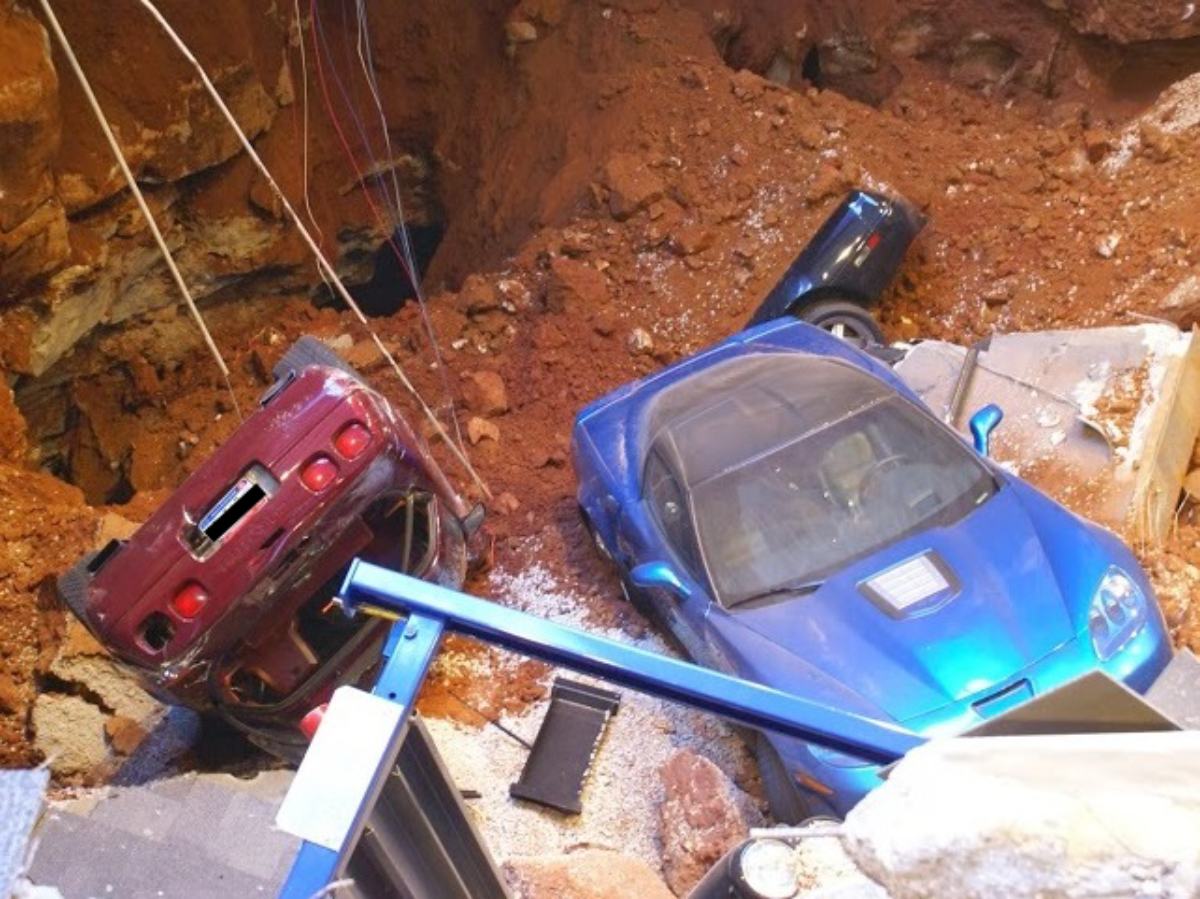
Yes. A third party can be financially responsible when evidence shows that negligent construction, excavation, utility work, drainage problems, or another preventable action caused or contributed to the collapse.
That is a separate issue from your own comprehensive coverage.
If comprehensive covers the vehicle, file your own auto claim first. Do not leave a damaged vehicle unrepaired while waiting months to determine whether a city, utility company, property owner, or contractor is legally responsible.
Preserve photographs, witness information, road-closure notices, construction records, correspondence, and anything else that documents what occurred. Your insurer can also pursue recovery from a responsible third party through subrogation after paying a covered claim.
Claims against government agencies have special notice requirements and liability rules that differ by state. When there is substantial damage and evidence that a public agency or contractor caused the collapse, obtain legal advice in the jurisdiction where the loss occurred.
What to check on your auto insurance policy
Open the declarations page and confirm these items before assuming you have sinkhole protection:
- Comprehensive or Other Than Collision coverage
- The comprehensive deductible
- Collision coverage and its deductible
- Rental reimbursement
- Towing or roadside assistance
- Gap protection if the vehicle is financed or leased
- The policy’s effective dates
- Any business-use restrictions that apply to the vehicle
Do not ask only whether you have “full coverage.” Ask whether the comprehensive is active and what deductible applies. Those two pieces of information answer the core sinkhole question immediately.
Common mistakes after sinkhole damage
The biggest mistakes occur when drivers misunderstand which policy protects which property or make decisions before the site is safe.
- Assuming liability insurance repairs your own vehicle.
- Assuming “full coverage” proves comprehensive is active without checking the declarations page.
- Trying to purchase comprehensive insurance after the sinkhole has already damaged the vehicle.
- Approaching or attempting to recover a vehicle before authorities determine that the ground is stable.
- Describing a moving-vehicle impact as simply “sinkhole damage” without explaining how the impact occurred.
- Discarding photographs, towing invoices, storage receipts, or other evidence.
- Assuming homeowners’ insurance automatically pays for the vehicle because the sinkhole formed on residential property.
- Assuming tools, merchandise, or other property inside the car are covered by comprehensive auto insurance.
- Accepting a total-loss settlement without checking the vehicle valuation.
- Waiting for a third party to accept responsibility before reporting a covered loss to your own insurer.
How Auto Insure News evaluates a sinkhole claim
Sinkhole claims become much easier to understand once the damage is separated from the geological event itself. The word “sinkhole” does not determine the coverage. The physical cause of the vehicle damage does.
At Auto Insure News, we evaluate these claims using four questions:
- Was the vehicle parked or moving? A parked car swallowed by collapsing ground points directly to comprehensive; a moving car striking the road can create a collision claim.
- Was it comprehensive and active before the collapse? Liability-only coverage cannot be converted into sinkhole protection after the loss.
- What property was actually damaged? The vehicle, house, personal belongings, and business equipment can belong under different insurance policies.
- Is there evidence of third-party responsibility? Your comprehensive claim and a negligence claim against a contractor, utility, property owner, or government entity are separate issues and should be handled separately.
Our recommendation: if your vehicle is worth enough that replacing it after an unexpected ground collapse would create a financial problem, keep comprehensive coverage active. Sinkholes are uncommon for any individual driver, but the financial outcome is simple when one occurs: comprehensive protects the vehicle; liability-only coverage does not.

RELATED AUTO INSURANCE GUIDES
Safety & Driving
Hot Car Safety Tips for Children, Pets and Drivers
Safety & Driving
How Does a Learner’s Permit Work? Rules and Next Steps
Safety & Driving
Thunderstorm Safety Tips at Home, Outdoors and in a Car
Auto Insurance
ACV vs Replacement Cost: How Insurance Payouts Differ