

Contractors, landscapers, delivery drivers, and small fleets operating in Highlands Ranch often assume a personal auto policy covers work-related driving. It typically does not. Once a vehicle regularly hauls equipment, transports clients, or carries business cargo, it falls outside what most personal policies are written to cover, and insurers can deny a claim once they determine the vehicle was being used commercially at the time of the loss.
Commercial auto insurance in Highlands Ranch protects vehicles, drivers, equipment, and the business itself from accidents, hail damage, theft, and liability claims. This guide from Auto Insure News covers Colorado’s insurance requirements, the risk factors specific to this part of Douglas County, coverage options, realistic cost ranges, and how to compare quotes.
Highlands Ranch Fleet & Commercial auto: 2026 snapshot
- Estimated Annual Cost: $1,200–$2,500 for single contractor trucks; $6,000–$15,000+ for small fleets (3–5 vehicles).
- Recommended Liability: Colorado requires a 25/50/15 floor, but high-traffic corridors like C-470 typically require $500,000 to $1,000,000 CSL.
- Urgent COI Requests: Need a Certificate of Insurance for an active commercial bid in Douglas County? Local independent brokers can typically issue same-day COIs once underwriting binds.
Which Highlands Ranch businesses need commercial auto coverage
Commercial auto insurance is built for vehicles used in business operations. It carries higher liability limits and covers situations that standard personal policies typically exclude once a vehicle is used for regular business purposes. A vehicle that earns income, carries business cargo, or transports clients needs a commercial policy rather than a personal one; a claims denial is the likely outcome if that distinction only surfaces after a loss.
The distinction matters across Douglas County generally, and in Highlands Ranch specifically, where suburban growth and a dense contractor and service-sector base mean a large share of local vehicles are doing double duty for business. For a broader breakdown of the underlying rule, see who needs commercial auto insurance; the categories below apply it locally.
Businesses that typically need a dedicated commercial policy in this area include:
- Landscapers and lawn care operators, who run pickup trucks, equipment trailers, and debris haulers daily across Douglas County
- Handymen and general contractors, whose cargo vans and work trucks carry tools, materials, and ladders
- Food truck operators, since a vehicle with permanently attached cooking equipment is a business-use vehicle that personal auto policies generally will not cover
- Fleet managers, meaning any business running three or more vehicles, from HVAC companies to cleaning services
- Independent contractors who regularly drive to job sites or carry business property or client materials
Occasional business use of a personal vehicle (an employee picking up office supplies, for instance) does not automatically require a full commercial policy. Hired and non-owned auto insurance (HNOA) is often the better fit in that case: it covers liability for personal or rented vehicles used on company time without replacing a commercial policy for vehicles the business owns outright.
Commercial fleet coverage in Highlands Ranch (3+ vehicles)
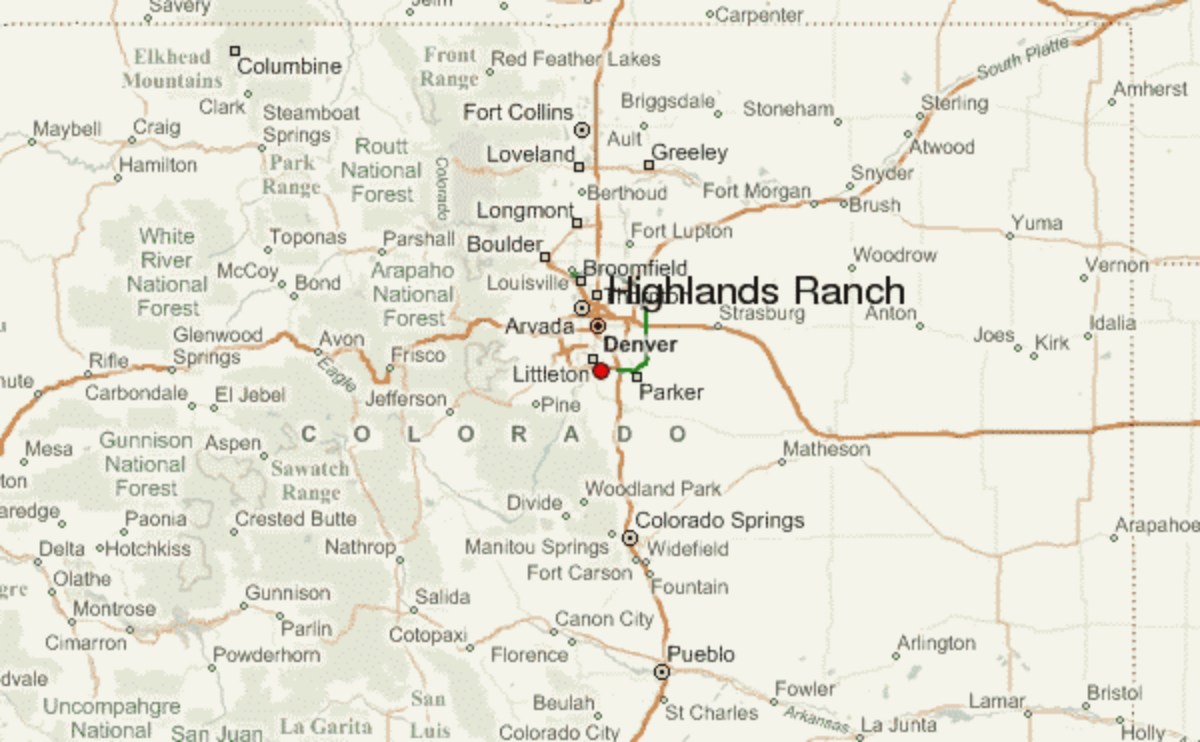
Douglas County businesses running three or more service vehicles (plumbing vans, landscaping trucks, courier units) often find that insuring each one under a separate policy creates coverage gaps and unnecessary administrative work. Dedicated fleet coverage consolidates those vehicles into a single program with a single set of liability limits and simpler driver management.
Scheduled vs. blanket fleet policies
Fleets of three to five vehicles typically start with a scheduled policy that lists each vehicle’s VIN and its assigned driver. As a fleet grows past five vehicles, it is worth asking an agent about an unscheduled, or blanket, fleet policy instead:
- Driver flexibility. Any employee with an approved MVR can operate any vehicle in the fleet without a formal policy change request each time assignments shift.
- Grace-period coverage for new vehicles. Newly purchased or leased vehicles are typically covered automatically for a short grace period before they need to be formally added to the schedule.
- One renewal date. Billing and administration run on a single annual cycle rather than staggered renewals for individual vehicles.
Managing hail exposure across a fleet
A fleet parked outdoors overnight in Douglas County carries a different kind of hail risk than a single vehicle does: one storm can damage several vehicles in the same event. It is worth asking an insurer directly whether the comprehensive deductible applies per occurrence or per vehicle: a per-vehicle structure means a single hailstorm could trigger several separate deductibles rather than one.
Telematics or GPS fleet tracking, discussed further below, tends to matter more as fleet size grows. Beyond the discount it can unlock, it gives a business its own record of vehicle location and driver behavior if a claim from a high-traffic corridor like C-470 or South Broadway is ever disputed.
What does commercial auto insurance cost in Highlands Ranch
Annual premiums vary widely by business type and vehicle count. The ranges below reflect general Colorado commercial insurance market patterns and national carrier benchmarks: they are estimates, not quotes, and an agent should be consulted for a specific fleet profile.
| Business Type | Estimated Annual Premium Range |
|---|---|
| Handyman / light contractor (1 vehicle) | $1,200 – $2,500/year |
| Landscaper (1–2 trucks + trailer) | $2,000 – $4,500/year |
| Food truck operator | $2,500 – $5,000/year |
| Small fleet (3–5 vehicles) | $6,000 – $15,000+/year |
| Commercial truck / car hauler insurance | $9,000 – $16,000/year |
Seven factors most affect the quote a Highlands Ranch business receives:
- Driver MVR (Motor Vehicle Record). Insurers pull three years of history for every listed driver; one at-fault accident or DUI can raise the entire policy’s premium.
- Vehicle type and GVWR. Heavier vehicles with higher replacement values cost more to insure, and a pickup with an attached work rack is rated differently than the same model used personally.
- Annual mileage. Higher mileage on corridors like C-470 and I-25 correlates with greater claim exposure, which insurers price directly.
- Industry and cargo type. A landscaper hauling a trailer daily costs more to insure than a consultant who occasionally drives to client meetings.
- Prior claims history. A single commercial auto claim in the past three to five years affects pricing; multiple claims can narrow carrier options.
- Coverage limits selected. Limits above the state minimum add premium cost, but the protection gap between 25/50/15 and $500,000 CSL is substantial.
- Sub-neighborhood within Highlands Ranch. ZIP code and neighborhood claim data influence pricing; the western and backcountry edges have different wildlife exposure than areas closer to I-25.
Commercial auto insurance providers serving Highlands Ranch
Highlands Ranch business owners can get quotes from national carriers, online small-business insurers, and local independent agencies. The right fit depends on vehicle type, business use, coverage limits, and whether Colorado PUC or FMCSA filings apply.
| Provider / Agency Type | Best For | Why It’s Worth Considering |
|---|---|---|
| Progressive Commercial | Contractors, landscapers, service vehicles, small fleets | Established commercial auto presence and online quoting |
| GEICO Commercial Auto | Small businesses wanting a fast quote | Broad availability and a simple quote process |
| State Farm | Owners who prefer a local agent | Commercial coverage for cars, pickups, vans, and box trucks |
| Nationwide | Businesses that want agent support | Commercial auto plus broader business insurance products |
| Allstate Business Insurance | Small service businesses | Commercial options for cars, vans, pickups, and trucks |
| Travelers (via independent agents) | Businesses comparing multiple markets | Typically quoted through local or independent agencies |
| NEXT Insurance | Solo operators and small contractors | Digital-first small-business insurance |
| Local independent agencies | Complex risks, fleets, PUC filings | Can compare several carriers and navigate Colorado-specific requirements |
Price alone is a poor basis for choosing a carrier. A low-cost policy that excludes trailers, hired and non-owned vehicles, equipment in transit, seasonal drivers, or Colorado PUC filing requirements can leave real gaps. Comparing coverage limits and exclusions before binding a policy matters as much as comparing prices.
Need a same-day certificate of insurance (COI) in Douglas County?
For Highlands Ranch general contractors, landscapers, and service fleets, winning commercial contracts often hinges on providing a current Certificate of Insurance (COI) before work begins. Many commercial property managers along Lucent Boulevard or Town Center Drive mandate proof of $1,000,000 Combined Single Limit (CSL) liability and list them as an Additional Insured.
How to expedite a COI or Colorado PUC filing:
- Choose an Independent Douglas County Broker: Direct national carriers (such as GEICO or Progressive direct) can take 24–72 hours to generate customized COIs or process Colorado PUC Form E filings. Working with an independent agency operating in the Denver South metro area (Highlands Ranch, Littleton, Centennial) allows you to speak directly with an account manager who can issue specialized contractor certificates the same afternoon.
- Keep your Master Driver & Vehicle Schedule Pre-Audited: Ensure all active vehicles (including trailers) and assigned drivers with clean 3-year MVRs are already listed on your commercial binder to prevent delays during underwriting review.
- Request Blanket Additional Insured Endorsements: If your fleet bids on multiple jobs each season, request an automated or blanket additional insured endorsement. This eliminates the need to pay per-certificate endorsement fees every time you sign a new commercial client.
Colorado’s commercial auto insurance requirements
Understanding Colorado’s commercial vehicle insurance law is less about memorizing statutes than about knowing which coverage tier applies to a specific fleet.
The baseline: 25/50/15 liability minimums
Colorado’s mandatory auto insurance law (C.R.S. § 10-4-619) requires all motor vehicles registered in the state to carry at least the minimum liability coverage. For most business-owned light-duty trucks and vans, that baseline is:
- $25,000 bodily injury per person, per accident
- $50,000 bodily injury for all persons in a single accident
- $15,000 property damage per accident
This baseline covers most light commercial vehicles operating intrastate: contractor pickups, cargo vans under 10,001 lbs, and similar configurations. The statute sets a minimum liability floor rather than mandating a named “commercial auto policy,” but in practice, vehicles used primarily for business need one anyway. Personal auto policies routinely exclude business use, and regulated operations (PUC carriers, FMCSA-registered carriers) face higher mandatory minimums on top of this floor.
Higher limits by vehicle type
Higher minimums apply above the state baseline depending on vehicle weight, cargo type, and whether the operation is intrastate (governed by the Colorado PUC) or interstate (governed by federal FMCSA rules).
Table A: Colorado PUC intrastate property & passenger carriers (4 CCR 723-6-6008)
| Operation Type | Vehicle / Capacity | Minimum Required |
|---|---|---|
| Light intrastate vehicles | Under 10,001 lbs GVWR | 25/50/15 split limits |
| Regulated movers (intrastate) | Under 10,000 lbs GVWR | $300,000 CSL |
| Regulated movers & towing carriers | 10,000 lbs+ GVWR | $750,000 CSL |
| PUC passenger carriers | 8 or fewer passengers | $500,000 CSL |
| PUC passenger carriers | 9–15 passengers | $1,500,000 CSL |
| PUC passenger carriers | 16–32 passengers | $3,000,000 CSL |
| PUC passenger carriers | 33 or more passengers | $5,000,000 CSL |
Table B: FMCSA interstate requirements (49 CFR Part 387)
| Operation Type | Threshold | Federal Minimum |
|---|---|---|
| For-hire property carriers (non-hazmat) | GVWR 10,001+ lbs, interstate | $750,000 CSL |
| For-hire property carriers (non-hazmat) | Under 10,001 lbs, interstate | $300,000 CSL |
| Interstate passenger carriers | 15 or fewer passengers | $1,500,000 CSL |
| Interstate passenger carriers | 16 or more passengers | $5,000,000 CSL |
CSL (Combined Single Limit) means a single liability pool per accident, covering bodily injury and property damage from a single limit. Split limits, like 25/50/15, cap each damage category separately. Regulated carriers generally need CSL; it pays claims more flexibly but requires a higher overall coverage commitment.
A vehicle’s GVWR (Gross Vehicle Weight Rating), listed on the driver-side doorjamb or in the owner’s manual, is the data point that determines which tier applies. Misreading it risks buying the wrong coverage tier entirely.
Colorado PUC rules that matter for local contractors
The Colorado Public Utilities Commission (PUC) adds a second compliance layer on top of the state minimums for regulated operations:
- Intrastate carriers subject to PUC regulation must register and obtain the applicable permit; a Form E insurance filing is required to activate that operating authority.
- PUC filing requirements change from time to time, so Colorado-regulated motor carriers should confirm current Form E and Motor Carrier ID requirements directly with the Colorado PUC or a Colorado-licensed commercial agent before submitting a filing, rather than relying on a static summary.
- Food trucks are generally treated as business-use vehicles needing commercial auto coverage. Food spoilage, foodborne illness, and customer injury claims fall outside commercial auto and require separate general liability and product liability policies.
- Rideshare and TNC drivers are subject to Colorado’s TNC Act (Senate Bill 14-125). A 50/100/30 minimum applies while the app is on and the driver is waiting for a request; the TNC’s $1,000,000 CSL coverage applies from ride acceptance through drop-off. A personal auto policy without a rideshare endorsement leaves the driver exposed during the waiting period. Operators considering premium black-car services should also review uber black insurance requirements.
Why Highlands Ranch businesses pay more for commercial auto coverage
Insurers weigh ZIP-code-level claim data, and Douglas County’s risk profile pushes commercial auto premiums higher in specific, documented ways.
Hail is the leading vehicle risk in the area
Highlands Ranch sits inside Colorado’s Front Range hail belt. The National Weather Service’s Storm Prediction Center puts the corridor between Denver and Colorado Springs at roughly 13 large hail events a year, among the highest hail frequencies anywhere in North America.
Colorado Division of Insurance data released by the Governor’s office in February 2026 found that hail accounts for 26% to 54% of homeowner insurance premiums, depending on the county, and roughly half of premiums along the Front Range. Separately, the National Insurance Crime Bureau has ranked Colorado second nationally, behind only Texas, in hail-damage claims, with Denver among the metro areas reporting the highest claim volumes.
For a fleet parked outdoors overnight, a single storm can damage several vehicles at once and pull all of them off the road for repair. Whether a $2,500 comprehensive deductible fits that exposure is worth a direct conversation with an agent; the same deductible carries different risk in Douglas County than it would in a part of the state outside the hail belt.
C-470 is a documented crash corridor
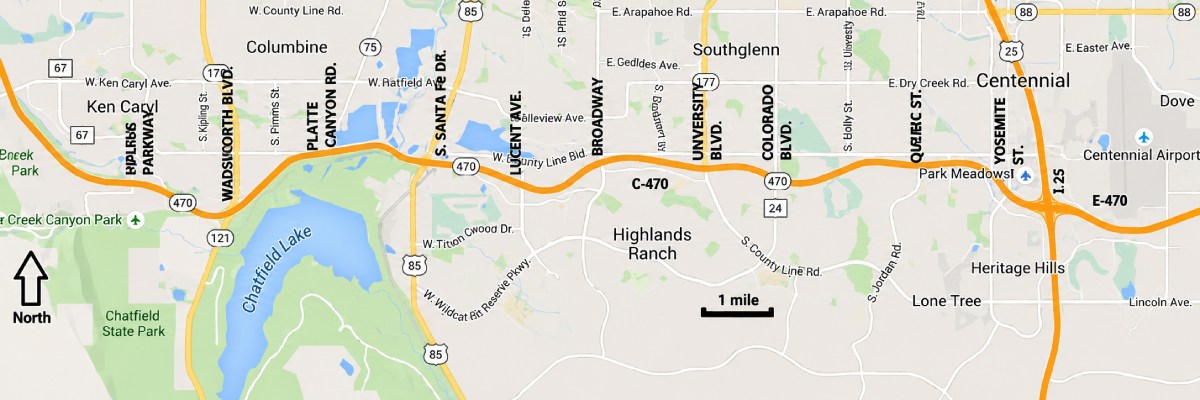
C-470 is the main east-west arterial through Highlands Ranch and carries an estimated 100,000 vehicles a day through Douglas County, according to CDOT figures reported by CBS News Colorado. Its interchange with Lucent Boulevard has recorded multiple serious and fatal crashes in recent years, including a rollover that killed two people in 2022 and a seven-vehicle collision in 2021, a pattern that has made the interchange a recurring subject of local crash coverage rather than an occasional hotspot.
Other corridors worth factoring into liability-limit decisions include I-25 near Lincoln Avenue, Santa Fe Drive (U.S. Highway 85), Highlands Ranch Parkway near Town Center, and the Quebec/Lucent interchange at C-470. These are the routes service vans, pickup trucks, and contractor rigs travel most often.
Wildlife collisions along the western edge
Highlands Ranch borders the BackCountry Wilderness Area, a large community-managed open-space preserve with an active deer population. Collision risk runs higher along the western and southern edges of the community. These are the same routes many landscapers and early-morning service crews travel before dawn. comprehensive insurance claims addresses wildlife strikes; without it, a deer collision that destroys a front fascia, radiator, and airbag system on a work truck becomes a full-out-of-pocket repair.
Coverage types to understand before buying
Commercial liability is where Colorado law starts, not where a well-built policy ends. Reviewing the types of car insurance helps clarify how liability, comprehensive, collision, UM/UIM, and HNOA fit together before sitting down with an agent.
| Coverage Type | What It Covers | Required in Colorado? |
|---|---|---|
| Commercial Liability | Injury/damage caused to others | Yes (25/50/15 minimum) |
| Comprehensive | Hail, theft, wildlife, and weather damage | No, but critical in Douglas County |
| collision insurance | Vehicle repair/replacement after a crash | No |
| Uninsured/Underinsured Motorist (UM/UIM) | Accidents caused by uninsured drivers | The insurer must offer it |
| Hired & Non-Owned Auto (HNOA) | Employees using personal/rented vehicles for work | No |
| Cargo / Equipment Coverage | Tools, materials, goods in transit | No, but essential for most contractors |
Commercial liability pays for bodily injury and property damage caused to others in an at-fault accident. The 25/50/15 minimum is a floor, not a ceiling: for contractors running heavy-equipment trailers or frequently driving C-470, $100,000/$300,000 or higher limits are a defensible business decision.
Comprehensive coverage pays for non-collision damage: hail, theft, fire, flooding, and wildlife strikes. Given Douglas County’s documented hail exposure, it functions as a near-mandatory addition for any fleet that sits outdoors overnight.
Collision coverage pays for a vehicle’s repair or replacement after an at-fault crash, regardless of the other driver’s insurance status. For a service business where a truck out of commission means zero billable hours, collision coverage protects income as much as the vehicle itself.
UM/UIM coverage must be offered by Colorado insurers, though it can be waived in writing. Waiving it is usually a mistake: Colorado has a meaningful share of uninsured drivers, and getting hit by one while driving a commercial vehicle carrying a trailer, tools, or employees is a scenario worth a few extra dollars a month to avoid.
HNOA covers employees using personal or rented vehicles during company time. It does not replace a commercial policy for business-owned vehicles; it fills the gap between an employee driving their own car to pick up supplies and full commercial fleet coverage.
Cargo and equipment coverage protects tools, materials, and job-site equipment loaded into or onto a vehicle, which a standard commercial auto policy generally excludes. For landscapers hauling mowers and blowers, handymen with a van full of power tools, or contractors transporting materials, a cargo or inland marine endorsement closes this gap: without it, a stolen trailer full of equipment is not a commercial auto claim at all.

Six ways to lower commercial auto costs without cutting coverage
The goal is maximum protection at a competitive price, not minimum coverage at minimum cost. Six strategies consistently move the needle for Douglas County business owners:
- Raise comprehensive and collision deductibles strategically. A higher deductible lowers the annual premium: a sound trade for businesses with cash reserves to absorb a $2,000–$3,000 deductible after a hailstorm.
- Install telematics or GPS fleet tracking. Many Colorado commercial insurers offer 5–15% discounts for driver-monitoring technology. Before adopting it, review how driver data and location tracking affect a policy; these systems also reduce claim disputes by providing objective data on driver behavior at the time of an incident.
- Bundle with a Business Owner’s Policy (BOP). Combining policies often yields multi-policy discounts of 10–20% and simplifies renewals by consolidating relationships with fewer carriers.
- Hire clean-record drivers and run MVRs proactively. One high-risk driver can raise an entire fleet’s premium. Running Motor Vehicle Record checks before adding any driver (including seasonal employees) is most important for landscaping businesses that expand their crews each spring and summer.
- Work with an independent agent who shops multiple carriers. Rates for an identical Highlands Ranch business profile routinely vary by $1,200 or more annually between carriers. A Colorado-licensed independent agent can run that profile against 20–30 insurers and identify which carriers have the strongest appetite for a specific industry and vehicle type.
- Audit the vehicle schedule annually. A sold or retired vehicle still listed on a commercial policy means paying for coverage that no longer applies. Reviewing the schedule at each renewal keeps it aligned with the actual fleet.
Choosing the right commercial auto policy in Highlands Ranch
Getting fleet insurance right is less about the lowest quote than about matching the coverage structure to the specific operation.
Independent agents vs. direct carriers
Independent agents licensed in Colorado can access multiple carrier markets at once. That matters in Highlands Ranch, where carrier appetite for hail exposure, commercial truck risk, and contractor vehicle types varies significantly: an independent agent can place a policy with a carrier that specializes in a given industry and region, rather than forcing the profile into a one-size-fits-all program.
Direct carriers (Progressive Commercial, GEICO Commercial, and similar) offer speed and convenience, and work well for straightforward single-vehicle policies on lower-risk profiles. For more complex operations (multiple vehicles, a mix of HNOA and owned vehicles, PUC filings, or specialized cargo coverage), an independent agent typically delivers a better outcome.

What to have ready when requesting quotes
Walking into a commercial auto quote unprepared costs time and often produces a policy that does not fully reflect the operation. Learning how to get quotes for car insurance works best with the same vehicle list, driver roster, business use, liability limits, deductibles, filings, and cargo needs presented to every carrier:
- VIN, year, make, model, and GVWR for every vehicle to be insured
- Primary use of each vehicle (job-site hauling, client transport, material delivery, etc.)
- Estimated annual mileage per vehicle
- Driver’s license numbers for all operators, including part-time and seasonal employees
- Three-year MVR history for each listed driver
- Current policy declarations page, if switching carriers
- Business entity type (sole proprietor, LLC, S-corp, etc.)
- DOT number and Colorado-issued Motor Carrier ID, for PUC-regulated carriers
- A list of any cargo, equipment, or trailer coverage needs
Ready to compare commercial auto quotes?
Commercial auto rates depend on your vehicles, drivers, mileage, cargo, coverage limits, and Colorado filing requirements.
Compare options before choosing a policy.
Questions worth asking before signing
- Does this policy cover the specific use case, including trailer coverage, equipment in transit, or permanently attached food truck equipment?
- Are seasonal and part-time employees covered while operating company vehicles?
- Does the policy include HNOA for employees using personal vehicles on company time?
- How does this carrier handle hail claims in Douglas County, and what is the typical repair authorization timeline?
- Does this policy satisfy Colorado PUC Form E filing requirements for a motor carrier operation?
- What does the policy exclude for cross-state trips into Wyoming, Utah, or New Mexico? Interstate trips trigger FMCSA minimums, not Colorado PUC minimums.

RELATED AUTO INSURANCE GUIDES
Safety & Driving
Black Ice on the Roads: How to spot it and handle a skid
Auto Insurance
Car Insurance Umbrella Policy: Coverage, Cost and Limits
Auto Insurance
Michigan Car Insurance: Rates, Companies & PIP Coverage
Safety & Driving
Texting and driving: risks, statistics, laws and prevention