
Hitting a deer is one of the most common and unsettling things that can happen on a rural road, especially in late fall. This guide from Auto Insure News walks through exactly what to do in the moments after a deer collision, which coverage pays for the damage, whether a claim will raise your rates, and how to lower your odds of hitting one in the first place.
The first steps to take right after hitting a deer
- Get to a safe place. Pull onto the shoulder if you can, turn on your hazard lights, and turn off the engine.
- Stay in your vehicle. A wounded deer can be unpredictable and dangerous, so do not approach it.
- Call the authorities. Dial 911 or the local police if anyone is hurt, the deer is blocking the road, or your car is badly damaged. A police report also helps your claim.
- Document everything. Take clear photos and video of the damage, the scene, and any fur, blood, or marks on your car, even if the deer runs off.
- Check whether your car is safe to drive. Look for leaking fluid, loose parts, broken lights, a bent hood, or flat tires. If anything looks unsafe, call for a tow.
- Contact your insurer. Report the incident through the app, website, or claims line and start your claim as soon as possible.
Do you have to report hitting a deer?
Whether you are required to report a collision with a deer depends on state regulations. Many states mandate reporting if the collision results in injuries or property damage exceeding a certain threshold (e.g., $1,000 or $1,500), and some jurisdictions require you to notify local wildlife officials or the Department of Natural Resources if the animal dies. When in doubt, contact the authorities; leaving the scene of a serious collision can lead to legal trouble, and a police report will significantly simplify the insurance claims process.
For more details on coverage in Potsdam, drivers can consult our guide to car insurance in Potsdam, New York.
Even if the deer runs off and your car looks fine, it is worth stopping to photograph any fur, blood, or marks and to check for hidden damage. Damage under the hood or to the radiator is not always visible at first, and having a record of the incident protects you if you need to file a claim later.
Does car insurance cover hitting a deer?
Yes, if you carry comprehensive car insurance. Because a deer strike is a sudden event outside your control, insurers treat it as a comprehensive claim, similar to hail damage covered by car insurance or damage from a falling object, rather than a collision claim. For coverage to apply, your car generally has to make contact with the animal. Comprehensive pays to repair or replace your vehicle, minus your deductible.
When swerving to avoid a deer becomes a collision claim
There is one important exception. If you swerve to avoid a deer and end up hitting another car, a tree, a guardrail, or a ditch, that damage is covered under collision coverage, not comprehensive. It can also be treated as an at-fault accident, since losing control is considered within your control, even when an animal caused it. In short, hitting the deer is a comprehensive claim, while missing the deer and hitting something else is a collision claim.
What if you only have liability coverage?
If you carry only state-required liability coverage, none of the damage to your own car is covered, whether you hit the deer or swerve into something. Liability insurance only covers injuries and property damage you cause to other people. Drivers who lease or finance a vehicle are almost always required to carry comprehensive and collision insurance, so they are usually protected.

Comprehensive vs. collision after a deer crash
| Scenario | Coverage that pays |
|---|---|
| You hit the deer directly | Comprehensive |
| A deer runs into your parked or moving car | Comprehensive |
| You swerve and hit another car | Collision (your car) + Liability (their car) |
| You swerve and hit a tree or guardrail | Collision |
| You carry liability only | Not covered |
How much does a deer claim cost, and what about the deductible?
Deer damage is not cheap. Data from State Farm and MoneyGeek shows repair costs at record highs, and industry estimates place the total damage from deer collisions at more than $10 billion a year. A comprehensive claim is paid minus your deductible, which is typically $250, $500, or $1,000. For example, if a deer causes $4,500 in damage and your deductible is $500, you pay the first $500, and your insurer covers $4,000. If the damage is close to or below your deductible, it may not be worth filing a claim.
Are you at fault, and will a deer claim raise your rates?
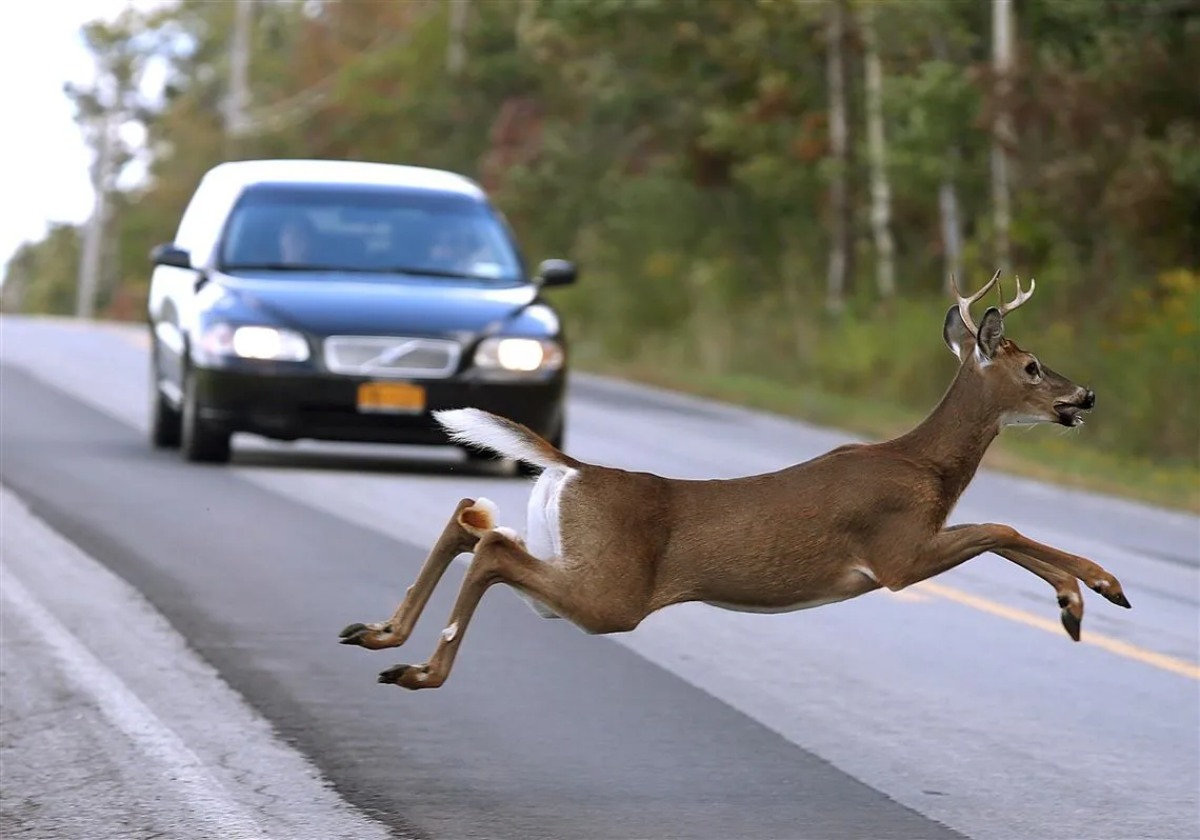
In most states, hitting a deer is not treated as an at-fault accident because it is viewed as unavoidable. Since comprehensive claims usually carry no fault, they are less likely to raise your premium than an at-fault collision. That said, it is not guaranteed. Whether your rate changes depends on your insurer, your state, and how many claims you have filed recently. Swerving into another vehicle and causing a collision is more likely to affect your rate.
How likely are you to hit a deer?
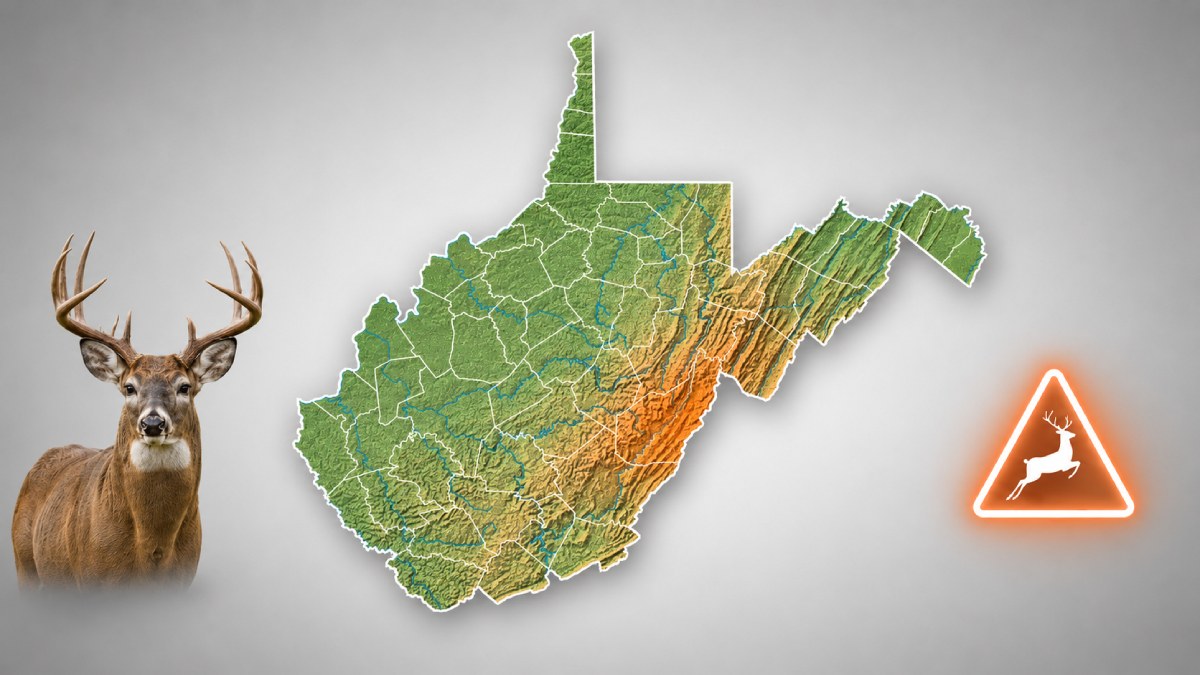
According to State Farm, U.S. drivers filed about 1.7 million animal collision claims between July 2024 and June 2025, with deer accounting for more than 1.1 million of them. The national odds of an animal collision are about 1 in 139. The risk is far higher in some states:
- West Virginia: 1 in 40
- Montana: 1 in 53
- Wisconsin: 1 in 58
- Michigan: 1 in 61
- Pennsylvania: 1 in 62
Deer are most active and collisions peak in October, November, and December during mating and hunting seasons, especially around dawn and dusk.
How to lower your odds of hitting a deer
- Slow down and stay alert at dawn and dusk, when deer are most active.
- Use high beams when there is no oncoming traffic so you can spot eyes on the roadside sooner.
- Remember that deer travel in groups. If one crosses, expect more behind it.
- Heed deer crossing signs, which mark known high-traffic areas.
- Brake firmly, do not swerve. Most safety experts advise braking hard and staying in your lane rather than swerving, which often causes a worse crash.
- Always wear your seat belt.
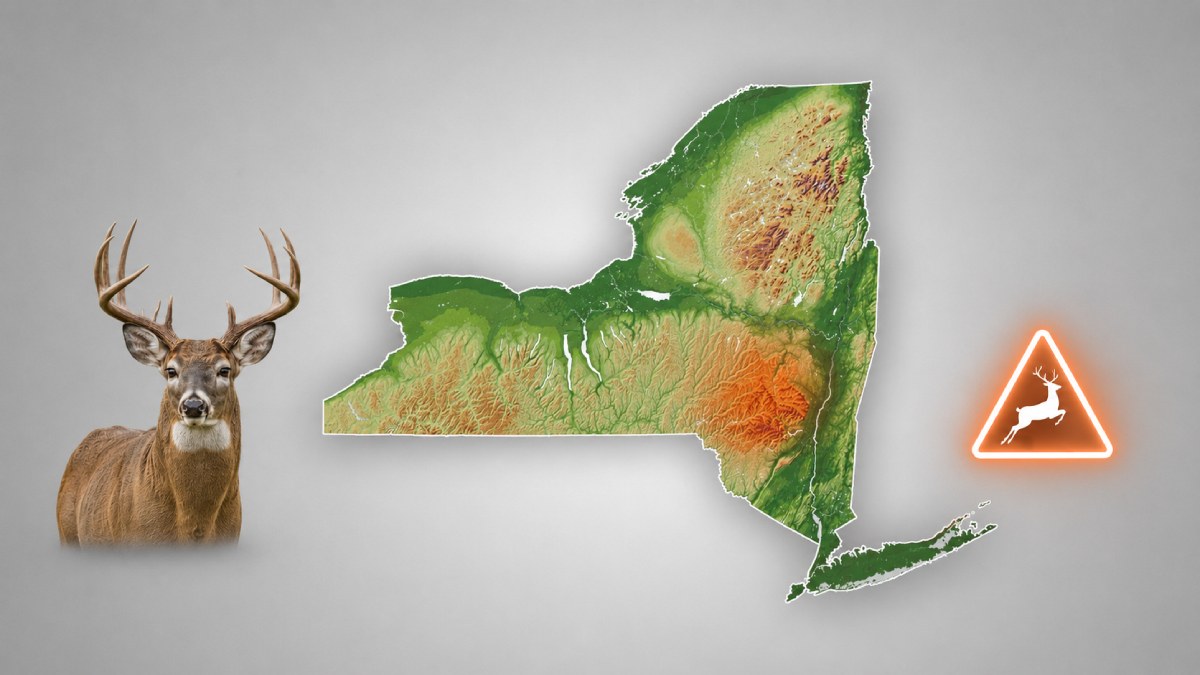
Deer collisions and New York drivers
New York, especially the rural Upstate and North Country regions, sees heavy deer activity along wooded roads. Drivers in snowy, rural areas such as Potsdam face the double risk of winter weather and frequent deer crossings, which makes comprehensive coverage especially valuable there. The same coverage that pays after a deer strike also handles cold-weather claims, as our guide on whether car insurance covers snow damage explains. New York does not treat a deer strike differently from other states: comprehensive still pays for the damage to your car, and no-fault, or Personal Injury Protection, applies only to injuries, not vehicle repairs.
Make sure your policy is ready for deer season
A deer can total a car in an instant, and only comprehensive coverage protects you when it does. The best time to check your policy is before the fall and winter months, not after a crash. Confirm that you carry comprehensive coverage, review your deductible, and if you want to compare rates, compare the same limits, deductibles, vehicles, and garaging address across insurers so the quotes are truly comparable.
Want to stay ahead of deer season and winter driving risks? Enter your email and state in the sign-up form below to get the latest coverage guides and rate updates from Auto Insure News.

RELATED AUTO INSURANCE GUIDES
Safety & Driving
Hot Car Safety Tips for Children, Pets and Drivers
Safety & Driving
How Does a Learner’s Permit Work? Rules and Next Steps
Safety & Driving
Thunderstorm Safety Tips at Home, Outdoors and in a Car
Auto Insurance
ACV vs Replacement Cost: How Insurance Payouts Differ