

Car insurance is mandatory for most drivers in the United States, but the reason goes beyond simply following the law. A serious crash can leave another person with medical bills, lost income, and property damage that the at-fault driver may have no realistic way to pay.
That makes the debate more complicated than it first appears. Requiring insurance can create a financial safety net for accident victims, but a mandate does not automatically make coverage affordable, and millions of drivers still go without it. At Auto Insure News, we look at why states require car insurance, why some drivers remain uninsured, and what the numbers tell us about whether mandatory coverage actually works.
What does the law require?
Nearly every state requires drivers to carry liability insurance or otherwise meet financial responsibility requirements. For a basic overview of understanding car insurance, start with the protections a policy is designed to provide. According to the Insurance Research Council, 49 states and the District of Columbia legally require drivers to purchase liability insurance. New Hampshire remains the only state without a general compulsory auto insurance law.
There is, however, an important distinction between compulsory insurance and financial responsibility.
A compulsory insurance system generally requires coverage before a vehicle can be legally registered or operated. A financial responsibility system can instead require a driver to demonstrate an ability to pay after certain accidents or violations.
New Hampshire follows the second approach. The New Hampshire DMV states that drivers generally may operate a vehicle without purchasing auto insurance in advance.
That does not remove their responsibility for an accident. An uninsured driver who causes a crash may still be personally responsible for property damage and medical expenses and can face future financial responsibility requirements.

Why do states require car insurance?
The main reason is simple: a person who causes an accident may not have enough money to pay for the damage.
A relatively minor crash may involve only vehicle repairs. A severe accident can lead to hospital bills, rehabilitation, lost wages, property damage, and long-term injury claims that can quickly exceed what an average household could pay from savings.
Liability insurance establishes a source of payment before an accident happens. Instead of forcing an injured person to rely entirely on the at-fault driver’s personal finances, a liability policy can pay covered claims up to its limits. That is a central answer to why car insurance is required.
This does not guarantee that every loss will be fully covered, but it gives accident victims a much more realistic path to compensation than relying solely on the assets of the person who caused the crash. In short, it is one reason for having car insurance.
Who pays when an uninsured driver causes a crash?
Going without insurance does not make the cost of an accident disappear. If an uninsured driver causes a crash and cannot pay the resulting losses, some of those costs may fall on the injured person’s own insurance or finances.
Depending on the circumstances and available coverage, the victim may have to rely on uninsured motorist coverage, health insurance, collision coverage, or personal savings while attempting to recover money from the at-fault driver. This is one of the strongest arguments for mandatory liability insurance: the decision to drive without coverage can affect people who had no role in it.
Why do some drivers still go without insurance?
If insurance is required almost everywhere, it is reasonable to ask why so many uninsured drivers are still on the road.
There is no single explanation.
- Insurance costs vary substantially between drivers. Premiums can be affected by driving history, location, vehicle, coverage choices, and other rating factors permitted by state law. In many states, credit-based insurance information can also influence rates.
- For lower-income households, an auto insurance premium can compete with rent, food, utilities, and other necessary expenses. Giving up the vehicle may not be realistic either, particularly when it is needed to get to work.
- Other drivers may allow coverage to lapse or continue driving despite insurance requirements and possible penalties.
The result is an important weakness in a compulsory system: making insurance legally required does not guarantee that every driver will maintain it.
How common is uninsured driving?
Uninsured driving remains a significant problem in the United States.
The Insurance Research Council estimated that 15.4% of motorists were uninsured in 2023.
That is more than one in seven drivers.
| Driver status | 2023 estimate |
|---|---|
| Uninsured | 15.4% |
| Underinsured | 18.0% |
| Uninsured or underinsured | 33.4% |
The problem becomes even larger when drivers with insufficient liability limits are included. IRC estimated that 18.0% of motorists were underinsured in 2023. Combined, 33.4% of drivers were either uninsured or underinsured, roughly one in three.
Those figures show that requiring insurance and ensuring adequate financial protection are not necessarily the same thing.
Why are uninsured rates so different by state?
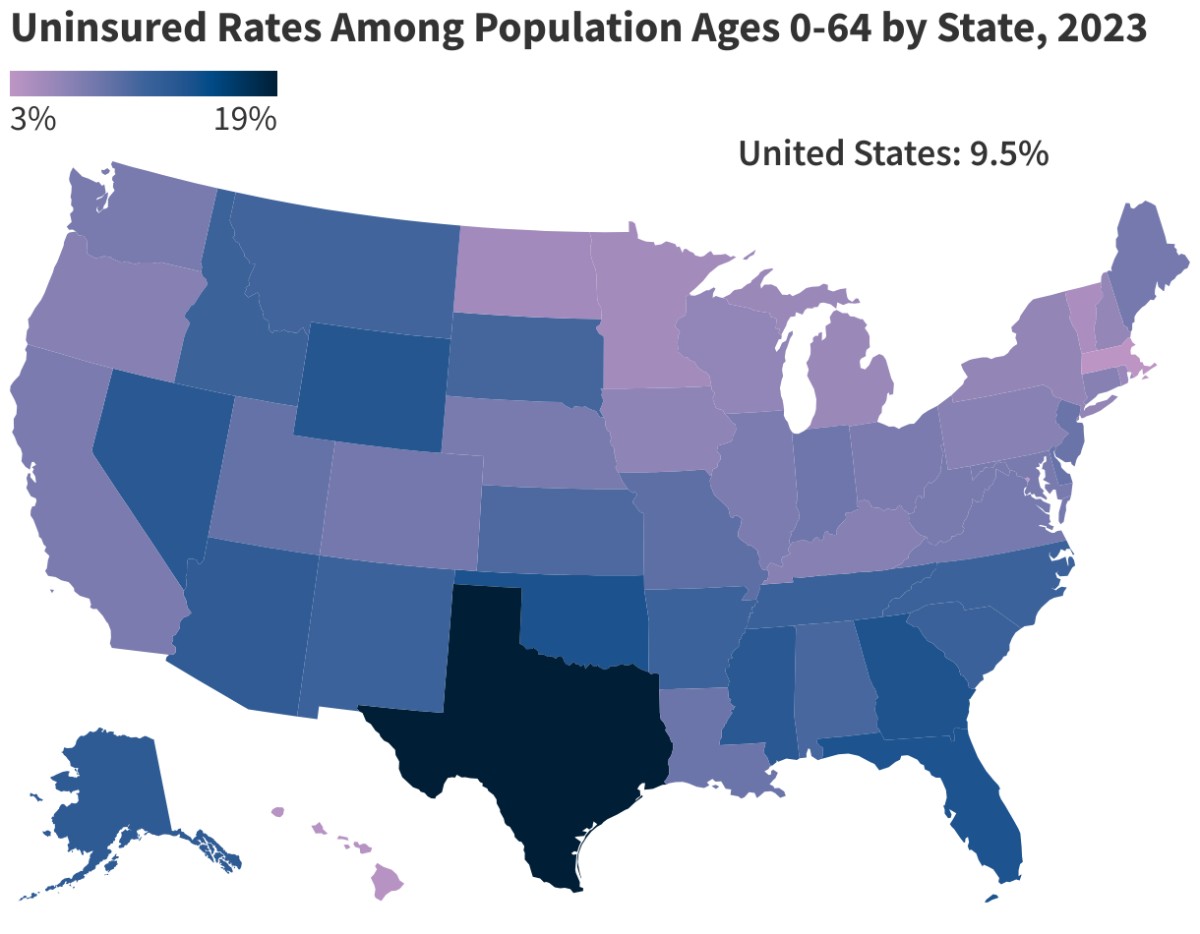
Uninsured driving is not distributed evenly across the country.
IRC estimated that Maine had an uninsured motorist rate of just 5.7% in 2023, while Mississippi’s rate was 28.2%. That is a major difference, even though both states have compulsory insurance requirements.
This is important because it shows why the effectiveness of mandatory insurance cannot be judged simply by asking whether a law exists. IRC identifies several factors associated with differences in uninsured and underinsured rates across states, including economic conditions, insurance costs, and state insurance laws and regulations.
Enforcement and insurance verification systems may also differ between states. In other words, compulsory insurance is only one part of a much larger system.
Do penalties stop uninsured driving?
States can impose serious consequences for driving without required insurance, but the national uninsured rate shows that penalties do not eliminate the behavior.
Consequences vary by state and circumstances and may include fines, suspension of a license or registration, reinstatement costs, and future proof-of-financial-responsibility requirements.
Virginia provides a useful example.
Before July 1, 2024, Virginia vehicle owners could pay an uninsured motor vehicle fee instead of maintaining insurance. The fee did not provide any insurance coverage or protect the driver from liability after an accident. Virginia eliminated that option on July 1, 2024. Vehicles registered in the state must now meet Virginia’s insurance requirements.
According to the Virginia DMV, an uninsured vehicle owner can face suspension of driving and registration privileges, a $600 non-compliance fee, and an SR-22 financial responsibility filing for three years before full reinstatement. Those penalties can encourage compliance, but they also illustrate a difficult policy question: what happens when the original reason a driver went uninsured was the cost of insurance itself?
Is minimum coverage enough?
Another problem remains even when every driver follows the law: the required liability limits may still be too low for a serious accident. A driver can therefore be fully insured under state law and still be underinsured for the loss they cause.
This is particularly important for bodily injury claims, where medical treatment, lost income, rehabilitation, and long-term injuries can push costs far above a minimum policy limit. Some states have responded by increasing required liability limits.
Virginia, for example, now requires policies effective on or after January 1, 2025, to provide at least:
- $50,000 for bodily injury or death of one person
- $100,000 for bodily injury or death of two or more people in one accident
- $25,000 for property damage
The issue is therefore not only whether insurance should be mandatory. It is also a question of whether the required limits provide meaningful protection in the event of a serious accident.
Why is New Hampshire different?
New Hampshire is often mentioned in this debate because it takes a different approach from the rest of the country. The state generally does not require every driver to maintain an auto insurance policy before operating a personal vehicle. Learn more about New Hampshire car insurance requirements and exceptions.
But driving without insurance does not mean driving without financial responsibility. The New Hampshire DMV explains that an uninsured driver involved in an accident may be personally responsible for the other party’s property damage and medical expenses. Certain accidents or violations can also trigger requirements to demonstrate future financial responsibility.
New Hampshire lawmakers revisited the issue in 2026. House Bill 1568 proposed requiring owners of registered vehicles to maintain liability insurance, provide proof of coverage at registration, and carry minimum limits of 25/50/25.
The New Hampshire House ultimately classified the bill as Inexpedient to Legislate, so the proposal did not replace the state’s existing approach. That makes New Hampshire particularly useful in this debate. It shows that the real policy question is not whether drivers should be responsible for the damage they cause; they already are, but whether proof of the ability to pay should be required before an accident happens.

What happens if you drive without insurance?
The consequences depend heavily on where you live. To understand the legal and financial risks in more detail, see is it illegal to not have car insurance.
If your state requires insurance, a lapse can create problems even if you never cause an accident. Depending on state law, you may face fines, registration suspension, license restrictions, reinstatement costs, or additional insurance filing requirements.
The financial risk becomes much greater if you cause a crash while uninsured. Without liability coverage, you may be personally responsible for another person’s vehicle damage, medical expenses, lost income, and other damages resulting from the accident.
A judgment against an uninsured driver does not disappear simply because the driver did not have insurance. If cost is making it difficult to maintain coverage, compare quotes before allowing a policy to lapse. Ask insurers about available discounts and check whether your state offers an insurance program for qualifying lower-income drivers.
If you own your vehicle outright, you can also review optional coverages such as collision and comprehensive separately from liability insurance. A lender or leasing company, however, will commonly require physical damage coverage while it has a financial interest in the vehicle.
Should you consider uninsured motorist coverage?
The number of uninsured and underinsured drivers makes this coverage particularly relevant. Uninsured motorist coverage can help when an at-fault driver has no liability insurance. Underinsured motorist coverage may apply when the driver’s policy limits are insufficient to cover a loss.
Whether these coverages are mandatory, automatically included, optional, or rejectable varies by state. Drivers should therefore review bodily injury and property damage options separately and check the limits available under their own state’s rules. This is one reason to understand the types of car insurance policies available.
Should car insurance be mandatory?
The strongest argument for mandatory car insurance is that someone injured by another driver’s mistake should not have to depend entirely on the at-fault driver’s ability to pay. Liability insurance creates a source of payment before the accident occurs and reduces the risk that the entire financial burden will fall on the victim.
But mandatory insurance is not a complete solution. More than one in seven U.S. motorists was still uninsured in 2023, and uninsured rates varied dramatically between states that all required coverage. Affordability, insurance prices, enforcement, economic conditions, and state regulations also play a role.
There is a second problem as well: carrying the legal minimum does not guarantee that a driver has enough insurance to cover a severe loss. The better question may therefore be broader than simply whether car insurance should be mandatory.
A useful insurance system has to do three things at once: require drivers to take financial responsibility, make compliance realistically achievable, and provide enough protection to matter when a serious accident happens.
For drivers, the practical answer is simpler. Follow the insurance or financial responsibility rules in your state, avoid unnecessary coverage lapses, and choose limits based on the financial loss you could realistically cause or face, not just the smallest amount the law allows.

RELATED AUTO INSURANCE GUIDES
Safety & Driving
Black Ice on the Roads: How to spot it and handle a skid
Auto Insurance
Car Insurance Umbrella Policy: Coverage, Cost and Limits
Auto Insurance
Michigan Car Insurance: Rates, Companies & PIP Coverage
Safety & Driving
Texting and driving: risks, statistics, laws and prevention