

Millennials are now at a stage of life where car insurance costs depend on much more than age. Some are still renting and driving one paid-off car, while others are financing newer vehicles, buying homes, combining policies, adding household drivers, or working remotely and driving fewer miles. If you are comparing car insurance for millennials, this guide by Auto Insure News explains what you may pay in 2026, which insurers are worth quoting, and how to lower the premium without weakening essential protection.
How much does car insurance for millennials cost?
Whether you search for car insurance for millennials or auto insurance for millennials, there is no special “millennial car insurance rate.” The phrase “millennial car insurance” refers to a shopper, not a separate policy. A millennial pays according to the same rating factors insurers use for other adult drivers: age, driving history, location, vehicle, coverage, mileage, claims history, and other factors permitted by state law.
The Pew Research Center defines Millennials as people born between 1981 and 1996. In 2026, that places the generation at roughly 29 to 45 years old, depending on their birth year.
For the national context, Bankrate’s June 2026 analysis reports an average full-coverage premium of approximately $2,697 per year across its standardized U.S. driver profile. Its age analysis puts a 30-year-old driver at roughly $2,877 per year and a 40-year-old at roughly $2,697 per year.
| 2026 benchmark | Average annual full-coverage premium | What does it tell you |
|---|---|---|
| Age 30 | About $2,877 | The younger end of the millennial range can still pay somewhat more |
| Age 40 | About $2,697 | Age-related pricing has largely flattened compared with younger-driver years |
| National benchmark | About $2,697 | Useful comparison point, not a target price for your policy |
Source: Bankrate’s 2026 car insurance rate analysis. These are sample national averages, not personal quotes.
The important conclusion is that age is no longer the dominant pricing problem for most millennials. By this stage of adulthood, your ZIP code, vehicle, driving record, insurer, coverage choices, mileage, and other permitted rating factors can move the premium much more than simply turning 35 or 40.
Those factors work together, so a personal quote is more useful than a national average for comparing coverage.
Why car insurance generally gets cheaper as millennials age
The steepest age-related insurance penalty occurs much earlier in a driver’s life. By the late 20s and 30s, the effect begins to flatten because the driver has accumulated substantially more experience.
That does not mean every birthday triggers a premium decrease.
A 40-year-old who moves into an expensive ZIP code, buys a high-cost vehicle, causes an accident, or substantially increases coverage can pay more than that same person paid at 35.
What actually affects a millennial’s premium
- Driving record: at-fault accidents, DUI convictions, and moving violations can materially increase rates.
- Vehicle: value, repair costs, theft exposure, performance, and safety systems all matter.
- Location: claim frequency, traffic, theft, weather, and state insurance regulations affect pricing.
- Annual mileage: Driving fewer miles can reduce exposure to insurers that materially rate mileage.
- Credit-based insurance information: this can affect rates in states where its use is permitted.
- Coverage: liability limits, collision, comprehensive, UM/UIM, and deductibles directly change the premium.
- Household drivers: adding a spouse, a young driver, or another household member can substantially change the policy.
- Claims history: prior losses can affect underwriting or pricing according to state law and insurer rules.
Two 35-year-old millennials should not expect similar premiums merely because they are the same age.
Best car insurance for millennials in 2026: companies to quote
There is no single best insurer for Millennials. The correct company is the one that produces the strongest combination of price, coverage, service, and policy features for your individual profile.
This is why Auto Insure News does not recommend ranking insurers solely on a single national premium table.
A useful shortlist for 2026 includes:
| Insurer | Why a millennial should quote it | Main limitation to remember |
|---|---|---|
| Auto-Owners | Strong general pricing and broad policy options | Available only in selected states and primarily sold through agents |
| Geico | Broad availability, competitive national pricing, and strong self-service tools | Your personal rate can still differ substantially from national averages |
| USAA | Strong option for eligible military households | Eligibility restrictions |
| Travelers | Competitive pricing plus extensive optional coverages | Not available in every state |
| Progressive | Useful for quote comparison, telematics, and varied driver profiles | Usage-based pricing can work differently by state and driving behavior |
| Nationwide | Strong usage-based insurance experience and flexible programs | Availability and program features vary |
| State Farm | Large agent network plus telematics savings | May not be the cheapest option for every profile |
| Erie | Strong shopping experience and reputation in its operating territory | Regional availability |
| Allstate | Broad coverage menu, local agents, and digital shopping options | Price should be compared carefully against competitors |
| Farmers | Useful for households needing bundling or more customized insurance | Pricing can be higher for some profiles |
J.D. Power’s 2026 Insurance Shopping Study found that consumers requesting auto insurance quotes obtained an average of 3.5 quotes, the highest level recorded in that study. That is a useful benchmark for millennials as well.
Our recommendation: Request at least three comparable quotes before choosing a carrier.
Use the best way to get auto insurance quotes: keep the vehicle, drivers, liability limits, UM/UIM limits, deductibles, and optional coverages identical.

How Auto Insure News evaluates insurers for millennials
We use four practical criteria rather than treating age alone as the selection method.
- Price: how competitive the insurer is when the same driver and coverage are quoted.
- Coverage: whether the company offers the liability, physical damage, and optional protection the household actually needs.
- Shopping and service experience: whether policy information, quoting, and account servicing are easy to understand.
- Discount structure: whether bundling, mileage, telematics, or other applicable programs fit the driver’s situation.
J.D. Power’s 2026 studies also show why price should not be the only factor. Digital purchasing continues to grow, but understanding of policy coverage remains weak: only 58% of customers surveyed in the 2026 Auto Insurance Study said they fully understood what their policy covered.
Do not use one national rate table as your quote
National insurer averages can identify companies worth investigating, but they should not be presented as the amount every 35-year-old millennial will pay.
A national study may assume:
- A specific age
- A clean driving record
- Good credit where legally permitted
- A particular vehicle
- A fixed set of liability limits
- Specific, comprehensive, and collision deductibles
Change one of those variables, and the ranking can change.
Travelers – worth quoting for coverage flexibility
Travelers remains a useful company to include in a millennial quote comparison because it combines competitive mainstream pricing with a broad selection of optional coverages.
The carrier can make particular sense for drivers with newer vehicles who want protection such as gap insurance, new-car replacement, roadside assistance, or accident-forgiveness options where available.
- Best for: drivers who want competitive pricing without stripping optional coverage.
- Check: state availability and the final premium after adding the endorsements you actually need.

USAA – first quote for eligible military households
USAA deserves an early quote when the household meets its membership requirements.
The limitation is straightforward: it is not open to every millennial. Eligibility generally centers on military members, veterans, and qualifying family members.
- Best for: eligible military-connected millennials.
- Check: compare the USAA quote with the voluntary market rather than assuming membership automatically produces the lowest rate.

Geico – strong option for self-service shoppers
Geico combines nationwide reach with online quoting and policy management tools, making it an obvious choice for consumers who prefer to handle insurance directly.
J.D. Power’s 2026 Digital Experience Study ranked Geico third in its insurer service segment, behind Amica and Nationwide.
- Best for: shoppers who value digital policy management and broad availability.
- Check: do not assume digital convenience means the lowest premium for your ZIP code.

Erie – strong regional option
Erie deserves a quote whenever you live inside its operating territory.
The company ranked highest among large insurers in J.D. Power’s 2026 Insurance Shopping Study for customer satisfaction with the purchase experience.
Its limitation is geographic rather than conceptual: many U.S. drivers simply cannot buy Erie.
- Best for: shoppers inside Erie’s footprint who want to compare regional and national insurers.
- Check: availability where the vehicle is garaged.
Auto-Owners – strong value where available
Auto-Owners is another regional insurer worth putting against the national carriers.
Bankrate’s current 2026 company analysis identifies Auto-Owners as a particularly strong option for budget-focused coverage, with competitive average pricing in its standardized comparison.
The company relies heavily on independent agents rather than a fully direct digital sales model.
- Best for: price-conscious shoppers comfortable working with an agent.
- Check: whether Auto-Owners operates in your state.

Progressive – useful for usage-based pricing
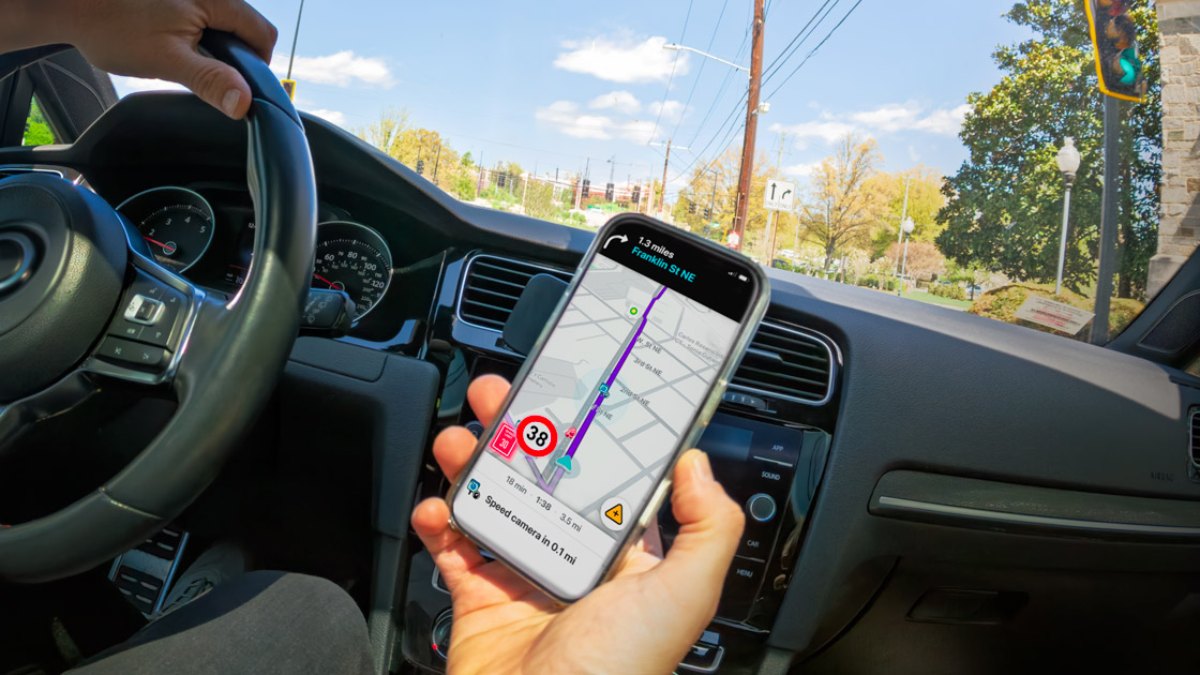
Progressive is particularly relevant for millennials considering usage-based insurance because Snapshot directly incorporates actual driving behavior into pricing.
Progressive currently states that Snapshot evaluates factors such as how much you drive, when you drive, braking and acceleration behavior, and, for some mobile-app participants, phone use while driving.
Snapshot is not guaranteed to reduce your rate. Progressive explicitly states that high-risk driving can result in a higher premium in states where that result is permitted.
- Best for: drivers willing to have actual driving behavior influence pricing.
- Check: which behaviors are measured and whether adverse driving can raise your rate in your state.

Nationwide – strong choice for usage-based insurance
Nationwide deserves attention from drivers specifically interested in telematics.
J.D. Power’s 2026 U.S. Auto Insurance Study ranked Nationwide highest in its usage-based insurance segment for the third consecutive year.
That does not make Nationwide automatically the cheapest. It does make the company a relevant benchmark when your strategy depends on mileage or driving-behavior pricing.
- Best for: drivers actively comparing UBI programs.
- Check: program availability and how your state allows telematics data to affect premiums.

State Farm – strong mix of agent support and telematics
State Farm is useful for millennials who want a local agent but also want driving-based pricing.
Its current Drive Safe & Save program provides an initial participation discount and advertises savings of up to approximately 30% based on driving behavior, subject to state availability and program rules.
State Farm monitors factors such as mileage and driving characteristics through the program.
- Best for: shoppers who want both a local agent and an optional telematics program.
- Check: state availability and the actual renewal discount rather than the maximum advertised percentage.

Farmers – worth comparing for bundled households
Farmers becomes more relevant when auto insurance is only one part of the household’s insurance picture.
A millennial who also needs homeowners, renters, umbrella, or other protection should compare the combined household premium rather than ranking companies based on auto insurance alone.
- Best for: households evaluating multiple policies together.
- Check: whether the bundle actually beats buying the policies from separate insurers.

Allstate – another broad-market comparison
Allstate gives shoppers another national carrier to place against Geico, Progressive, State Farm, and the regional companies available in their state.
J.D. Power’s 2026 Insurance Shopping Study ranked Allstate third among large insurers for purchase experience.
That does not make its premium automatically competitive for every driver. The purpose of adding Allstate to the list is to increase pricing competition.
- Best for: consumers comparing national insurers and local-agent support.
- Check: the final annual cost after every applicable discount.

Insurance tips for millennials: how to lower costs
Shopping between insurers is usually the first move. Optimizing the existing policy comes second.
The most useful strategies are:
- Compare equivalent quotes at renewal.
- Update annual mileage when driving habits change.
- Price a higher deductible you could actually afford after a claim.
- Compare bundled and unbundled household policies.
- Review collision and comprehensive on older paid-off cars.
- Use telematics only after understanding how the program affects pricing and privacy.
- Keep continuous coverage.
- Protect the driving record.
Use telematics when your driving profile fits it
Usage-based insurance can save money, but it is not automatically a discount program.
J.D. Power’s 2026 Insurance Shopping Study found that approximately 20% of customers now use UBI policies.
The underlying idea is straightforward: the insurer uses actual driving data rather than relying only on traditional rating factors.
Depending on the program, the insurer may monitor:
- Mileage
- Time of day
- Hard braking
- Rapid acceleration
- Speed
- Cornering
- Phone interaction
Before enrolling, review the program’s privacy terms and ask which data the insurer collects, how long it is retained, and whether poor driving results can increase your premium.
Low mileage deserves a new quote
Remote work, public transit, carpooling, and shorter commutes can materially reduce annual mileage.
Do not leave an old 15,000-mile commuting estimate on the policy if you now drive 6,000 miles per year.
Ask the insurer about:
- Lower-mileage rating tiers
- Low-mileage discounts
- Usage-based insurance
- Pay-per-mile insurance is available
Give an accurate estimate. Underreporting mileage to obtain a lower premium is not a savings strategy.
Bundle auto with renters or homeowners insurance carefully
Bundling can reduce the combined household insurance cost, but the advertised bundle percentage does not determine whether the deal is good.
Compare:
| Option | What to calculate |
|---|---|
| One insurer | Auto + home/renters after bundle discounts |
| Separate insurers | Lowest competitive auto quote + lowest competitive property quote |
Choose whichever produces the better total coverage for the household.
Marriage is another common trigger for insurance policy changes within this age range. If two drivers are combining cars or policies, our guide examines the question “is car insurance cheaper when married” and explains when combining coverage makes financial sense.

Stack legitimate discounts
Discount availability varies by insurer and state, but commonly available categories include:
- Multi-policy
- Multi-car
- Accident-free or safe driver
- Low-mileage
- Telematics
- Anti-theft equipment
- Paid-in-full
- Autopay
- Paperless billing
- Affinity or employer-group discounts, where available
Do not add the advertised percentages together. Insurance discounts can apply to different portions of the premium, have maximum limits, or interact with one another.
If you work in education, also check whether your insurer offers car insurance for teachers before assuming a telematics or bundled discount is the best option.
Match coverage to the value of the vehicle
Do not drop physical-damage coverage merely because a car is old.
Instead, calculate what you are buying.
For an older paid-off vehicle, compare:
- Current market value
- Collision premium
- Comprehensive premium
- Deductibles
- The amount you could afford to absorb if the car were totaled tomorrow
If dropping collision saves $500 per year but losing the vehicle tomorrow would force you into an unaffordable replacement loan, keeping the coverage can still be rational.
Understanding the different types of car insurance is more useful than applying a blanket rule such as “drop full coverage after 100,000 miles.”
Coverage millennials should review as their finances change
Insurance needs can change significantly between the ages of 30 and 45, even when the driver and car remain the same.
Liability limits
A driver with growing income, savings, home equity, or other assets has more to protect from a serious at-fault liability claim.
State minimum liability limits are legal minimums, not automatically appropriate financial limits.
Uninsured and underinsured motorist coverage
UM/UIM becomes valuable when another driver causes the crash but has no usable insurance or insufficient limits.
Do not automatically reduce UM/UIM simply to lower the monthly bill without understanding what losses would remain uncovered.
Collision and comprehensive
Keep the lender-required physical damage coverage in effect while financing or leasing the vehicle.
Once the car is paid off, review the economics periodically rather than canceling it automatically.
Umbrella liability
Millennials who have accumulated significant assets should also ask whether an umbrella policy makes sense after establishing sufficiently high underlying auto liability limits.
When millennials should re-shop for car insurance
Do not wait years between quote comparisons.
Run new quotes when:
- Your renewal premium increases materially.
- You move.
- You buy another vehicle.
- You marry or combine households.
- You add or remove a driver.
- You begin working remotely, and mileage falls.
- A ticket or accident ages off the insurer’s relevant rating period.
- Your credit profile changes substantially in a state where credit-based insurance information can be used.
- You purchase a home, and bundling becomes possible.
- You pay off an auto loan.
A renewal should be treated as a price check, not as an automatic decision to remain with the same insurer.
Mistakes millennials should avoid when buying car insurance
- Assuming your age group has one “best” insurance company.
- Using a national average as though it were a personal quote.
- Comparing premiums with different coverage limits or deductibles.
- Staying with one insurer for years without checking competitors.
- Entering a telematics program without understanding what data is collected.
- Keeping outdated annual mileage after changing jobs or working remotely. A job change can also raise the question, “does being unemployed affect car insurance?”
- Dropping liability protection merely to reduce the monthly payment.
- Dropping collision or comprehensive without calculating the financial loss if the vehicle is totaled.
- Assuming bundling is always cheaper.
- Allowing the policy to lapse while switching insurers.
How Auto Insure News evaluates auto insurance for millennials
Millennials should not be treated as a single insurance risk category. A 30-year-old renter driving 5,000 miles per year and a 44-year-old homeowner with three vehicles and teenage drivers can belong to the same generation while requiring completely different policies.
At Auto Insure News, we evaluate millennial auto insurance using four questions:
- Is the current insurer still competitive? Compare equivalent quotes rather than relying on loyalty or a national carrier ranking.
- Does the coverage match the household’s current finances? Liability needs generally become more important as assets and income grow.
- Has the way the vehicle is used changed? Remote work, shorter commutes, marriage, additional vehicles, and new household drivers can materially change the correct policy.
- Are you trading privacy or coverage for a discount? Telematics and aggressive coverage cuts should be evaluated based on their actual financial impact, not on their advertised monthly savings.
Our recommendation: millennials should stop shopping for “millennial insurance” and instead shop for their actual risk profile. Request at least three equivalent quotes, update mileage and household information, compare telematics only when the program fits your driving, and increase or reduce coverage according to the amount of financial risk you can genuinely absorb. These steps are usually more effective than chasing a demographic label when learning how to save money on car insurance.

RELATED AUTO INSURANCE GUIDES
Safety & Driving
How Does a Learner’s Permit Work? Rules and Next Steps
Safety & Driving
Thunderstorm Safety Tips at Home, Outdoors and in a Car
Auto Insurance
ACV vs Replacement Cost: How Insurance Payouts Differ
Safety & Driving
Black Ice on the Roads: How to spot it and handle a skid