

An insurer pricing car insurance for new drivers has little or no record to work from, which is why the first policy costs more. That gap applies at any age, from a sixteen-year-old with a fresh license to an adult who just moved to the United States. Auto Insure News looks at how new drivers get a first policy and which choices bring the price down fastest. Many of those choices happen before the first quote, while the car and the policy setup are still open.
Who counts as a new driver for car insurance?
Insurers use the label for anyone without a meaningful driving history in the United States. Age plays a part, but the deciding factor is how long the driver has been licensed and insured. A teenager who just passed the road test is the obvious case, though older drivers land in the same group for different reasons.
| New driver | Usual route to coverage | What raises the price |
|---|---|---|
| Teen living with parents | Added to a parent’s policy | Age and high crash risk in the first years |
| Adult licensed for the first time | Own policy | No years of licensed driving to rate |
| Recent immigrant | Own policy, often after getting a state license | No U.S. driving or insurance record |
| Driver returning after a long break | Own policy | No recent insurance history |
Many insurers keep a driver in the new category for roughly the first three years, though an adult usually climbs out faster than a teenager as the record builds.
How much is car insurance for a new driver per month?
Adding a new driver to a family policy costs roughly $43 to $271 a month, or $521 to $3,252 a year, depending on the driver’s age. A newly licensed 16-year-old sits at the top of that range. The figure falls with every year of age and experience.
Teenagers pay the most of any new drivers because crash risk peaks in the first years behind the wheel. Measured by miles driven, drivers 16 to 19 have a fatal crash rate about three times that of drivers 20 and older, a gap tracked for years by the Insurance Institute for Highway Safety (IIHS).
Full coverage, meaning liability plus collision and comprehensive, shows the jump most clearly. ValuePenguin’s April 2024 analysis priced a married couple, both 45, on a 2015 Honda Civic EX with full coverage and $500 deductibles, then added a child of different ages to the same policy.
| Driver added to the couple’s policy | Annual premium | Monthly equivalent | Increase over the couple alone |
|---|---|---|---|
| No added driver | $2,060 | $172 | Base rate |
| 16-year-old | $5,312 | $443 | $3,252 a year, or $271 a month |
| 21-year-old | $4,212 | $351 | $2,152 a year, or $179 a month |
| 25-year-old | $2,581 | $215 | $521 a year, or $43 a month |
The curve flattens quickly with age, since car insurance for new drivers over 21 costs far less than what a teenager adds to the same policy. For new drivers over 25, the extra falls to roughly a sixth of the 16-year-old figure.
Young drivers who buy a standalone policy face the steepest bills of all, since there is no household discount to share. The cost of car insurance for an 18-year-old commonly runs several hundred dollars a month and swings widely from one state to another.
Should a new driver join a family policy or buy a separate one?
A teen living at home is almost always cheaper to insure on a parent’s policy, where the household keeps its multi-car and bundling discounts. Some insurers also let the family assign the teen to the least expensive car on the policy.
Most insurers expect every licensed driver in the home to be listed, and leaving one off to save money invites a denied claim after a crash. Massachusetts puts a deadline on the notice, giving families 60 days after a new license to tell the insurer, as spelled out in the state’s tips for teen driving.
A separate policy makes sense when the young driver owns a car titled only in that driver’s name or lives at a different permanent address. Prices for the same teen can differ by thousands of dollars between insurers. For that reason, a comparison of the best auto insurance for teens starts with at least three quotes on identical coverage.
Does a learner’s permit holder need insurance?
A permit holder is usually covered by the policy on the car being driven, which in most families means a parent’s policy. Many insurers charge nothing extra until the full license arrives. Some still require the permit holder to be listed, so a call to the insurer before the first practice drive settles the question. Cars used by a driving school carry the school’s own coverage.
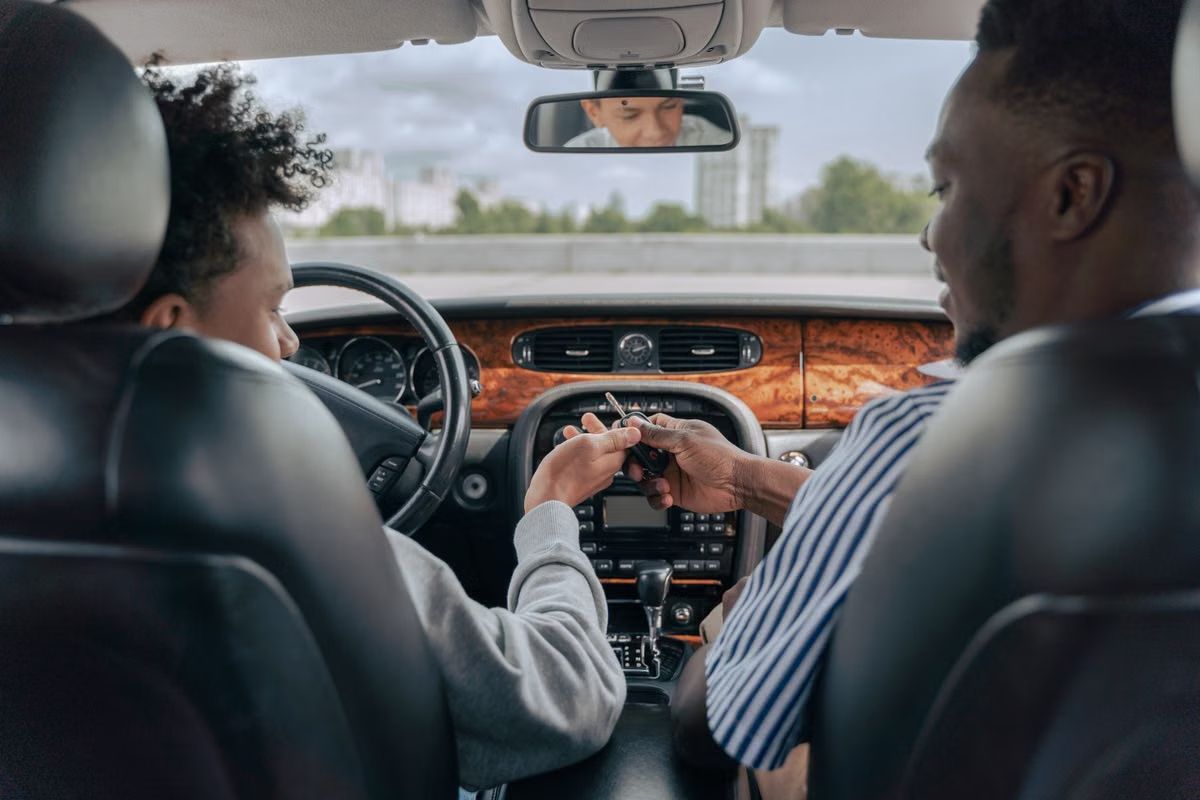
The licensing stages also shape the risk insurers see. Under graduated licensing, a new driver moves from supervised practice to an intermediate license with limits on night driving and teen passengers before full privileges. In a national IIHS study, licensing laws rated good were tied to fatal crash rates about 30 percent lower among 15- to 17-year-olds than laws rated poor. The steps differ by state, as covered in how a learner’s permit works.
How do adults and immigrants get insured as new drivers?
Adults licensed later in life
A first-time driver licensed as an adult avoids the age surcharge that hits teenagers but still lacks the history insurers use to set a price. Some companies add a charge for having no prior insurance at all. California rules that charge out, since its Insurance Code bars the absence of prior coverage, in and of itself, from being used to set auto rates or decide insurability.
In other states, a letter from a former insurer, even for a car driven years ago or for time spent as a listed driver on a family policy, may count toward insurance history at some companies. Where state law allows credit-based insurance scores, a thin credit file tends to nudge the price up for a driver who is new to both borrowing and driving.
Drivers with a foreign license
Recent arrivals face the same problem from another direction. Years of safe driving abroad rarely transfer, because most U.S. insurers look only at U.S. records. Some companies will write a policy on a foreign license or an International Driving Permit where the state accepts it, though most expect a state license once the driver becomes a resident. The deadline for that switch varies by state. A passport and the home-country license are the usual starting documents for a quote.
What does a new driver need to buy a first policy?
Insurers ask for the same basic details at the quote stage:
- The license number and date of birth of every driver in the household.
- The car’s vehicle identification number, or the exact model if the car has not been bought yet.
- The address where the car is parked overnight.
- A rough estimate of yearly mileage.
- Declarations pages from any earlier policy, which can count as insurance history.
A new driver who has not picked a car can price two or three likely models. Those quotes often settle the purchase itself. Coverage has to start before the car leaves the lot, and many dealers ask for proof.

Insurers disagree more about car insurance for new drivers than about almost any other kind of risk, which makes comparison shopping worth the effort. The usual steps to get auto insurance quotes still apply. At least three quotes built on identical limits and deductibles give a fair comparison. An independent agent prices several companies at once, a help when the situation is unusual. Paying the six-month premium in full often earns a discount as well.
How much coverage should a first policy carry?
State minimum liability is the cheapest legal option and often the riskiest one for an inexperienced driver. A first policy is usually built from these pieces:
- Liability coverage pays for injuries and damage the driver causes to others. A single serious crash may use up minimum limits. Higher limits usually add less to the premium than the jump in protection suggests.
- Collision and comprehensive, the two physical damage types of car insurance. Lenders require both on a financed or leased car. On an older car owned outright, they can cost more over a year or two than the car would be worth to repair.
- Gap insurance on a financed or leased car covers the difference between the loan balance and the car’s value if it is totaled. A small down payment leaves the widest gap, a point worth weighing alongside gap insurance on a used car.
- Uninsured motorist coverage pays when the at-fault driver has no insurance.
Paying for minor scrapes out of pocket helps a new driver more than most people expect. A small claim in the first year can add more in surcharges over the next few renewals than the repair itself cost.
Which car is cheapest to insure for a new driver?
Much of the price a new driver pays comes down to the model on the policy. Insurers weigh what a car costs to fix against how often its drivers file injury claims, so a modest sedan or small SUV with strong crash-test results usually costs far less to insure than a sports car or a luxury model.
IIHS and Consumer Reports publish a yearly list of safe vehicles for teens, on which every used model weighs more than 2,750 pounds and earns a good rating in the IIHS driver-side small overlap front test. The May 2026 update named 45 used vehicles starting under $10,000. Several models on the list also come in high-horsepower versions, so the base engine is the one to pick.
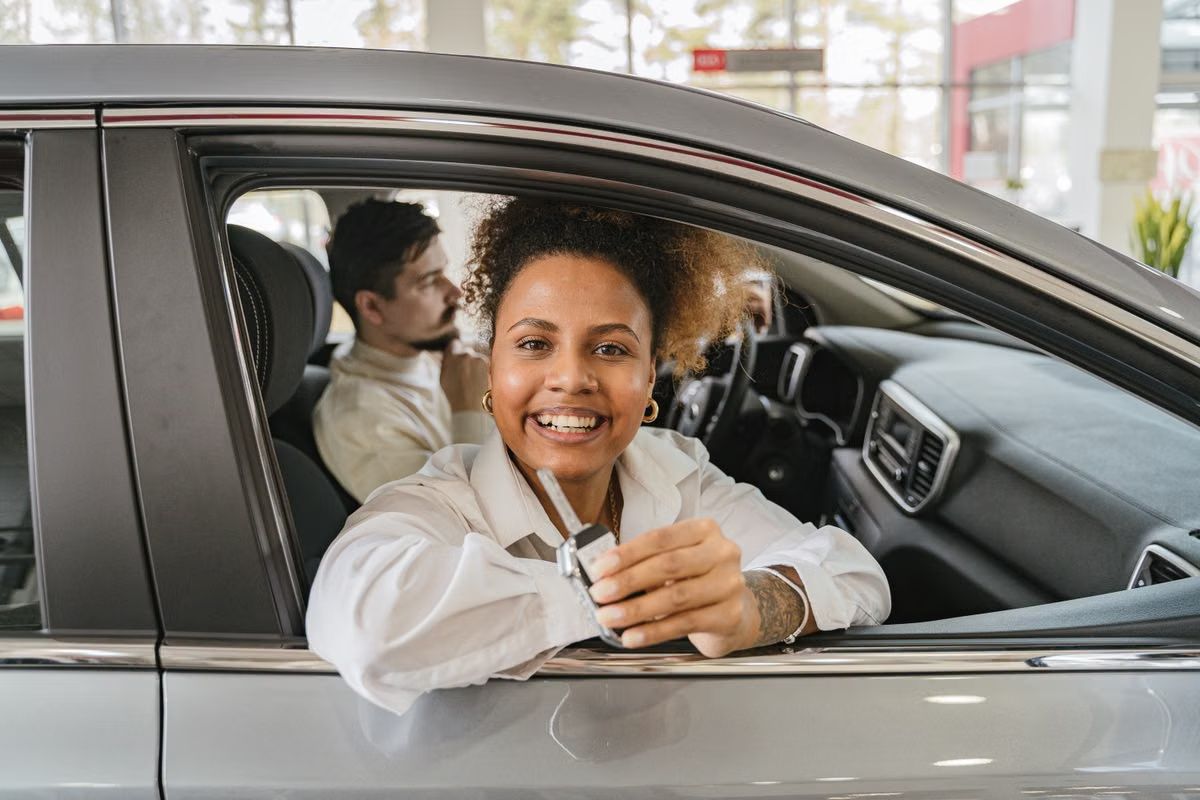
Quoting the exact model before signing for a first car keeps the insurance bill from surprising anyone after the purchase.
Which discounts help new drivers the most?
Discount names and sizes vary by insurer and state, though most large companies offer some version of these:
- A good student discount, usually for full-time students under 25 with a B average or a 3.0 GPA. State Farm’s discount runs up to 25 percent, while GEICO’s reaches 15 percent on certain coverages.
- A driver training discount for finishing an approved driver education course.
- A student away at school discount when the student lives more than 100 miles from home without a car.
- A telematics program that tracks how and when the car is driven. GEICO’s DriveEasy, for one, offers up to 15 percent for enrolling. Some programs only lower the rate, while others can raise it for risky habits.
- A young-driver training program such as State Farm’s Steer Clear, open to drivers under 25 who hold a valid license and have had no at-fault accidents or moving violations in the past three years.
Stacking two or three of these on a family policy often trims more than any single change to coverage.
How long do new-driver rates stay high?
Car insurance for new drivers does not stay expensive forever. The insurance rate for a new driver comes down in steps, as each renewal with a clean record adds to the history insurers rate. A noticeable drop often arrives after about three years licensed. Age brings separate relief. In the ValuePenguin sample, the same couple paid $3,252 more a year for a 16-year-old and $521 more for a 25-year-old.
Keeping coverage continuous matters as much as keeping the record clean. A driver who sells a car and lets insurance lapse for a year may come back looking new again. A non-owner policy, usually cheaper than standard coverage, keeps that history going while there is no car to insure.
Because not every insurer lowers the price on its own at the next renewal, a 25th birthday or the third anniversary of a license is a good moment to shop again.

RELATED AUTO INSURANCE GUIDES
Auto Insurance
Factors affecting high-risk driver auto insurance cost
Auto Insurance
Actual cash value of my car: how it is set and disputed
Safety & Driving
What to do if car won’t start after driving through water
Safety & Driving
Water damage car repair cost: what drives the bill