

Can you get car insurance before buying a car? Usually, yes. You can compare quotes and prepare a policy before signing the purchase documents, but coverage does not begin until the insurer binds or issues the policy with a stated effective date. The vehicle details, VIN, state rules, and any lender requirements determine what must be finalized before you take possession.
This guide explains how to arrange coverage before buying, what information insurers need, how to handle a missing VIN, and what to check before driving away. It also separates a preliminary quote from active coverage so you do not mistake an estimate for protection that has already started.
Do you need insurance before buying a car?
Usually, you can shop for and arrange insurance before you complete the purchase. A quote may be available based on the vehicle’s year, make, model, trim, and estimated purchase date. The insurer may request the VIN and final ownership details before binding or issuing the policy. If your pickup date is close, it helps to know how long it takes to get car insurance.
A quote is not the same as active coverage. Coverage generally begins only after the application is accepted and the policy is bound or issued with a stated effective date. Set that date and time to match when you take possession of the vehicle and become responsible for it.
Requirements for insurance and proof of insurance vary by state. A dealer may also require proof before releasing the vehicle, while a lender may require physical-damage coverage beyond the state minimum. The Consumer Financial Protection Bureau’s guidance on auto insurance when financing a car recommends comparing insurance coverage and cost before buying a financed vehicle.
For broader explanations of coverage choices and vehicle-ownership decisions, Auto Insure News has related guides.

How to get car insurance before buying a car
The process is easier when you separate the work into three stages: prepare the information, compare and bind the coverage, and verify the documents before pickup.
Identify the purchase situation
First, determine whether you are buying from a dealer or a private seller, and whether you are paying cash, financing, or leasing. The transaction type affects the documents, timing, lender requirements, and proof of insurance you may need.
| Purchase situation | What to confirm before taking possession |
| Dealer purchase | Accepted proof of insurance, delivery date, registration documents, and dealer requirements |
| Private-party purchase | VIN, title, lien status, transfer documents, effective coverage, and legal driving requirements |
| Cash purchase | State-required liability coverage and protection for damage to the vehicle |
| Financed purchase | Liability limits, comprehensive and collision coverage, deductible limits, and lienholder information |
| Lease | Lessor’s required limits, deductible rules, physical-damage coverage, and gap-related requirements |
Gather driver and household information
An insurer will usually ask about the drivers, household, residence, prior insurance, and driving history. Use the address where the vehicle will normally be kept, not a dealership address or temporary address chosen to produce a lower estimate.
Prepare the following information:
- Full name and date of birth for each regular driver.
- Driver’s license information.
- Residential and vehicle-garaging address.
- Prior insurance and continuous coverage history.
- Accidents, tickets, claims, and other driving-history information.
- Estimated annual mileage and vehicle use.
- Whether the vehicle will be used for commuting, school, business, or occasional driving.
- Current policy information, if you already have insurance.
If someone in the household will regularly drive the vehicle, ask whether that person must be listed. Failing to disclose a regular driver or the correct garaging address can create underwriting and claim problems.
Get the vehicle information for the quote
The exact vehicle usually produces a more accurate quote. Ask the dealer or seller for the VIN. It may appear on the vehicle, title documents, listing, buyer’s order, or other purchase paperwork.
The VIN helps the insurer identify the specific model, trim, engine, safety equipment, repair characteristics, and other rating information. If the VIN is unavailable, ask for a preliminary quote based on the year, make, model, trim, and expected purchase date. Treat that figure as an estimate until the VIN and final vehicle details are confirmed.
Do not substitute the VIN from a similar car. A different trim, engine, safety package, ownership status, or optional equipment can change the final premium and policy description.
Compare the same coverage from each insurer
A lower quote may simply have lower limits, higher deductibles, fewer optional coverages, or different assumptions. The best way to get auto insurance quotes is to ask every insurer to quote the same driver information, vehicle, address, limits, deductibles, and effective date. Before comparing prices, review the types of car insurance you actually need.
| Coverage or feature | Question to ask |
| Bodily injury liability | What limits are included, and are they higher than the state minimum? |
| Property-damage liability | Is the limit sufficient for damage to another vehicle or property? |
| Collision | What vehicle damage is covered and what deductible applies? |
| Comprehensive | Does the policy cover listed non-collision losses such as theft, fire, hail, vandalism, or animal impact? |
| Uninsured/underinsured motorist | What protection is available if the other driver has no insurance or insufficient limits? |
| Medical payments or PIP | What medical expenses may be covered under this state and policy? |
| Rental reimbursement | What limits apply while the insured vehicle is being repaired? |
| Roadside assistance | What services, limits, and exclusions apply? |
The National Association of Insurance Commissioners’ auto insurance guide explains that liability coverage protects against certain claims made by others, while collision and comprehensive are separate coverages that may be required by a lender. These are among the factors to consider when choosing car insurance.
Confirm lender and lienholder requirements
If you are financing or leasing, contact the lender before finalizing the policy. The lender may specify liability limits, require comprehensive and collision coverage, set a maximum deductible, and require its exact legal name and mailing address on the policy.
Ask the lender:
- Which liability limits are required?
- Are comprehensive and collision coverage mandatory?
- What is the maximum permitted deductible?
- What exact lienholder or loss-payee name and address should appear?
- Is gap coverage required, optional, or offered separately?
- What proof of insurance must be provided before funding or delivery?
A lender’s physical-damage requirement protects its financial interest in the vehicle. It does not necessarily mean the policy has every protection you may want for yourself.
Set the policy’s effective date
The effective date is when coverage begins. For a vehicle purchase, ask the insurer to make the policy effective when you take possession of the vehicle and become responsible for it. If the pickup date or time changes, contact the insurer before driving the car.
Request written confirmation of:
- Effective date and time.
- Covered vehicle and VIN.
- Named insured and listed drivers.
- Liability limits and deductibles.
- Collision and comprehensive coverage, if selected.
- Lienholder information, if applicable.
- Delivery method for the insurance card or binder.
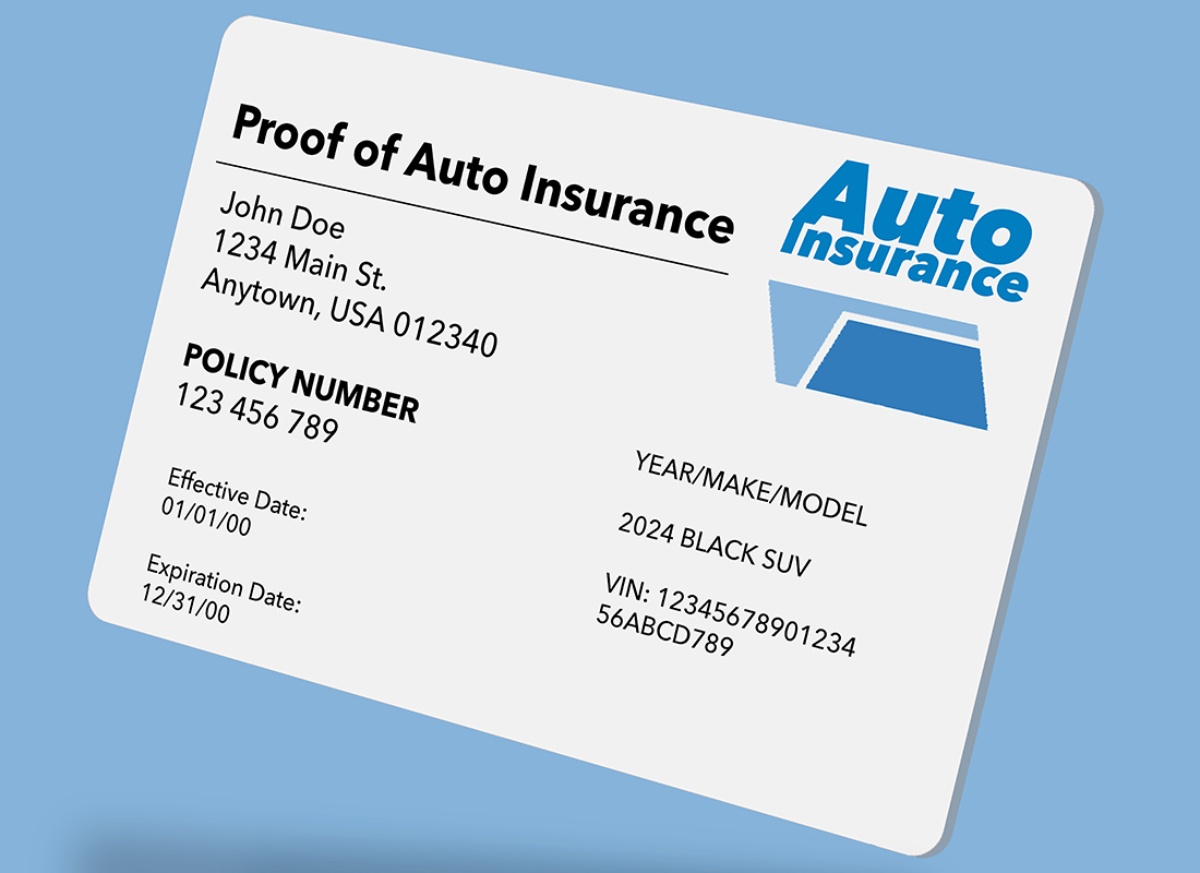
Some insurers issue a binder as temporary evidence of coverage, while others issue a policy or digital insurance card directly. Ask what the dealer and lender will accept.
Obtain proof of insurance before pickup
Save the insurance card, binder, or other accepted proof of insurance to your phone before arriving at the dealer or meeting the private seller. Check that the document identifies the correct vehicle, effective date, limits, deductibles, and lienholder.
Proof of insurance does not necessarily confirm that every option discussed during the quote is active. If the document is wrong, correct it before driving away.
A 24-hour before-you-buy insurance timeline
| Timing | Action |
| Before visiting the dealer or seller | Gather driver, address, vehicle, and current-policy information; request preliminary quotes |
| Before signing the purchase documents | Compare identical coverage; confirm lender or lessor requirements; verify the VIN if available |
| Before taking possession | Bind or issue the policy with the correct effective date; add the vehicle and lienholder |
| Before driving away | Check the insurance card or binder; verify vehicle, VIN, limits, deductibles, and effective time |
| After the purchase | Review the declarations page and correct any mismatch in vehicle, drivers, coverage, or lender details |
Once you take possession, review what to do after buying a new car so the registration, documents, maintenance, and policy details stay aligned.
Do you need a VIN to get insurance before buying a car?
Not always. An insurer may estimate a premium based on the vehicle’s year, make, model, trim, and other details. The VIN usually makes the quote more precise and may be required to finalize the policy or issue proof of insurance.
If you are deciding between several vehicles, ask for separate quotes. Do not assume that two cars with the same model name will have the same premium. Trim, engine, safety features, replacement cost, ownership, and vehicle use can affect the result.
Does an existing policy automatically cover a new car?
Some policies include a newly acquired vehicle provision, but its terms and time limits vary. Coverage may differ depending on whether the new car replaces an existing vehicle or is added as an additional vehicle. Adding a vehicle to an existing insurance policy can therefore require different steps from replacing one. The replacement vehicle may also receive different coverage from an additional vehicle.
Do not rely on a general “grace period.” Before buying, ask your insurer:
- Does my current policy cover a newly purchased vehicle?
- Is coverage automatic, or must I report the vehicle first?
- How long do I have to add the vehicle?
- Does the new vehicle receive the same coverage as the replaced vehicle?
- Are additional vehicles treated differently?
- Does the provision apply if the vehicle is financed or leased?
The California Department of Insurance consumer guide advises consumers to notify the agent, broker, or insurer when buying a car or adding a driver and to read the policy for coverage, exclusions, and costs. California’s guidance is a general example; automatic-coverage rules differ by state and policy.
What insurance do you need when financing a car?
State-required liability coverage is only the starting point. A lender commonly requires comprehensive and collision coverage because the vehicle secures the loan. The lender may also set liability limits and deductible requirements that are higher or stricter than state law.
“Full coverage” is not a standardized policy name. Ask for the exact coverage types, limits, deductibles, exclusions, rental reimbursement, roadside assistance, and uninsured-motorist protection shown on the quote and declarations page.
What if you are buying a used car from a private seller?
The process is similar to a dealer purchase, but the seller may provide less administrative support. Before meeting the seller, request the VIN, obtain a quote, and arrange the effective date for the expected handoff.
Separately confirm the title, lien status, registration documents, and any state requirements for transferring ownership. If the seller and vehicle are in another jurisdiction, check the destination state’s title, registration, and insurance rules before traveling or arranging delivery. Do not drive the vehicle home because the seller says it was insured. The seller’s policy should not be treated as your continuing coverage after ownership changes.
Common mistakes to avoid
- Waiting until after the purchase. Waiting can delay delivery and may leave you without confirmed coverage when you need to drive home.
- Comparing quotes with different coverage. A quote with lower limits or higher deductibles is not directly comparable with broader protection.
- Assuming a quote is active coverage. A quote is an estimate. Confirm that the policy has been bound or issued and that the effective date has started.
- Relying on an unverified grace period. Automatic coverage for a newly purchased vehicle is policy-specific. Confirm the rule before relying on it.
- Giving incomplete or inaccurate information. Use the correct address, regular drivers, VIN, mileage, vehicle use, and ownership details. A temporarily lower estimate is not worth creating an underwriting or claim problem.
- Forgetting the lender’s information. An incorrect lienholder name or address can delay funding, delivery, or policy correction.
Final before-you-buy checklist
| Before purchase | Before driving away |
| Compare quotes with identical coverage | Confirm the policy is bound or issued |
| Provide the correct driver and garaging information | Check the effective date and time |
| Obtain the exact VIN if available | Confirm the vehicle and VIN |
| Ask the lender or lessor for requirements | Check liability, comprehensive, and collision coverage |
| Confirm deductibles and optional coverage | Verify lienholder information |
| Ask whether an existing policy applies | Save the accepted proof of insurance |
| Confirm the dealer or state document requirements | Do not drive until coverage is confirmed |

RELATED AUTO INSURANCE GUIDES
Safety & Driving
Black Ice on the Roads: How to spot it and handle a skid
Auto Insurance
Car Insurance Umbrella Policy: Coverage, Cost and Limits
Auto Insurance
Michigan Car Insurance: Rates, Companies & PIP Coverage
Safety & Driving
Texting and driving: risks, statistics, laws and prevention