

Collision insurance can be easy to misunderstand. It protects the insured vehicle after many types of crashes, but it does not pay every accident-related expense, and it is not the same as liability insurance. The price and value of the coverage also depend on the car, the deductible, the driver, and the state. Auto Insure News explains what collision insurance covers, how claims and deductibles work, when the coverage may be required, and how drivers can decide whether it still makes financial sense.
What does collision insurance cover?
Collision insurance generally covers physical damage to the insured vehicle when that vehicle hits, or is hit by, another vehicle or object. It may pay to repair the car when it can be fixed. If the car is declared a total loss, the insurer may issue a settlement based on the vehicle’s actual cash value (ACV), minus the policy deductible.
Actual cash value is the insurer’s estimate of what the vehicle was worth immediately before the loss. It reflects factors such as age, mileage, condition, equipment, and local market prices. It is not necessarily the original purchase price, the cost of a new replacement, or the remaining loan balance.
Collision coverage may apply whether the policyholder caused the crash or another driver was at fault. The exact outcome still depends on the policy language, the facts of the loss, and state insurance rules.
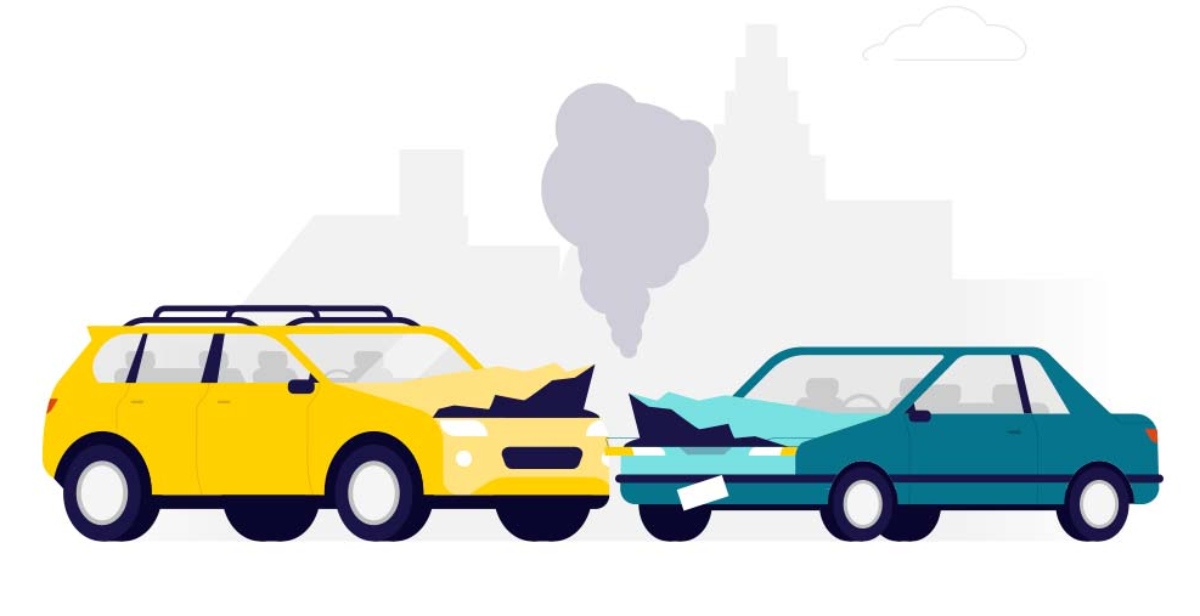
Crashes with another vehicle
Collision coverage may pay for damage to the insured car after common traffic accidents, including:
- A rear-end crash
- A collision at an intersection
- A sideswipe on a highway
- A multi-vehicle accident
- A crash involving a parked car
- An accident in which the insured driver is at fault
If another driver causes the accident, that driver’s property damage liability insurance may be responsible for the loss. The vehicle owner may also use collision coverage under their own policy, pay the deductible, and allow the insurer to seek reimbursement from the responsible party.
Using collision coverage may help repairs begin while the fault or payment is still being investigated. However, the policyholder may need to pay the deductible at first. A later refund is possible in some cases if the insurer successfully recovers money through subrogation, the process of pursuing the at-fault party or that party’s insurer. Recovery is not guaranteed, and timing varies.
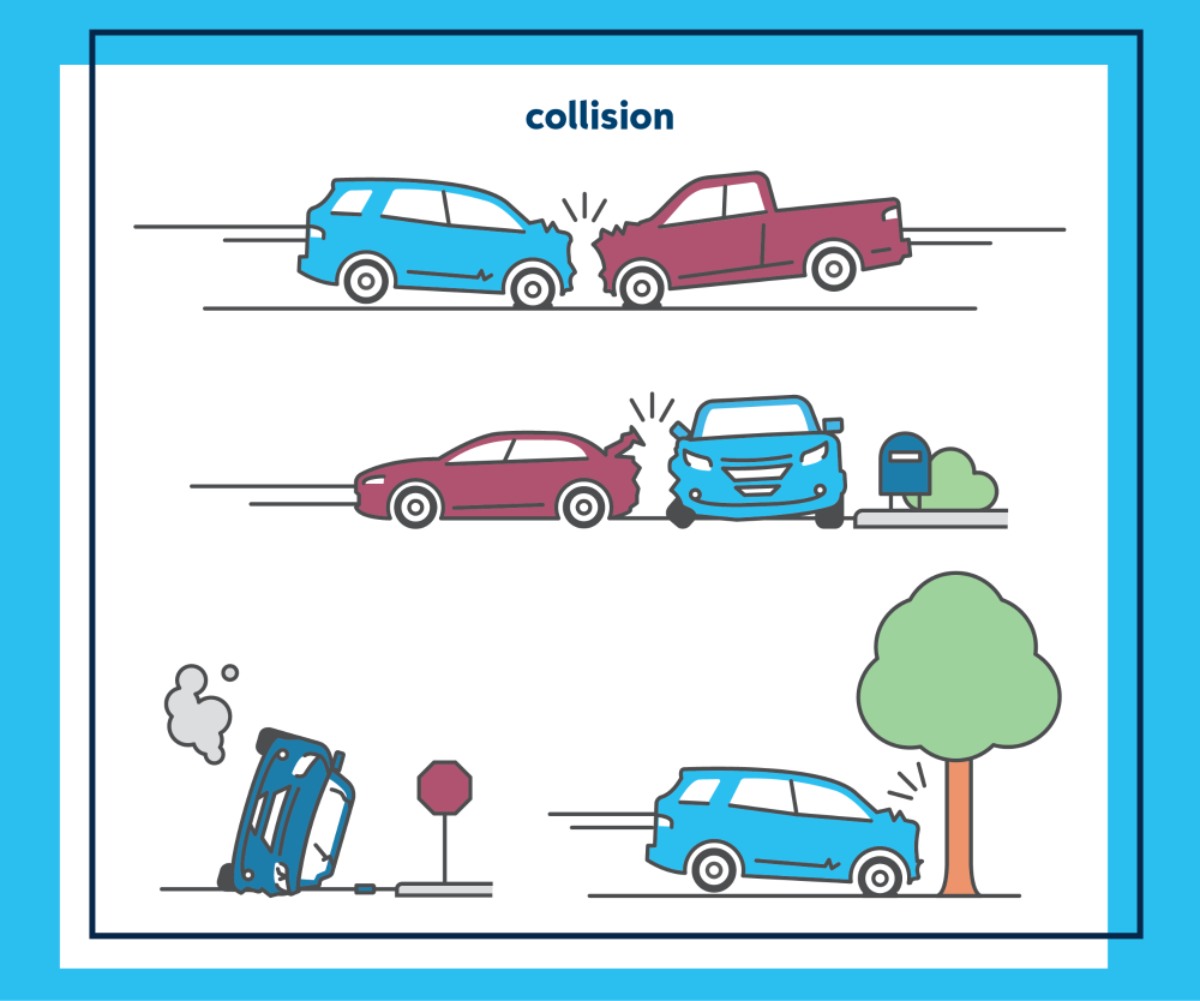
Collisions with objects and single-car accidents
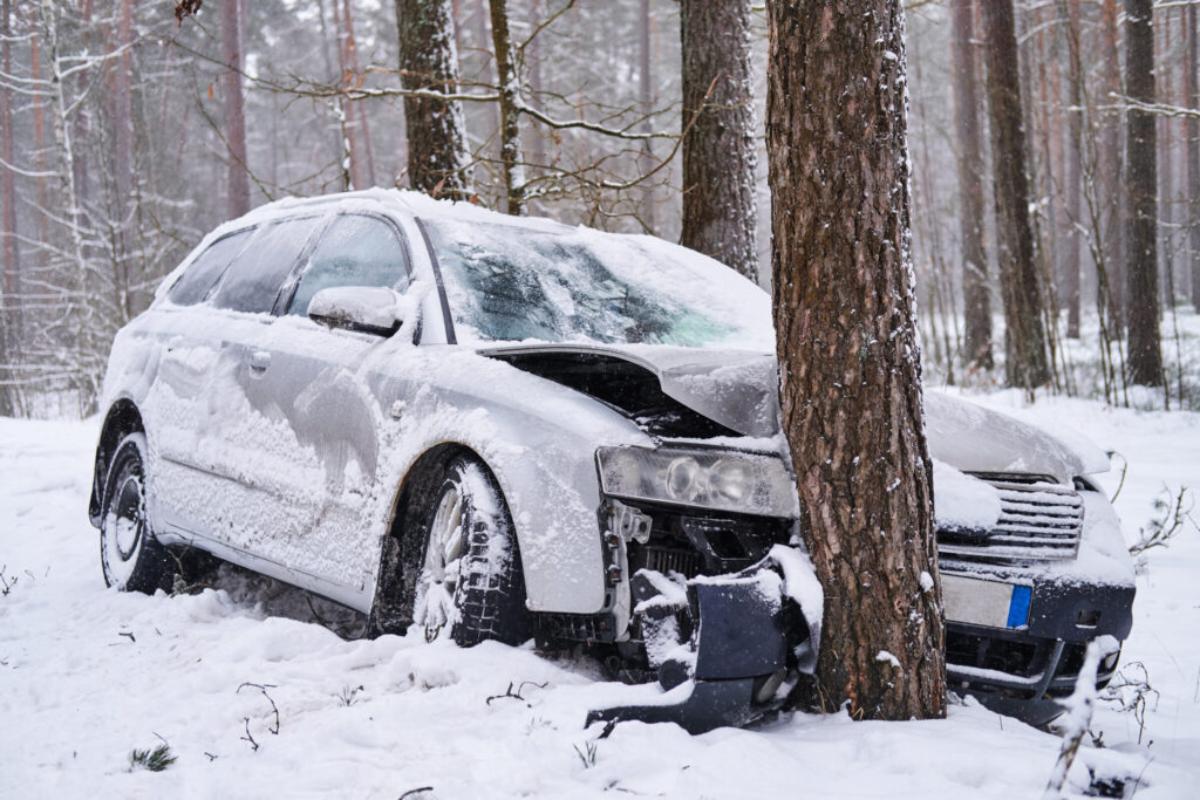
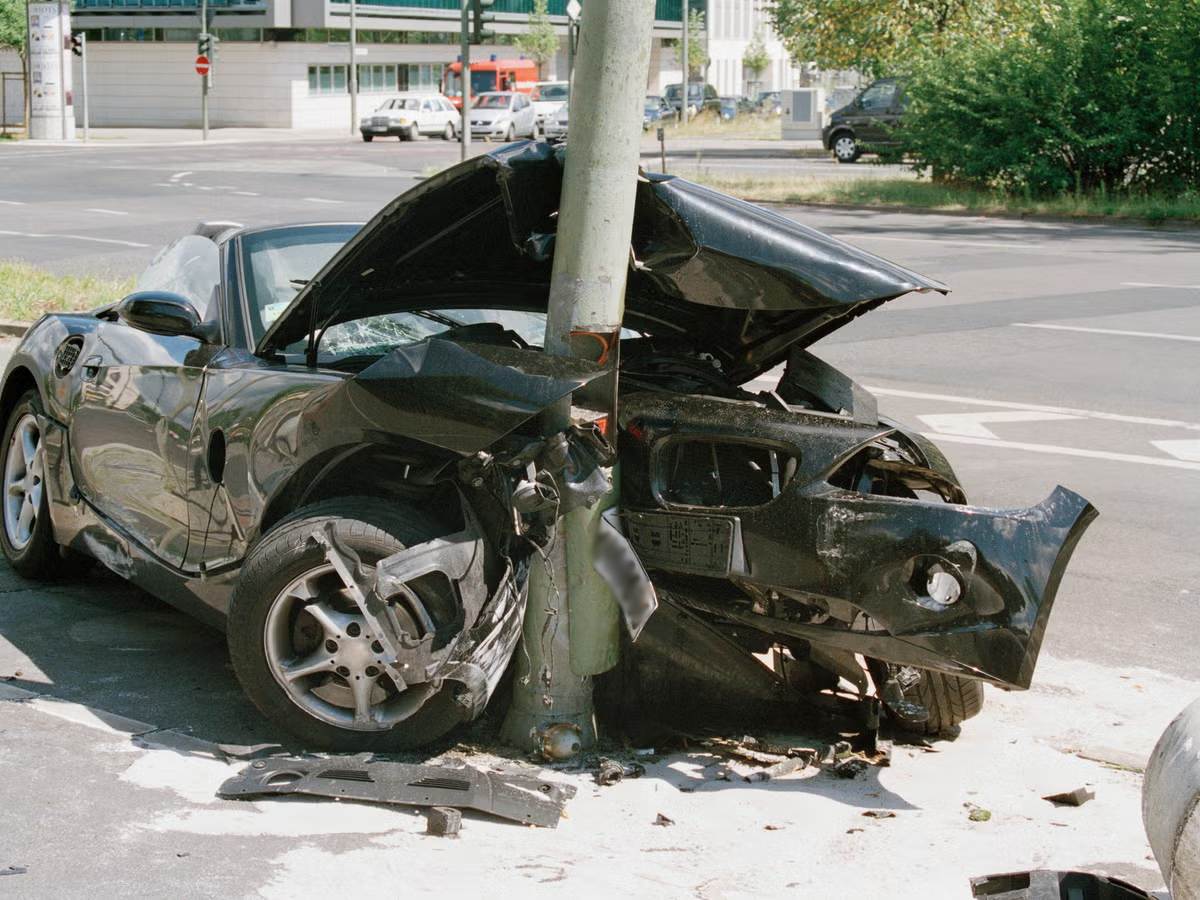
Collision insurance is not limited to two-car crashes. It may cover damage when a vehicle hits a fixed object, such as a:
- Tree
- Fence
- Guardrail
- Utility pole
- Mailbox
- Building
- Road sign
It may also cover a rollover, even if the car did not first hit another vehicle. Some policies treat damage from striking a pothole as a collision loss. Because pothole claims may be subject to the collision deductible, filing a claim might not make sense when the repair cost is only slightly higher than the deductible.
For example, if pothole damage costs $900 to repair and the collision deductible is $1,000, collision coverage would generally provide no payment. If the same damage costs $2,500, the potential covered payment might be about $1,500, subject to the adjuster’s findings and policy terms.
Hit-and-run and uninsured driver damage
Collision coverage may help repair a vehicle after a hit-and-run, even when the responsible driver cannot be identified. It may also apply when an uninsured driver damages the car. In either case, the collision deductible normally applies.
Another possible source of protection is uninsured motorist property damage, often shortened to UMPD. UMPD availability, limits, and deductibles vary significantly by state. Some states require insurers to offer it, while others limit when it can be used. Certain policies may not allow UMPD and collision coverage to pay for the same damage.
The practical choice can depend on the available coverage, the applicable deductible, the limits, and how quickly the claim can be resolved. The declarations page, which summarizes the coverages purchased, is a useful first place to check.
What doesn’t collision insurance cover?
Collision insurance protects against a defined category of physical damage. It is not a catch-all policy for every car-related loss.
| Loss or expense | Coverage that may apply instead |
|---|---|
| Theft, vandalism, hail, flood, fire, or a falling object | Comprehensive coverage |
| Damage from hitting a deer or another animal | Comprehensive coverage |
| Damage to another person’s car or property when the policyholder is at fault | Property damage liability |
| Injuries to the policyholder or passengers | Personal injury protection, medical payments coverage, or health insurance, depending on the state and policy |
| Injuries caused to other people | Bodily injury liability |
| A rental car while the insured vehicle is being repaired | Rental reimbursement coverage, if purchased |
| Mechanical failure, worn parts, or routine maintenance | Warranty, service contract, or the vehicle owner’s own funds |
| Personal property was stolen from the car | Homeowners or renters insurance may apply, subject to its deductible and limits |
Theft, weather, vandalism, and animal strikes
Comprehensive insurance generally covers damage caused by events other than traffic collisions. Common examples include theft, vandalism, fire, hail, flooding, wind, falling branches, and broken glass. Damage from hitting an animal, such as a deer, is also commonly treated as a comprehensive claim rather than a collision claim.
The immediate cause of the damage matters. If a driver hits a deer, comprehensive coverage may apply. If the driver swerves to avoid the deer and hits a tree, collision coverage may apply instead. An insurer will review the sequence of events and the policy wording before deciding which coverage applies.
Injuries and damage to someone else’s property
Collision insurance pays for damage to the insured vehicle. It does not normally pay medical bills, lost income, or the cost of repairing another person’s car.
If the policyholder causes an accident, property damage liability may pay for damage to the other vehicle, a fence, a building, or other property, up to the policy limit. Bodily injury liability may pay for covered injuries to other people. Depending on the state, personal injury protection or medical payments coverage may help with medical expenses for the policyholder and eligible passengers.
These distinctions matter because state minimum insurance laws generally focus on liability and, in some states, personal injury protection or uninsured motorist coverage. Collision coverage serves a different purpose: protecting the policyholder’s own car.
Normal wear, mechanical failure, and personal items
Collision coverage is not a maintenance plan. It does not usually cover worn brakes, a failed transmission, engine problems, rust, or damage caused by neglect. A mechanical problem that directly results from a covered crash may be evaluated as part of the collision claim, but ordinary breakdowns are generally excluded.
Personal belongings inside the vehicle are also outside the normal scope of collision coverage. A laptop stolen from a car, for example, may fall under renters’ or homeowners’ insurance rather than auto collision coverage. Separate deductibles and limits may apply.
Rental reimbursement is another separate coverage. Collision insurance may pay to repair the damaged vehicle, without requiring a temporary rental. Drivers who depend on a car for work or daily transportation may want to review whether rental reimbursement appears on the declarations page before an accident occurs.
How does collision insurance work?
A collision claim usually follows several basic steps:
- Document the accident. The driver may take photos, exchange information, notify law enforcement when required, and protect the vehicle from further damage.
- File a claim. The policyholder contacts the insurer and provides details of the accident, the damage, and any other parties involved. For a full walkthrough, see how to file an auto insurance claim.
- Inspection and estimate. An adjuster reviews the vehicle, repair estimate, and facts of the crash.
- Coverage decision. The insurer determines whether collision coverage applies and calculates the covered amount.
- Repair or total-loss settlement. The vehicle is repaired, or the insurer offers a settlement if the car is considered a total loss.
- Deductible. The policyholder is responsible for the selected collision deductible. The insurer may subtract it from the payment.
A vehicle may be declared a total loss when the repair cost is too high relative to the car’s value or when a state’s total-loss rules are met. The threshold and calculation can differ by state and insurer.
Collision deductibles explained
A deductible is the amount the policyholder agrees to pay out of pocket on a covered claim. Unlike a health insurance deductible that may accumulate during a year, an auto collision deductible generally applies to each claim.
Insurers often offer choices such as $250, $500, or $1,000, although lower and higher options may be available. A higher deductible often results in a lower premium because the policyholder assumes a greater share of the financial risk. A lower deductible may increase the premium but reduce the amount due after a covered accident.
The selected amount should be affordable on short notice. A $1,000 deductible may reduce the premium, but the savings can be less useful if the driver cannot produce $1,000 when repairs are needed.
The vehicle’s value also matters. A deductible that is close to the car’s ACV can sharply reduce the potential benefit of the coverage.
Payout examples in U.S. dollars
Repairable vehicle: A covered crash causes $4,000 in repairs. The policy has a $500 collision deductible. The insurer may pay about $3,500, while the policyholder is responsible for $500.
Total-loss vehicle: The insurer determines that a totaled car had an ACV of $12,000. The collision deductible is $1,000. The potential settlement may be about $11,000, subject to the policy and state rules for taxes, fees, and valuation.
Damage below the deductible: Repairs cost $700, and the deductible is $1,000. The insurer would generally make no collision payment because the covered damage does not exceed the deductible.
These examples are simplified. Actual payments may change based on covered and excluded damage, betterment adjustments, repair disputes, prior damage, and state-specific claim rules.
Will collision insurance pay off a car loan?
Collision insurance is based on the vehicle’s covered value, not the amount still owed to a lender. If a car has an ACV of $12,000, a $1,000 deductible, and a loan balance of $14,500, a potential $11,000 collision settlement would leave a $3,500 difference.
Gap insurance may cover some or all of an eligible difference between the insurance settlement and the loan or lease balance. Gap coverage has its own conditions and exclusions. It may be offered through an insurer, lender, or dealership, but the cost and cancellation rules can differ.
What happens when the other driver is at fault?
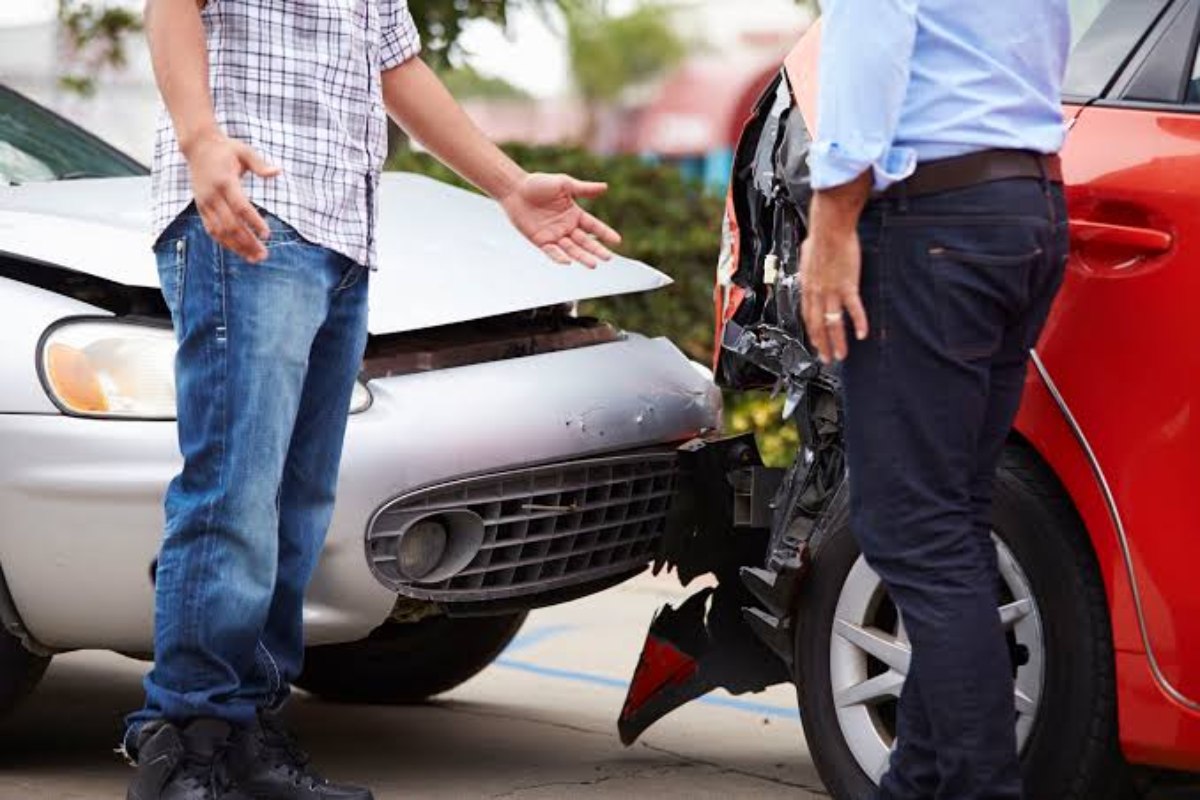
A not-at-fault driver may have two main options for vehicle damage:
- File a third-party property damage claim with the at-fault driver’s insurer
- File a first-party collision claim under the driver’s own policy
A third-party claim may avoid the collision deductible if liability is accepted and sufficient coverage is available. It may take longer if the fault is disputed or the other insurer is still investigating.
A first-party collision claim may allow the vehicle owner to work directly with their own insurer. The deductible may be collected initially. The insurer may later pursue the at-fault party through subrogation and may recover all or part of the deductible if money is recovered. Drivers who were not at fault often ask whether a claim will still raise their rate; see whether your insurance can go up if someone hits you.
No-fault insurance usually applies primarily to injury-related benefits, such as personal injury protection, rather than repairs to each driver’s vehicle. State-specific exceptions exist. Michigan, for example, has separate property protection, parked-vehicle, and mini-tort rules that can affect how vehicle damage claims are handled.
Is collision insurance required?
Collision insurance is generally not required by state law as a condition of legal driving. States usually require liability insurance or another form of financial responsibility. Some states also require personal injury protection, medical payments coverage, uninsured motorist coverage, or underinsured motorist coverage. New Hampshire is the rare state that does not require drivers to carry auto insurance at all, provided they can meet financial responsibility rules; for a closer look at that outlier, see whether auto insurance is required in New Hampshire.
Requirements can change, and minimum limits differ. A state Department of Insurance or motor vehicle agency is the best source for current local requirements.
Requirements for financed or leased cars
A lender, lienholder, or leasing company often requires collision and comprehensive coverage because it has a financial interest in the vehicle. This is a contractual requirement, not a state minimum insurance law.
The finance or lease agreement may also set a maximum deductible. If the required coverage lapses, the lender may purchase force-placed insurance and add the cost to the account. Force-placed coverage can be expensive and may primarily protect the lender’s interest rather than provide the broad protection of a standard auto policy.
Drivers with financed or leased vehicles should review the contract before changing physical damage coverage. Dropping collision coverage without lender approval may violate the agreement.
What if the car is owned outright?
Once a vehicle is paid off, collision coverage is usually optional. The owner can decide whether the potential claim benefit is worth the premium.
That choice should not be based solely on age. A well-maintained older vehicle may still have meaningful market value, and replacing even an inexpensive car can put pressure on a household budget. On the other hand, paying a substantial collision premium for a low-value car with a high deductible may offer limited financial protection.
Collision vs. Comprehensive vs. Liability Insurance
Collision, comprehensive, and liability insurance are three of the main types of car insurance, and each protects against different financial risks. Understanding which vehicle or person each coverage protects is more useful than relying on broad labels such as “full coverage.”
| Coverage | What it generally protects | Common examples | Deductible? | Usually required by state law? |
|---|---|---|---|---|
| Collision | The policyholder’s vehicle after a crash or rollover | Hitting another car, tree, pole, or guardrail | Usually | No |
| Comprehensive | The policyholder’s vehicle after many non-collision losses | Theft, hail, flood, fire, vandalism, or an animal strike | Usually | No |
| Property damage liability | Another person’s vehicle or property when the policyholder is legally responsible | Damage to the other car in an at-fault crash | Usually not | Often part of the state’s minimum requirements |
| Bodily injury liability | Other people’s covered injuries when the policyholder is legally responsible | Medical bills, lost income, or legal costs after an at-fault crash | Usually not | Required in many states |
Is collision insurance the same as full coverage?
Collision insurance is not the same as full coverage. “Full coverage” is an informal phrase, not a standardized policy or a guarantee that every loss is covered.
The phrase often refers to a policy that combines liability, collision, and comprehensive insurance. It may also include state-required coverages. Two policies described as full coverage can still have very different liability limits, deductibles, exclusions, and optional protections.
A declarations page provides a clearer picture than the label. It lists the actual coverages, limits, deductibles, and insured vehicles.

Which coverage may pay? common scenarios
| Scenario | Coverage that may apply |
|---|---|
| The insured car rear-ends another vehicle | Collision for the insured car, property damage liability for the other car |
| The insured car hits a tree | Collision |
| A deer runs into the vehicle | Comprehensive |
| The car is damaged by hail | Comprehensive |
| The car rolls over | Collision |
| The car is stolen | Comprehensive |
| An unknown driver hits the parked car and leaves | Collision or UMPD, depending on state and policy |
| The driver hits a pothole and damages a wheel | Collision may apply, subject to the deductible and policy |
| The policyholder causes damage to another person’s fence | Property damage liability |
How much does collision insurance cost?
There is no single national price for collision insurance. The cost is calculated as part of an individual auto policy, and quotes can vary by insurer even when the driver and vehicle are the same.
As a benchmark, the National Association of Insurance Commissioners (NAIC) reported a national average collision premium of about $464 per year as of 2023, the most recent data available, ranging from roughly $313 per year in Iowa to about $664 per year in the District of Columbia. Collision claims are fairly common: in 2024, about 4.2 percent of collision policyholders filed a claim, and the average collision claim came to roughly $5,489, according to the Insurance Information Institute (III). Most insured drivers also choose to carry coverage, with about 77 percent buying collision coverage and roughly 80 percent buying comprehensive coverage, according to a Triple-I analysis of NAIC data. These are averages, so an individual premium can land well above or below them.
Factors that affect the collision premium
Insurers may consider factors such as:
- State and ZIP code: Accident frequency, repair costs, traffic density, weather, and local claim patterns may affect rates.
- Vehicle make, model, and year: Expensive parts, advanced sensors, aluminum body panels, and specialized labor can raise repair costs.
- Vehicle value: A higher-value car creates a larger potential total-loss payment.
- Driving record: Recent accidents or violations may affect the broader auto premium.
- Claims history: Prior claims may influence eligibility or price, subject to state law.
- Annual mileage and use: A long commute or business use may increase exposure.
- Deductible: A higher collision deductible often lowers the premium.
- Discounts: Multi-policy, multi-car, safety-feature, or usage-based discounts may reduce the total price.
- Credit-based insurance information: Insurers may use it where state law allows. Some states restrict or prohibit the practice.
Rates can change at renewal because of personal changes, insurer filings, repair inflation, or broader claim trends. A price that was competitive two years ago may no longer be so.
How to choose a collision deductible
The lowest premium is not always the lowest-risk option. A practical deductible balances monthly or annual savings against the amount the policyholder could comfortably pay after a crash.
Suppose an insurer offers a $500 deductible and a $1,000 deductible. The higher deductible adds $500 of out-of-pocket risk to each covered claim. The policyholder can compare that added risk with the annual premium savings. If the savings are small, it may take several claim-free years to offset the additional $500 exposure.
A useful review includes three questions:
- Could the deductible be paid immediately from available savings?
- How much premium is actually saved by selecting the higher amount?
- Is the deductible too close to the vehicle’s current value?
Drivers should compare quotes with identical deductibles. A policy with a $1,000 deductible can look cheaper than a policy with a $500 deductible even when the insurer’s underlying price is not lower.

Do you need collision insurance?
Collision coverage may be valuable when the financial loss from a damaged or totaled car would be difficult to absorb. It may be less valuable when the car has a low ACV, and the premium plus deductible consumes much of the possible benefit.
Collision coverage may be worth it if
Collision insurance may deserve strong consideration when:
- The vehicle is financed or leased, and the contract requires it
- The vehicle is new, relatively new, or still has substantial market value
- The owner could not comfortably pay for major repairs
- Replacing the car without an insurance settlement would be difficult
- The household depends on the vehicle for work, school, caregiving, or medical needs
- The vehicle is driven frequently or in heavy traffic
The decision is partly about risk tolerance. Two owners with identical cars may reasonably make different choices because their savings, transportation needs, and ability to replace the vehicle are different.
When might a driver drop collision coverage?
Dropping collision coverage may be worth considering when:
- The loan has been paid off
- The vehicle’s ACV has fallen substantially
- The collision-only premium is high relative to the potential payout
- The deductible absorbs a large share of the car’s value
- The owner has enough savings to repair or replace the car
- The vehicle is rarely driven or is kept in long-term storage
A driver considering removal should identify the collision-only premium on the declarations page or request it from the insurer. Comparing the entire auto premium with the car’s value can be misleading because the total also includes liability and other coverages that may still be necessary.
Removing collision shifts the full cost of crash damage to the vehicle owner. Comprehensive coverage may still be useful for theft, weather, fire, or vandalism, even when collision is dropped. Availability of comprehensive coverage without collision can vary by insurer and lender rules.
Is collision insurance worth it for an older car?
Vehicle age is only a starting point. Current market value is more important.
A simple estimate of the maximum likely collision benefit is:
If an older car has an ACV of $3,500 and a $1,000 deductible, the maximum potential total-loss payment may be about $2,500. The owner can compare that amount with the annual collision premium and the financial effect of losing the car.
Even a modest payout may be useful to someone who lacks the cash to replace the vehicle. Another owner with substantial savings may prefer to self-insure, meaning that person accepts the risk and pays future crash costs directly.
There is no universal age or dollar threshold for dropping collision. A reasonable review uses the vehicle’s current value, the actual collision premium, the deductible, replacement options, and household savings.
How to find affordable collision coverage and compare rates
Collision coverage is most useful when it is in place before an accident. Drivers should review the policy at renewal, after buying or paying off a car, after moving to another state, and whenever the vehicle’s value changes enough to affect the coverage decision.
Before comparing prices, it helps to review:
- The vehicle’s estimated current market value
- Whether a lender or lease sets coverage requirements
- The current collision deductible
- The collision-only premium
- Comprehensive coverage and its separate deductible
- Liability limits
- Rental reimbursement, roadside assistance, and gap coverage
- Exclusions and claim procedures
Quotes should be compared on an equal basis. Each quote should use the same liability limits, collision deductible, comprehensive deductible, drivers, vehicles, mileage, and optional coverages. Otherwise, a lower rate may simply reflect less protection. A step-by-step guide to getting auto insurance quotes can make that first comparison easier.
Drivers interested in rate and coverage updates can use the Auto Insure News form at the bottom of the page. Entering an email address and state can help connect readers with information relevant to their location. The form is best used after reviewing current coverage, so any comparison can match the same limits and deductibles rather than comparing unlike policies.

RELATED AUTO INSURANCE GUIDES
Auto Insurance
Agreed Value vs. Stated Value for Classic Cars in Gary, IN
Safety & Driving
Rules of the road Indiana: Essential driving laws and safety rules
Auto Insurance
Commercial insurance for Uber Black: requirements & costs
Auto Insurance
Why is it illegal to not have car insurance?