
A three-car accident is rarely as simple as it looks. Unlike a typical two-vehicle crash, a multi-car collision can involve conflicting statements, multiple insurance companies, and questions about who caused the first impact. Determining fault often depends on the sequence of events, the evidence available, and the laws in your state.
Auto Insure News breaks down how fault is determined in a three-car collision, including common accident scenarios, how responsibility may be divided between drivers, what evidence insurers use, and what steps you should take after a crash.
How a three-car collision usually happens
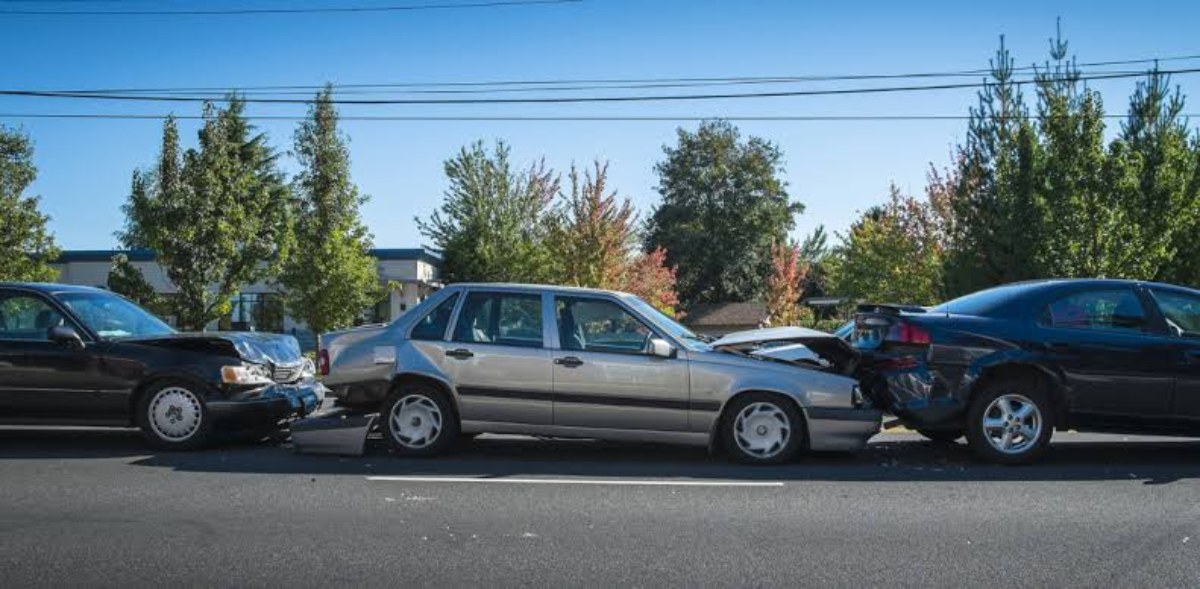
To talk about fault clearly, it helps to name the cars. Picture three vehicles in a line:
- Car A is in front
- Car B is in the middle
- Car C is in the rear
Most three-car crashes fall into one of a few patterns:
The classic chain reaction. Car C fails to stop in time and slams into Car B, which is pushed forward into Car A. One impact, two collisions, and the force originates at the back.
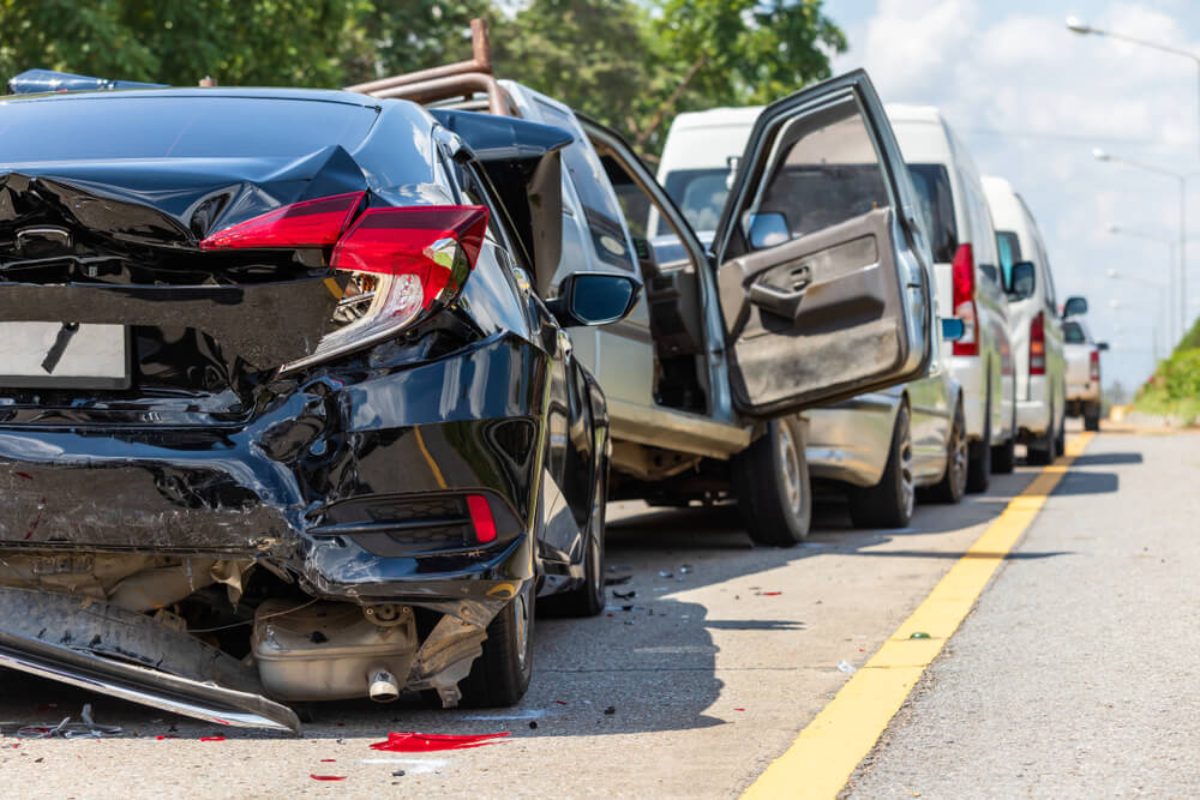
The sequential pileup. Car B rear-ends Car A first, and then Car C, following too closely or not paying attention, hits Car B a moment later. This looks identical to the first scenario at the scene, but the fault picture is very different, because there were two separate acts of negligence.
The sudden-stop crash. Car A brakes hard or unreasonably, sometimes after cutting someone off, causing B to hit A and C to hit B.
The intersection or merge crash. Someone runs a light, fails to yield, or drifts across a lane, and the collision spreads to a third vehicle.
That distinction between one impact and two separate impacts matters enormously, and it is usually the first thing investigators try to establish.
Who gets blamed, position by position
One question drives everything: sequence. One impact pushing cars forward is a very different case from two separate crashes a moment apart.
Car C, the rear driver. The usual suspect. Every driver must keep a safe following distance, so failing to stop in time is textbook negligence. But it’s a presumption, not a verdict, if Car B’s brake lights were dead, Car C had no warning, and its share can shrink to nothing.
Car B, the middle driver. If Car B was shoved into Car A, then Car B is the victim. If Car B hit Car A first and then got rear-ended, Car B is responsible for the first crash; being hit afterward doesn’t erase it. Car B also picks up fault for tailgating, texting, hard braking for no reason, dead brake lights, or driving too fast in rain, ice, or fog.
Car A, the lead driver. Not automatically blameless. Car A can be liable, sometimes primarily, for brake-checking, cutting someone off, then braking, reversing unexpectedly, an unsafe merge, dead brake lights, or stopping in a live lane with no hazards on.
How fault actually gets divided: comparative negligence
In most states, fault isn’t a yes-or-no proposition. It’s a percentage, split among all three drivers, and your payout drops by your share. Find your state:
| System | How it works | Example states |
|---|---|---|
| Pure comparative negligence (about 12–13 states) | You can recover damages even if you are 99% at fault, reduced by your share | Alaska, Arizona, California, Kentucky, Louisiana, Mississippi, Missouri, New Mexico, New York, Rhode Island, South Dakota, Washington |
| Modified comparative negligence, 50% bar (about 10 states) | You recover only if you are 49% or less at fault. Hit 50%, and you get nothing | Colorado, Georgia, Idaho, Kansas, Maine, Nebraska, North Dakota, Tennessee, Utah, West Virginia |
| Modified comparative negligence, 51% bar (about 24 states) | You recover as long as you are 50% or less at fault | Illinois, Ohio, Texas, Pennsylvania, New Jersey, Michigan, Wisconsin, Massachusetts, South Carolina, Oregon, and others |
| Pure contributory negligence (5 jurisdictions) | Any fault at all, even 1%, bars you from recovering anything | Alabama, Maryland, North Carolina, Virginia, and Washington, D.C. |
The math: $100,000 in damages and 20% fault pays you $80,000 (confirmed by the Illinois and Ohio insurance departments). A typical three-car split: Car C 70%, Car B 30%, Car A 0%. For vehicle repairs, the allocation also helps determine whether you seek recovery from another driver or use your own auto collision coverage.
Two warnings. Florida left the pure column in 2023 for a 51% rule, so older articles list it wrong. And in the five contributory jurisdictions, 1% of blame kills your entire claim, in a pileup where insurers try to pin a sliver on everyone. Get a lawyer immediately.
What evidence decides fault
Because the sequence of impacts is the whole ballgame, evidence matters more in three-car crashes than in simple two-car ones. Investigators, adjusters, and attorneys typically rely on:
- The police report, including any citations issued and the officer’s diagram of the scene
- Photos and videos of vehicle damage, skid marks, debris fields, and final resting positions
- Dashcam footage, which is often the single most decisive piece of evidence
- Witness statements, especially from uninvolved third parties
- Damage patterns, since the location and depth of dents can reveal how many impacts occurred and in what order
- Vehicle event data recorders, which can capture speed and braking in the seconds before impact
- Crash reconstruction experts in serious or disputed cases
- Traffic camera or nearby business surveillance footage
One detail worth knowing: a police report is influential but not binding. Insurers conduct their own investigations and can assign fault differently than the officer’s opinion suggests.
Don’t forget the parties who weren’t driving
Fault in a multi-car crash does not always stop with the three drivers. Depending on the facts, liability may extend to:
- A government agency that failed to install or maintain traffic signs and signals, or failed to clear a road hazard that caused drivers to stop abruptly
- A trucking company, if a commercial vehicle was involved or its driver was fatigued or improperly trained
- A vehicle or parts manufacturer, if defective brakes or a failed component contributed
- A repair shop that performed faulty work
- An employer, if a driver was on the job at the time
Semi-trucks come up frequently here, because their size and their presence on high-speed highways mean a single truck collision can easily involve multiple cars.
What if you live in a no-fault state?
Twelve states use some form of no-fault insurance: Florida, Hawaii, Kansas, Kentucky, Massachusetts, Michigan, Minnesota, New Jersey, New York, North Dakota, Pennsylvania, and Utah (including Puerto Rico). In those states, your own personal injury protection (PIP) coverage pays your medical bills and certain losses first, regardless of who caused the crash. That does not mean fault is irrelevant; it still governs vehicle damage claims and, in serious injury cases, the ability to sue beyond PIP limits. But it does mean your medical treatment does not have to wait for three insurers to finish arguing.
Coverage for treatment can still involve more than PIP, so check whether health insurance covers car accident injuries under your plan. For New York-specific rules, see whether New York is a no-fault state.
What to do after a three-car collision
What you do in the first hour can shape the fault determination for months.
- Check for injuries and call 911. Get a police report, even if the damage looks minor. In a three-car crash, it is close to essential.
- Photograph everything before vehicles are moved, if it is safe to do so. Final positions, all damage on all three cars, skid marks, debris, road conditions, and traffic signals.
- Exchange information with both other drivers, not just the one who hit you.
- Collect witness contact details. Uninvolved witnesses are gold in disputed sequence cases.
- Write down the sequence while it is fresh. How many impacts did you feel, and in what order? A middle driver who felt one jolt versus two has a meaningfully different case.
- Get a medical evaluation even if you feel fine. Soft-tissue injuries commonly surface days later.
- Notify your insurer promptly and stick to the facts. Follow the basic steps for how to claim vehicle insurance while the details are fresh.
- Do not admit fault or speculate at the scene. You may not know yet what actually happened behind you.
- Consider a lawyer if there are injuries, disputed fault, or if you are being blamed for something you do not believe you caused.

RELATED AUTO INSURANCE GUIDES
Safety & Driving
Black Ice on the Roads: How to spot it and handle a skid
Auto Insurance
Car Insurance Umbrella Policy: Coverage, Cost and Limits
Auto Insurance
Michigan Car Insurance: Rates, Companies & PIP Coverage
Safety & Driving
Texting and driving: risks, statistics, laws and prevention