

A classic car that gets totaled or stolen in Gary is only worth what the insurance policy says it’s worth. Two valuation methods decide that number: agreed value and stated value. The names sound almost interchangeable, but they settle a claim very differently. One guarantees the payout. The other does not. Auto Insure News breaks down how each option works, why the difference matters more for an appreciating collector car than for a daily driver, and what Gary owners should factor in before choosing a policy.
What is actual cash value coverage?
Most standard auto insurance policies pay actual cash value, or ACV, in a total-loss claim. ACV is generally defined as the vehicle’s market value at the time of loss, after depreciation. Our guide explains in more detail how insurers determine the value of a totaled car. For an ordinary used car, that number falls every year.
ACV works reasonably well for a car that is expected to keep losing value. It works poorly for a collector car that has been restored, is increasingly rare, or is holding or gaining value in the market, since a standard policy has no mechanism to account for that.

What is stated value coverage?
Stated value coverage allows the policyholder to state the vehicle’s value, usually with supporting documentation such as receipts or a bill of sale. The insurer reviews that figure before issuing the policy.
The detail many owners miss: a stated value policy does not guarantee that number as the payout. In a covered total loss, the insurer pays the lower of the stated value and the vehicle’s actual cash value at the time of loss. If the car’s market value has fallen, or the insurer’s own valuation comes in under the stated figure, the stated amount is not what the owner receives.
What is agreed value coverage?
Agreed value coverage, sometimes marketed as guaranteed value coverage, is built differently. The owner and the insurer agree on the vehicle’s value up front, based on appraisals, photos, and documentation, and that figure is fixed in the policy. If the car is a covered total loss, the insurer pays the full agreed amount, minus the deductible, with no depreciation calculation and no second valuation at the time of claim.
Agreed value coverage is offered primarily by specialty collector-car insurers, though some mainstream carriers also offer it as an endorsement on classic vehicles. The valuation method determines the potential payout, while comprehensive car insurance covers many non-collision losses, such as theft, fire, vandalism, or weather damage.
Agreed value vs. stated value: the key difference
| Stated value | Agreed value | |
|---|---|---|
| Who sets the value | The owner states it; the insurer may review the documentation | Owner and insurer agree together, based on appraisal or documentation |
| Total-loss payout | The lesser of the stated value or actual cash value at the time of loss | The full agreed amount, regardless of depreciation |
| Appraisal | Often not required | Frequently required, especially for higher-value vehicles |
| Who typically offers it | Standard insurers, as an endorsement | Specialty collector-car insurers and some standard insurers |
| Best suited for | Vehicles with a value that is easy to verify and unlikely to be disputed | Appreciating rare, heavily restored, or customized vehicles |
Of the two, agreed value offers the stronger guarantee. A stated value policy can still leave an owner underpaid if the insurer’s after-the-fact valuation differs from the amount on the declarations page.
Why the difference matters for a classic car specifically
A daily-driven car almost always loses value, so an ACV-based payout and the owner’s expectations tend to line up. A well-maintained or restored classic can do the opposite: it can hold its value or appreciate for years. That appreciation does not help under a stated-value policy, because the payout is always the lower of the stated figure and the car’s actual cash value, never the higher.
Agreed value coverage removes that gap. Because the payout is fixed when the policy is written and confirmed again at renewal, an owner who has put years of restoration work into a vehicle is not subject to an insurer’s post-loss opinion of the car’s value.
Typical eligibility rules for agreed value coverage
Insurers that offer agreed-value coverage generally restrict it to vehicles treated as collectibles rather than as transportation. These requirements form part of the classic car insurance qualification process. Common conditions include:
- A minimum vehicle age, commonly framed around classic, antique, or collector status, rather than a single fixed number
- An occasional-use or pleasure-use restriction; some insurers cap annual mileage, while others instead simply exclude commuting and daily use without a fixed mileage number
- Garage-kept or otherwise secure, covered storage
- The vehicle is a secondary car in a household with a daily driver, not the owner’s primary transportation
- Supporting documentation, such as photos, an appraisal, or restoration receipts, particularly for higher-value claims
Requirements differ by insurer, so a Gary owner should confirm the specific mileage limit, storage rule, and use restriction that applies before assuming a policy quote covers how the car is actually driven. Some insurers verify these terms with a mileage log or photos of the storage location, rather than taking the application at face value, particularly for higher agreed-value amounts.
Questions to ask before buying a policy
- What is the exact agreed value, and how was it calculated?
- Does the value get reviewed and updated at each renewal, or only when the owner requests a change?
- What documentation is required now, and what would be required to raise the value later after restoration work?
- Is there a fixed annual mileage cap, or an occasional-use restriction without a specific number, and what happens if actual use exceeds it?
- How does the policy divide liability vs. full coverage, and which protections remain active while the car is stored?
- Does the policy cover the car while it is being driven to or parked at a show, cruise-in, or auction?
- Is roadside assistance or flatbed towing included, given that a classic car should generally not be towed like an ordinary vehicle?
- What voids agreed-value coverage, such as using the car for daily transportation or storing it outside during winter?
Indiana’s collector vehicle registration lines up with insurer rules
Indiana’s own vehicle registration categories echo the same logic insurers use. A vehicle at least 25 years old can be registered as a historic vehicle, and a historic vehicle can be registered as a collector vehicle for a reduced fee if it is owned, restored, or used as a collector’s item, a leisure pursuit, or an investment, and is not used primarily for transportation. Registering a vehicle as a collector vehicle requires filing a Collector Vehicle Affidavit with the Indiana BMV at first registration and at each renewal.
That state standard, limited use rather than daily transportation, tracks closely with what an insurer looks for when underwriting agreed value coverage. A Gary owner whose car already qualifies for Indiana’s collector vehicle registration often describes the same driving pattern an agreed value insurer wants to see. Registration and insurance eligibility are decided separately, though, and qualifying for one does not automatically qualify a vehicle for the other. For the broader driving rules that apply to any vehicle on Indiana roads, including a registered collector car, see our rules of the road in Indiana guide.
What Gary and Northwest Indiana owners should factor in
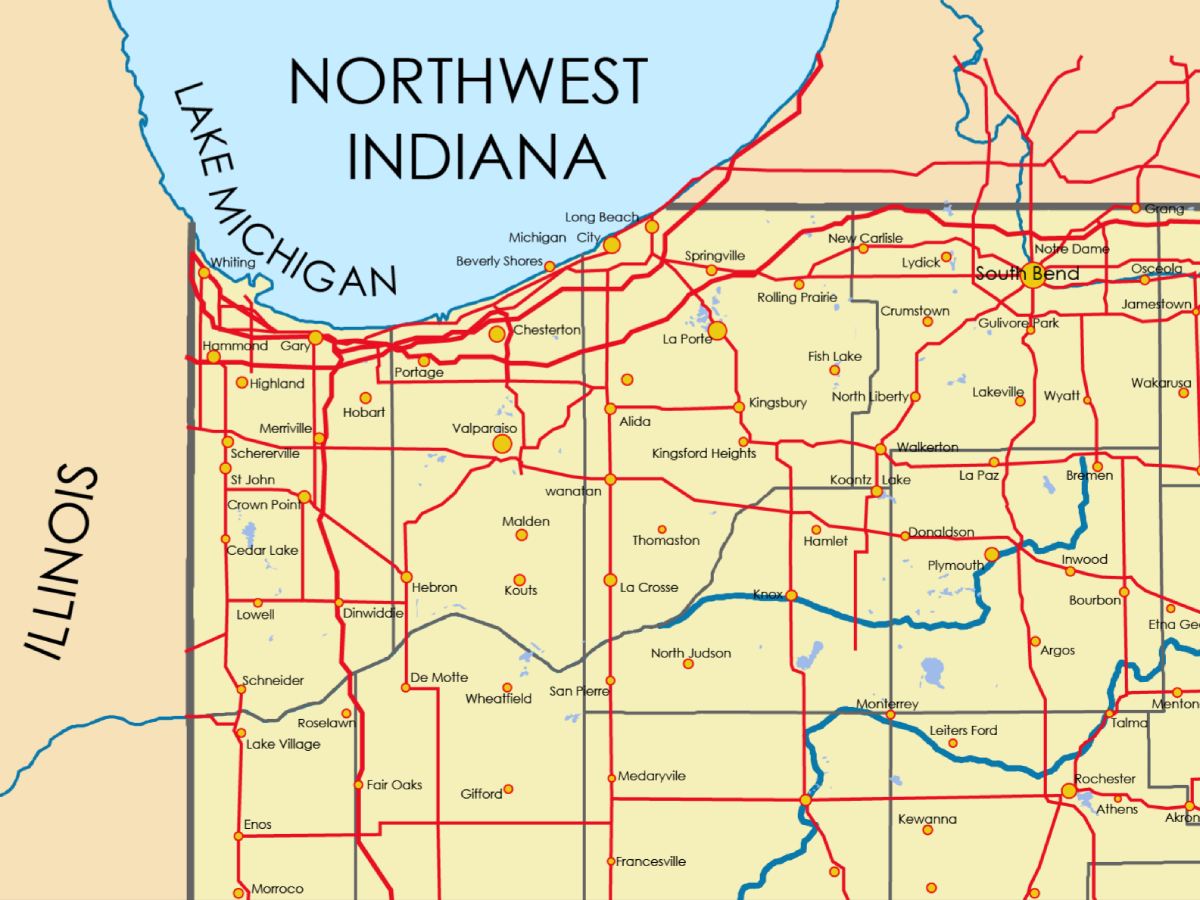
Lake County’s winters bring lake-effect snow and heavily salted roads, both of which accelerate rust on an unprotected classic far faster than in a drier climate. An insurer’s storage requirement is not just paperwork here; consistent garage or covered storage during winter months protects the asset the policy is meant to cover. Following a complete classic car winter storage routine can also help document how the vehicle was protected.
Owners who take a car to shows or cruise-ins should confirm the policy explicitly covers exhibition use and any transport to and from events, since some agreed value policies restrict coverage to specific use categories. Proximity to the broader Chicago-area collector market can also help when building a value case for an agreed value policy, since more comparable regional sales generally make it easier to support a higher, well-documented figure. For a broader look at coverage options and requirements in the area, see our guide to classic auto insurance in Gary, Indiana.
Documentation that supports a stronger agreed value case
- A professional appraisal, especially after a restoration or major mechanical work
- Dated photos showing the vehicle’s condition, including before-and-after restoration images
- Receipts for parts, labor, and restoration work
- The original bill of sale or purchase documentation
- Records of comparable sales for the same make, model, and condition
Common mistakes to avoid
- Assuming a stated value quote guarantees that the full amount at claim time, when the payout is actually the lower of stated value or ACV
- Failing to update the insured value after a restoration, engine swap, or other work that changes the car’s worth
- Exceeding an agreed value policy’s mileage or use limits, which can complicate a claim
- Insuring a modified or restored classic under an ordinary ACV policy that was never designed to reflect its real value
What agreed value coverage often includes beyond the payout
Specialty collector-car insurers frequently bundle claims-handling features that a standard ACV policy does not offer, regardless of the valuation method. Common examples include letting the owner choose the repair shop rather than a network shop, sourcing original-equipment, new-old-stock, or custom parts to match the car rather than defaulting to aftermarket parts, and flatbed-only towing so the car is never towed like an ordinary vehicle. A Gary owner comparing quotes should weigh these claims-handling terms alongside the valuation method itself, since two agreed value policies are not automatically equivalent.

How premiums typically compare
Specialty collector-car insurance is often cheaper overall than insuring the same car under a standard daily-driver policy, since premiums are based on limited, pleasure-oriented use rather than the everyday commuting risk; some insurers advertise savings of 20 to 40 percent compared with standard coverage for the same vehicle. Within collector coverage specifically, an agreed value option can carry a somewhat higher premium than a stated value option on the same car, since the insurer guarantees the full amount rather than reserves the right to pay a lower amount based on actual cash value.
How to decide between agreed value and stated value
- Choose the agreed value if the vehicle is appreciating, rare, extensively restored, or would be difficult to replace at a market price
- Choose the agreed value if certainty at claim time matters more than a slightly lower premium
- Stated value may be adequate for a vehicle whose market value is stable, easy to document, and unlikely to be disputed
- Either way, revisit the insured value after any major work, and keep documentation current rather than waiting until a claim to gather it
Valuation is only one part of the decision. Before choosing a policy, review the other factors to consider when choosing car insurance, including exclusions, deductibles, storage requirements, claims handling, and permitted vehicle use.

RELATED AUTO INSURANCE GUIDES
Safety & Driving
Hot Car Safety Tips for Children, Pets and Drivers
Safety & Driving
How Does a Learner’s Permit Work? Rules and Next Steps
Safety & Driving
Thunderstorm Safety Tips at Home, Outdoors and in a Car
Auto Insurance
ACV vs Replacement Cost: How Insurance Payouts Differ