

Most car shoppers naturally focus on the vehicle’s selling price, but the interest rate can materially change what that car ultimately costs. A competitive purchase price paired with an expensive loan can still be a poor deal once several years of interest have accrued. That’s why Auto Insure News breaks down what a good interest rate on a car looks like in 2026, how rates differ by credit tier, and how to compare financing offers before you sign.
What’s a good interest rate on a car in 2026?
A useful starting point in 2026 is the national auto-finance market. Experian’s Q4 2025 data reported an average interest rate of 6.37% for new-vehicle loans and 11.26% for used-vehicle loans. An offer below the average for borrowers with a similar credit profile can be competitive, but the national average alone does not determine whether your specific rate is good.
Your credit profile, loan term, amount financed, down payment, vehicle age, lender, and loan-to-value ratio can all influence the APR you receive. The better comparison is therefore not simply “Is my rate below 6.37%?” but “Is my rate competitive for my credit tier and the vehicle I am financing?”

What’s a good car loan rate for your credit score?
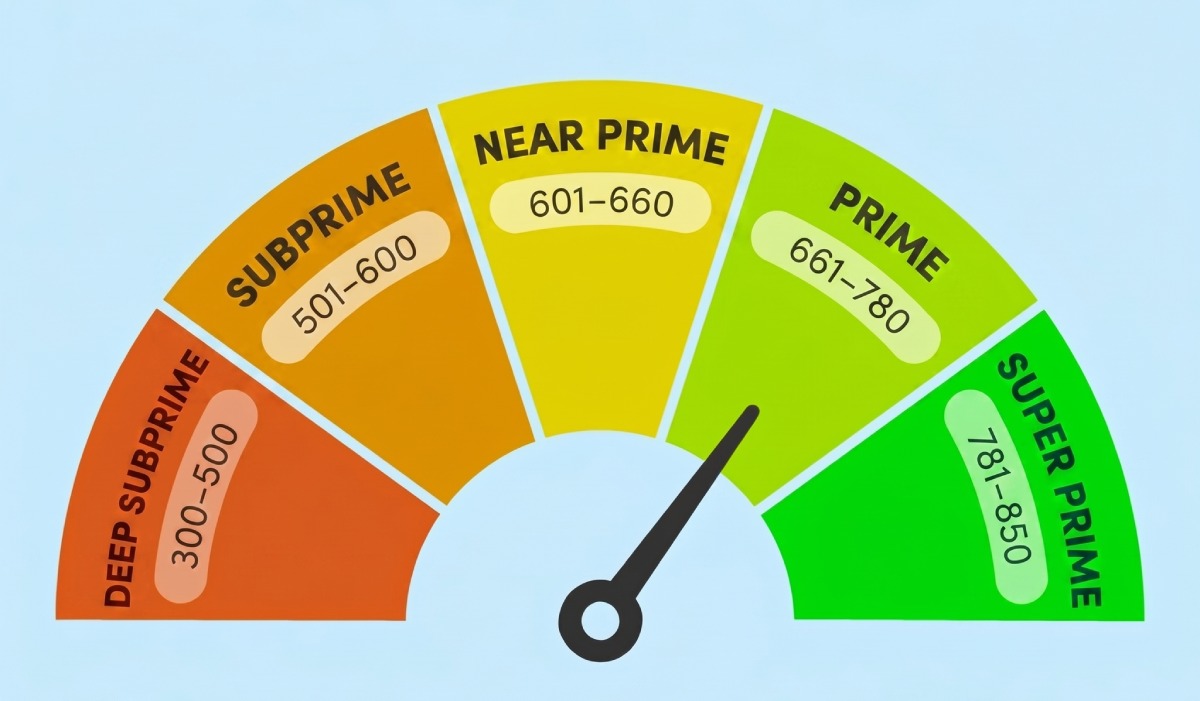
Credit is one of the strongest factors lenders use when pricing an auto loan, but it is not the only one. Experian’s Q4 2025 automotive finance data provides a useful benchmark for comparing rates across different borrower tiers:
| Credit Tier | Score Range | Average New Car APR | Average Used Car APR |
|---|---|---|---|
| Super Prime | 781–850 | ~4.66% | ~7.70% |
| Prime | 661–780 | ~6.27% | ~9.98% |
| Near Prime | 601–660 | ~9.57% | ~14.49% |
| Subprime | 501–600 | ~13.17% | ~19.42% |
| Deep Subprime | 300–500 | ~16.01% | ~21.85% |
Data from Experian (State of the Automotive Finance Market, Q4 2025)
Important: Experian’s figures above use VantageScore 4.0 ranges. Your lender may use a different scoring model or an auto-specific credit score, so the score a lender sees may not exactly match the number shown in a consumer credit app.
Auto Insure News benchmark: Use the average for your credit tier as a reference point, not a hard cutoff. If one lender offers a rate materially higher than the benchmark, get additional quotes before assuming that is the best financing available to you.
What does your credit tier actually mean for your car loan?
- Super Prime (781–850): Borrowers in this range generally receive some of the lowest average rates and may have access to manufacturer-subsidized financing when eligible. Promotional APRs can be attractive, but compare the financing incentive to any cash rebate you might forgo by choosing the promotional rate.
- Prime (661–780): Prime borrowers generally have access to competitive financing from banks, credit unions, manufacturer finance companies, and other lenders. Even within this tier, comparing several offers matters because a relatively small APR difference becomes meaningful over a 60- or 72-month loan.
- Near Prime (601–660): Financing is available to many borrowers in this range, but average rates are significantly higher. At this point, the vehicle price, down payment, and loan term become especially important because a high APR combined with a large loan balance can materially increase total interest.
- Subprime (501–600): Financing options can become more expensive, and lender requirements may be stricter. Keep the amount financed manageable and compare the total cost of borrowing rather than focusing only on approval. If you are also considering leasing, understand how a car lease works before assuming it will be easier or less expensive than financing.
- Deep Subprime (300–500): Borrowers in this range can face very high average APRs and fewer attractive financing choices. When the purchase is not urgent, improving the credit profile, increasing the down payment, reducing the amount financed, or choosing a less expensive vehicle may offer greater financial benefits than simply finding a lender willing to approve the loan.
Credit can also matter outside the loan itself. Auto financing and auto insurance use different risk models, but drivers rebuilding their credit should understand how bad credit can affect auto insurance in states where insurers may consider credit-based insurance information. The loan payment and insurance premium should be evaluated separately when calculating the real monthly cost of a vehicle.
New car vs. used car: why the rates are so different
Used-car loans generally carry higher average APRs than new-car loans. Experian’s Q4 2025 market averages illustrate the difference: 6.37% for new vehicles versus 11.26% for used vehicles.
Several factors can contribute to that gap. New vehicles often qualify for manufacturer-subsidized financing programs, while lenders evaluate the age, value, loan-to-value ratio, and resale risk of used vehicles differently. The borrower mix between new- and used-car financing can also affect the national averages.
Note for EV buyers: financing incentives can vary by model and manufacturer, so compare APRs alongside the purchase price and any available incentives. EV buyers should also understand why electric cars can be more expensive before comparing financing offers, because depreciation, battery-related repair costs, insurance, and charging can change the total ownership equation.
If you’re deciding between new and used, factor in the financing cost – not just the sticker price. A less expensive used vehicle financed at a much higher APR can considerably narrow the price advantage. You should also compare insurance costs for the vehicle before signing, because the loan payment is only one part of the real monthly cost. Your vehicle, location, driving history, coverage choices, and other underwriting factors can all affect how your auto insurance rate is calculated.
If you are leaning used, timing can still help with the purchase price. Before locking in a deal, review what the best month is to buy a used car so you can evaluate the selling price and financing offer together.
What is a good APR for a car loan? (quick benchmarks)
There is no single APR that is “good” for every borrower. A 5% offer might be excellent for one credit profile and uncompetitive for another. The most useful benchmark is the average rate for borrowers in a similar credit tier, followed by competing offers from several lenders.
As a practical rule, an APR materially below the current average for your credit tier deserves serious consideration. An offer materially above that range should prompt you to compare lenders, verify your credit information, and review whether the loan term, down payment, or vehicle itself is contributing to the higher rate.
Do not evaluate APR in isolation, either. A manufacturer may offer a very low promotional rate in place of a cash incentive, while another lender may offer a higher APR that allows you to keep a substantial rebate. Compare the total amount paid under each option.

Why loan terms can make a good rate more expensive
A longer loan term lowers the required monthly payment because the balance is spread across more months. The trade-off is that you remain in debt longer and generally pay more total interest.
Longer terms can also increase the period during which you owe more than the vehicle is worth, particularly when the down payment is small. That makes it important to compare the loan’s total cost rather than judging affordability by the monthly payment alone.
Here’s what the math can look like on a hypothetical $30,000 new-car loan. These rates are illustrative rather than lender quotes. If this is your first vehicle, compare the loan math against how much a first car should cost before assuming a lower monthly payment makes the vehicle affordable.
| Loan Term | Illustrative APR | Monthly Payment | Total Interest Paid |
|---|---|---|---|
| 48 Months | 5.90% | ~$703 | ~$3,752 |
| 60 Months | 6.27% | ~$584 | ~$5,025 |
| 72 Months | 7.75% | ~$522 | ~$7,609 |
In this example, extending the loan from 48 to 72 months lowers the payment by roughly $181 per month, but total interest rises by about $3,856. That trade-off may be acceptable for some budgets, but it should be a conscious decision rather than a number hidden behind a lower monthly payment.
Auto Insure News recommendation: when a dealer presents a lower payment, ask to see four numbers together: the vehicle selling price, APR, loan term, and total amount financed. If any one of those changes, the lower payment may not represent a better deal.
6 ways to get a good car loan interest rate
- Secure a pre-approval before you shop. A pre-approval from a bank, credit union, or other lender provides a clear financing benchmark before the dealership presents its offer. The dealer can still beat it, but you are no longer evaluating their financing without a point of comparison.
- Compare several types of lenders. Banks, credit unions, manufacturer finance companies, and online lenders can price the same borrower differently. Do not assume one category will always have the lowest rate.
- Reduce the amount you need to finance. A larger down payment can lower the loan-to-value ratio, reduce your monthly payment, and decrease the amount of interest you pay. Whether it produces a lower APR depends on the lender and the rest of your application.
- Ask whether auto-pay changes the rate. Some lenders offer a rate discount for automatic payments, while others do not. Confirm the actual APR both with and without any discount rather than assuming one is included.
- Check your credit reports before applying. Review your reports through AnnualCreditReport.com and dispute inaccurate information before submitting major loan applications. Also, remember that the consumer score you see may differ from the score used by an auto lender.
- Shop multiple lenders within a focused period. Rate shopping for an auto loan is generally treated differently from applying for several unrelated credit accounts. Depending on the FICO scoring model used, multiple auto-loan inquiries within a rate-shopping window of roughly 14 to 45 days may be grouped as a single inquiry for scoring purposes. Keeping applications close together also makes the offers easier to compare.
The financing discussion should also remain separate from the vehicle price negotiation. Before visiting the dealership, understanding how to negotiate a used car price at a dealership can help prevent a lower monthly payment from distracting you from a higher selling price or unnecessary add-ons.
The Backup Plan: Auto Loan Refinancing
If your credit profile does not qualify for a competitive rate today and you need to purchase a vehicle, refinancing may become an option later. The important thing is not to assume that approval today means you must keep the same loan until payoff.
Building a consistent record of on-time payments, reducing other debt, and improving the overall credit profile can put you in a stronger position when you request refinancing later. There is no guarantee that six or twelve months will produce a particular score or rate, so evaluate the new offer based on the numbers available at that time.
A significantly lower refinance APR can reduce interest expense and potentially lower the monthly payment. However, compare the remaining term carefully. Extending a loan that has 36 months remaining into a new 60-month term may reduce the payment while also reducing or eliminating some of the interest savings you expected from the lower APR.
Before refinancing, compare:
- The new APR
- The remaining principal balance
- The new loan term
- The total remaining interest under each option
- Any lender or title-related fees

After you secure the loan and take delivery, the financing work is only one part of the ownership checklist. Review what to do after buying a new car so you handle insurance proof, registration, paperwork, maintenance reminders, and early ownership steps correctly.
How Auto Insure News evaluates a car loan offer
A good auto loan is not defined by APR alone. The vehicle price, amount financed, loan term, down payment, incentives, insurance cost, and how long you expect to keep the car all affect whether the financing actually makes sense.
At Auto Insure News, we evaluate financing as part of the total cost of owning the vehicle rather than treating the loan payment as a separate decision.
- We compare rates within the right credit tier; a national average is more useful when compared with borrowers who have a similar credit profile.
- We calculate total interest: a lower monthly payment can still cost more when the loan is extended for additional years.
- We separate vehicle price from financing: negotiating a competitive APR does not make an overpriced vehicle a good deal.
- We include insurance in affordability: financing determines what you pay the lender, while insurance, maintenance, fuel, and registration determine whether the vehicle fits your overall budget.
Our recommendation is straightforward: get at least a few comparable financing offers, evaluate them using the same vehicle price and loan amount, and compare the APR, term, monthly payment, and total interest side by side. The best car loan is the one that keeps both the rate and the total borrowing cost competitive without stretching the repayment period simply to make the monthly payment look affordable.

RELATED AUTO INSURANCE GUIDES
Safety & Driving
Hot Car Safety Tips for Children, Pets and Drivers
Safety & Driving
How Does a Learner’s Permit Work? Rules and Next Steps
Safety & Driving
Thunderstorm Safety Tips at Home, Outdoors and in a Car
Auto Insurance
ACV vs Replacement Cost: How Insurance Payouts Differ