

Hail can damage a vehicle in just a few minutes, leaving owners with everything from minor dents to shattered glass and expensive repair bills. Whether your insurer will pay for those repairs depends on the coverage your policy included before the storm. Auto Insure News breaks down whether auto insurance covers hail damage, what situations may lead to a denied claim, and what to expect if you need to file for storm-related damage.
When does auto insurance cover hail damage?
Auto insurance covers hail damage only when comprehensive coverage was active before the storm occurred. The damage must be consistent with hail, reported within your insurer’s claim window, and expensive enough to exceed your deductible. If you carry liability-only coverage, hail damage to your own car is usually not covered.
What type of car insurance covers hail damage?
Comprehensive insurance claims for hail damage are the only standard claims designed for weather events; liability and collision are for entirely different situations. A policyholder should confirm that comprehensive coverage was active before assuming a basic policy will cover hail dents, cracked glass, or paint damage.
Comprehensive coverage explained
Comprehensive coverage – sometimes labeled “other-than-collision” coverage – pays for damage to your own vehicle from causes other than a crash. That includes hail, fire, theft, vandalism, flooding, falling objects, and animal strikes. If you also live in a severe-weather area, review does car insurance cover tornado damage to understand how comprehensive coverage may apply to wind, flying debris, fallen trees, and other storm losses. Similar non-collision weather questions include does car insurance cover snow damage and does car insurance cover sinkholes. It is optional in every state, but lenders and leasing companies often require it when financing or leasing a car.
This is also why “full coverage” can be confusing. Full coverage is not a formal policy type. If your policy includes comprehensive coverage, hail damage is usually covered after your deductible. If your policy only includes liability and collision, hail damage to your own car is not covered.
The same rule applies if the car was parked when the storm hit; comprehensive coverage can still apply because hail is a weather-related loss, not a driving-related accident.
Why liability and collision insurance do not cover hail damage
Liability and collision coverage often cause confusion because both are common parts of an auto policy, but neither is designed to pay for hail damage to your own car.
Liability insurance pays for injuries or property damage you cause to other people. It does not repair your own vehicle after a hailstorm. Collision coverage applies when your car hits another vehicle, an object, or rolls over. Hail damage does not fit that definition because the loss comes from weather, not a crash.
If you only carry liability coverage, or if your policy includes collision but not comprehensive coverage, hail dents, cracked glass, and paint damage are usually your responsibility.
Table: Liability vs. collision vs. comprehensive coverage
| Coverage type | Pays for hail damage? | What it actually covers | Typically required? |
|---|---|---|---|
| Liability | No | Injuries or property damage you cause to others | Yes, in most states |
| Collision | No | Damage from crashes with another vehicle/object, or rollovers | No, but often required by lenders |
| Comprehensive | Yes | Hail, fire, theft, vandalism, flooding, animal strikes | No, but often required by lenders |
What comprehensive coverage may pay for after hail damage
Once a hail claim is approved, comprehensive coverage can cover a wide range of repairs, and the final hail damage repair cost depends almost entirely on how many panels were hit and how deep the dents are.
Dent, body, paint, and glass damage
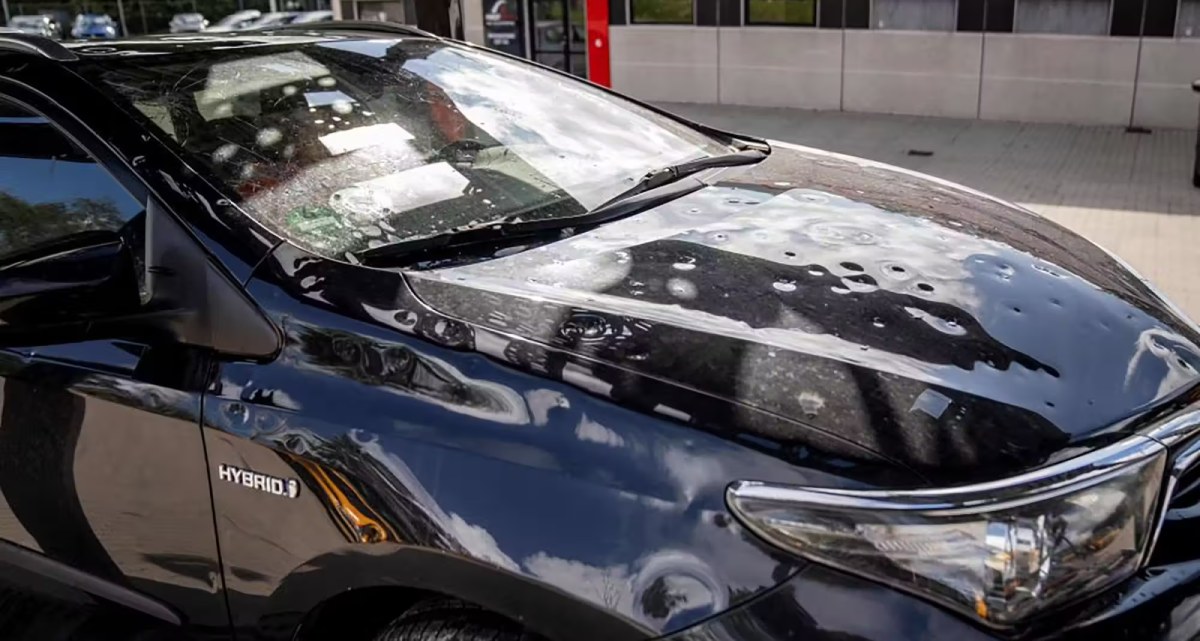
Most hail claims start with paintless dent repair (PDR), a technique that removes dents from the back of the panel without repainting when the paint surface is still intact. It is usually faster and less invasive than traditional bodywork. Repair costs vary widely depending on the number of dents, the panels affected, the vehicle model, paint condition, glass damage, and local labor rates. Minor cosmetic damage may cost less than your deductible, while severe hail damage across multiple panels can reach several thousand dollars.
Windshield and glass damage
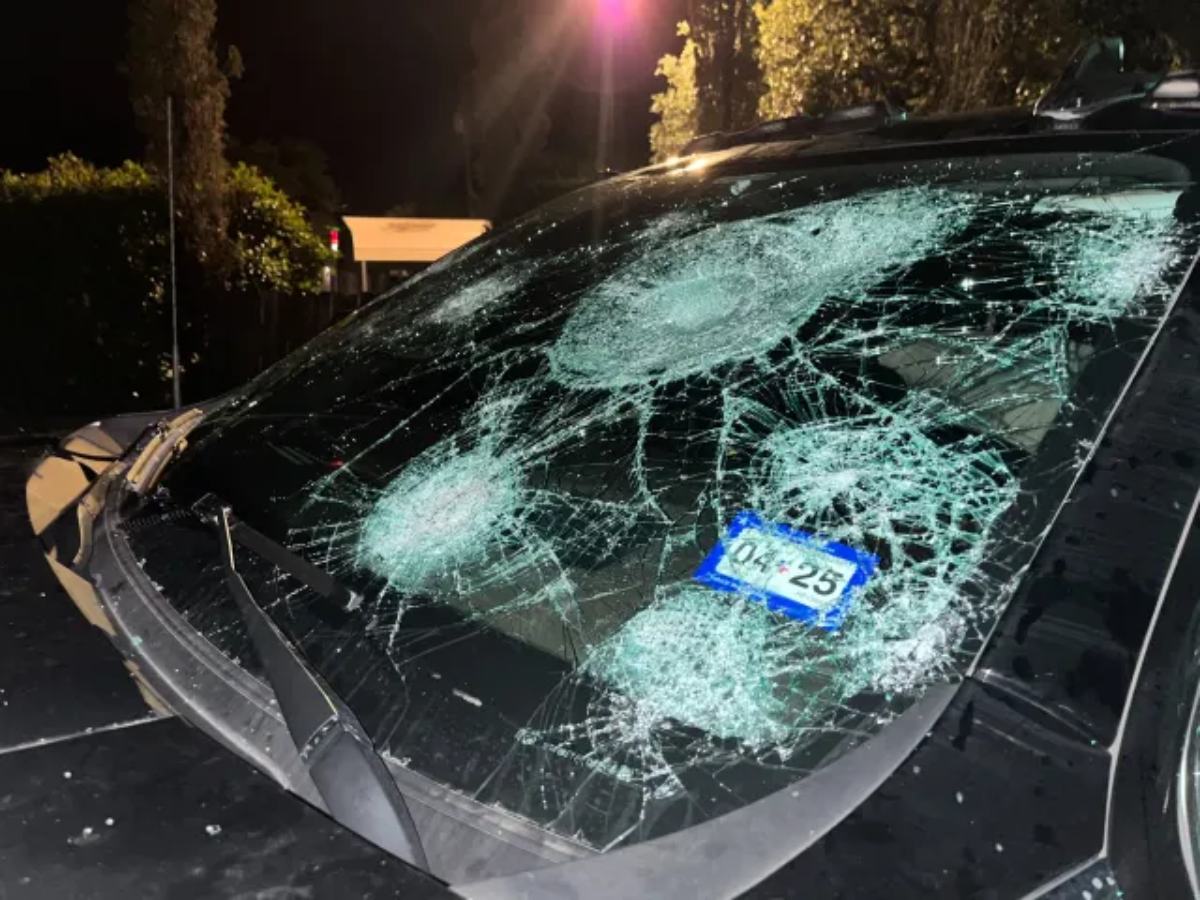
Hail can crack or shatter windshields, side windows, and mirrors, and comprehensive coverage pays for glass repair or replacement just like it does for body damage. Some insurers offer full glass coverage as an add-on that may waive or reduce the deductible for windshield or auto glass claims. State rules vary, so the deductible may depend on where you live, whether the glass is repaired or replaced, and whether your policy includes a separate glass endorsement. Florida drivers should review florida insurance windshield replacement before assuming every glass claim works the same way. It’s worth checking your declarations page or calling your agent to see if this applies to you before the next storm season.
When hail damage can lead to a total loss
A single severe hailstorm can hit every exposed panel at once. If the estimated repair cost is too high compared with the car’s actual cash value, the insurer may declare the vehicle a total loss instead of repairing it. The exact rule varies by state and insurer: some states use a percentage-based threshold, while others use a total-loss formula that weighs repair cost, salvage value, and pre-loss vehicle value. If your car is totaled, comprehensive coverage generally pays the car’s pre-storm actual cash value, minus your deductible.
Two related coverages are worth knowing about here. If you’re still financing or leasing the car, gap insurance can cover the difference between the ACV payout and what you still owe the lender, since those two numbers are rarely the same. And if your car is repairable but needs a few days in the shop, rental reimbursement coverage can pay for a temporary vehicle in the meantime – a detail worth checking now, since it has to be added to your policy before the storm, not after.

When hail damage may not be covered
Most denials trace back to when coverage started, how the damage is documented, or a policy gap, rather than the hail damage itself being disqualifying. Knowing these three scenarios ahead of time can save you a frustrating call with your adjuster.
Coverage started after the storm
Timing matters. If you add comprehensive coverage after a hailstorm, that new coverage will not pay for damage that has already happened. Insurers may review the storm date, policy effective date, photos, and inspection notes before approving a hail claim.
The damage happened before your policy started
If the dents were already there before your current policy started, your new insurer generally will not pay for them. This can come up after buying a used car, switching insurers, or purchasing a vehicle from a hail-prone area. Dated photos, inspection reports, and purchase documents can help show when the damage occurred.

Your policy has exclusions, limits, or documentation issues
Your payout may also be limited by policy exclusions or documentation problems. Common issues include aftermarket parts without an endorsement, business or delivery use on a personal policy, missed filing deadlines, or weak evidence connecting the damage to a specific storm. If you are late reporting the damage, review how long do you have to make a car insurance claim before assuming the insurer will automatically deny it. Check the exclusions section of your policy before assuming every repair will be covered.
How does the deductible work for a hail damage claim?
Your hail damage deductible is the fixed dollar amount you pay before your insurer covers the rest of the repair bill, and it’s locked in when you buy or renew your policy, not chosen at claim time. A higher deductible lowers your monthly premium but raises what you owe after a storm, which makes it worth double-checking your current number before hail season peaks. Here’s exactly how that math plays out on a real claim.
How your deductible affects the claim payout
Say a hailstorm leaves your car with $2,000 in damage, and your comprehensive deductible is $500. You’d pay the first $500, and your insurer covers the remaining $1,500, paid either directly to the repair shop or to you, depending on how your policy is set up. If you’ve added full glass coverage, a windshield-only claim within the same storm may bypass the deductible entirely.

When a minor hail claim may not be worth filing
Before filing, compare the repair estimate with your comprehensive deductible. If the repair cost is close to or below your deductible, a claim may not put much money in your pocket. For example, a $400 repair on a policy with a $500 deductible would usually be paid out of pocket either way.
That does not mean the damage is excluded. It means the deductible absorbs the payout. For minor cosmetic dents, paying out of pocket may make more sense than adding a small claim to your insurance history.
Can you keep the insurance money and not repair the car?
It depends on whether you own the car outright. If there is no loan or lease on the vehicle, you may have more flexibility after the insurer pays the claim. If the car is financed or leased, the lender or leasing company may require the vehicle to be repaired because they still have a financial interest in it. Check your loan or lease agreement before deciding to keep a claim payment instead of repairing the damage.
Will a hail damage claim raise your premium?
A hail claim is usually not treated the same as an at-fault accident, but it is not invisible to insurers. A single reasonable hail claim may have little or no direct effect on your premium, depending on your insurer, your state, and your broader claims history.
However, frequent claims, regional hail losses, and rising comprehensive coverage costs in your area can still affect your renewal premium. If your renewal price jumps after a hail-heavy season, review how to get quotes for car insurance before accepting the new rate, using the same comprehensive deductible, liability limits, vehicle details, and coverage options across each insurer. Comprehensive pricing can vary by insurer because each company weighs weather risk differently.

How to file a hail damage claim step by step
Most claims move through the same four stages regardless of carrier, from the moment you spot the damage to the day repairs are finished. If this is your first storm-related claim, review how to claim vehicle insurance so your photos, repair estimate, policy number, storm date, and adjuster communication are organized from the start. Here’s what to do, in order.
- Document the damage immediately. Avoid making permanent repairs before the insurer has inspected the vehicle unless the repair is needed to prevent further damage, such as covering broken glass or stopping water from entering the car. Once it’s safe, take close-up and wide-angle photos and video of every panel, the roof, windows, mirrors, and any interior water intrusion. Note the date, time, and location of the storm – this becomes your claim’s evidence.
- Contact your insurer. Most companies let you start a claim through their app, website, or by phone. Have your policy number and photos ready; you’ll typically be asked when and where the damage occurred.
- Schedule an inspection or virtual estimate. An adjuster will assess the damage in person or review submitted photos remotely, then provide or approve a repair estimate, often in coordination with a body shop of your choice or one in the insurer’s preferred network.
- Approve repairs and pay your deductible. Once the estimate is finalized, repairs can begin. You pay your deductible directly to the shop, and the insurer covers the rest.
Timelines vary widely depending on the extent of damage and the level of activity at local shops after a regional storm. Straightforward paintless dent repair often wraps up in a day or two, while claims involving glass replacement, panel work, or a total-loss review can take anywhere from a few days to a few weeks, especially during peak hail season when body shops in affected areas are booked solid.

Which states have the highest hail risk?
Hail risk isn’t spread evenly across the country, and current hail damage statistics show it’s concentrated in a predictable corridor running through the central United States. If you live in or are relocating to a hail-prone state, comprehensive coverage becomes a practical layer of protection, not just an optional add-on. Here’s where the National Weather Service recorded the most major hail events last year.
| Rank | State | Major hail events, 2025 |
|---|---|---|
| 1 | Texas | 902 |
| 2 | Kansas | 375 |
| 3 | Oklahoma | 369 |
| 4 | Nebraska | 315 |
| 5 | Missouri | 253 |
| 6 | Colorado | 244 |
| 7 | South Dakota | 232 |
| 8 | Tennessee | 216 |
| 9 | Illinois | 167 |
| 10 | Arkansas | 154 |
Source: NOAA Storm Prediction Center, National Weather Service, 2025 annual data.
The financial scale behind these numbers is significant. State Farm alone reported paying out $5.6 billion nationwide in hail-related claims in 2025, including $1.4 billion in Texas claims. If you’re in one of the states above, it’s worth reviewing your comprehensive deductible now rather than after the next storm.
What to do next if a hailstorm just passed
If a hailstorm just passed, document the damage before you move or repair the car. Take clear photos and video, note the date and location of the storm, and check your policy for comprehensive coverage and your deductible.
If the repair estimate is far above your deductible, filing a claim may make sense. If the damage is minor and close to your deductible, paying out of pocket may be the cleaner option. If you live in a hail-prone area, review your comprehensive coverage before storm season instead of waiting until damage has already happened.

RELATED AUTO INSURANCE GUIDES
Safety & Driving
Black Ice on the Roads: How to spot it and handle a skid
Auto Insurance
Car Insurance Umbrella Policy: Coverage, Cost and Limits
Auto Insurance
Michigan Car Insurance: Rates, Companies & PIP Coverage
Safety & Driving
Texting and driving: risks, statistics, laws and prevention